TL;DR
- Reviewing contract terms carefully protects business operations and secures commercial revenue under Canadian laws.
- A comprehensive Service Agreements Checklist helps verify essential details like project scope and timelines.
- Understanding rights under the Interest Act ensures late fees can be charged without federal issues.
- Clear clauses for intellectual property ownership and moral rights under the Copyright Act protect unique created works.
- Compliance with privacy laws like the Personal Information Protection and Electronic Documents Act secures commercial data.
- Business owners can easily Create Service Agreements that comply with Canadian regulations using the professional Ziji Legal Forms platform.
Introduction
Signing a business contract without a review is a major risk. Transactions in Canada require clear and legally binding terms. This ensures that both parties share a complete understanding of their responsibilities. Whether a person is a business owner or an independent contractor, written agreements protect revenue. They also limit legal risk.
A good contract serves as a roadmap for daily business. It defines tasks, protects cash flow, and helps resolve conflicts. When written correctly, these agreements form a strong foundation. They lead to profitable, long term commercial partnerships.
Signing a poor contract can lead to big problems. It causes misunderstandings, lost revenue, and court disputes. This guide provides a detailed checklist to help businesses check their documents. By using this approach, signees can execute contracts with absolute confidence.
Why Reviewing a Service Agreement Matters
Evaluating an agreement before signing is a critical defensive measure. Every clause has legal consequences. These terms affect daily work and overall business reputation. A proper review ensures that the document remains fair and legally enforceable.
Prevents Misunderstandings
Misunderstandings occur when businesses make assumptions. A thorough review ensures that all expectations, timelines, and deliverables are put in writing. Verbal promises are generally unenforceable under Canadian contract law. Written terms clarify the fine print and confirm a common goal. This eliminates ambiguity and prevents frustrating disputes during the project.
Protects Both Parties
A balanced contract protects the interests of both sides. It ensures that the provider is paid fairly. It also guarantees that the client receives the exact quality of work promised. Without written protections, either party could face significant financial losses. A proper review keeps the contract fair for everyone.
Improves Enforceability
A contract is only useful if it is enforceable. Under Canadian common law, an agreement must meet specific criteria. This includes a clear offer, acceptance, intention to be bound, and valuable consideration. Reviewing the document helps identify invalid clauses or vague terms. This ensures the agreement is legally robust.
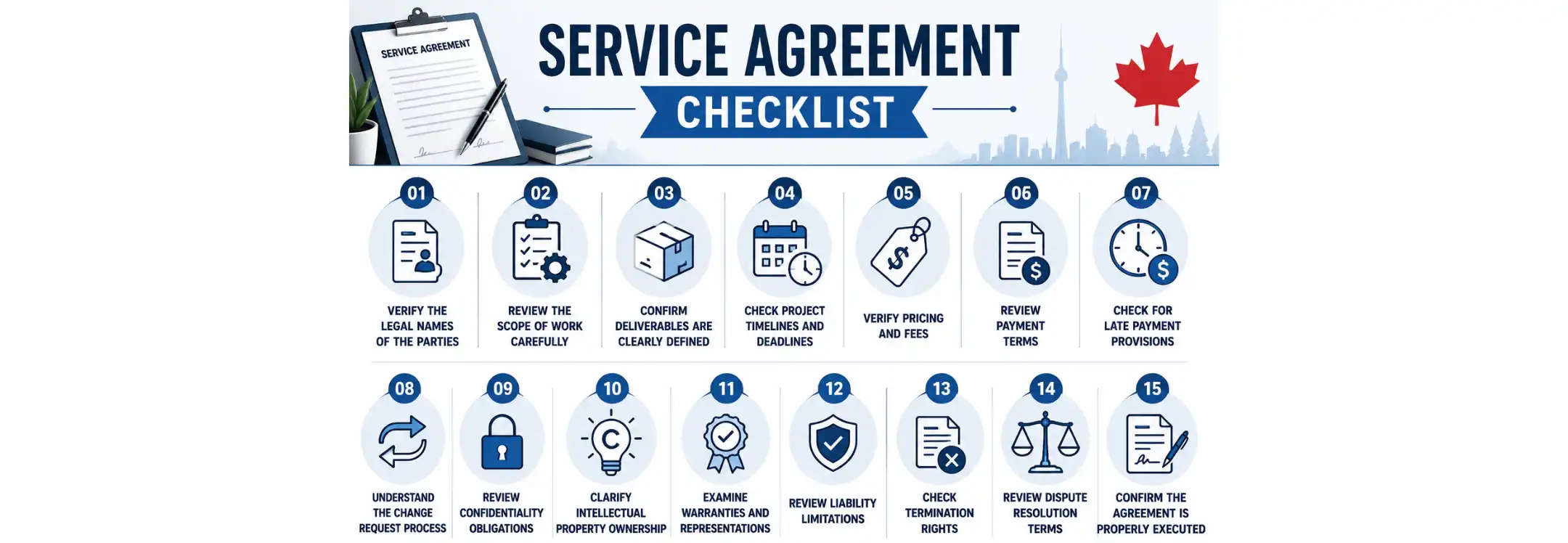
Service Agreements Checklist: 15 Things to Review Before Signing
Use this checklist to evaluate documents and ensure they comply with federal and provincial standards in Canada.
1. Verify the Legal Names of the Parties
Every agreement must identify the exact legal names of the parties. If the contract is with a corporation, use its registered corporate name rather than its trade name. Spelled out designations like Incorporated are essential. If individuals are signing, use their full legal names. This prevents execution errors and secures enforceability.
2. Review the Scope of Work Carefully
The scope of work is a critical operational section. Describe the exact services in clear and simple language. Vague phrases are the main cause of contract disputes. State who will perform the tasks, where, and when. List any excluded services clearly as out of scope to prevent unpaid extra work.
3. Confirm Deliverables Are Clearly Defined
Deliverables are the tangible results of the services, such as code or designs. Define these items with high precision, including technical specifications. Describe the format and quantity of each deliverable. Clearly defined parameters make it easy to verify completion and trigger payment obligations on time.
4. Check Project Timelines and Deadlines
State exact dates for project commencement, milestones, and final completion. If a project is ongoing, define the initial term and renewal rules. Add a force majeure clause to excuse delays caused by natural disasters. Clear timelines keep both parties on track and help manage operational expectations.
5. Verify Pricing and Fees
Confirm that the pricing structure is clearly stated and matches verbal agreements. Specify whether billing is a fixed fee, an hourly rate, or a retainer. Clarify if pricing includes or excludes applicable taxes like the Goods and Services Tax. Clear pricing terms avoid financial surprises when invoicing.
6. Review Payment Terms
Payment terms dictate when and how the client will pay. State the billing schedule clearly, such as within thirty days of the invoice. Outline the accepted payment methods, such as electronic fund transfers. Clearly documented terms protect cash flow and minimize payment delays for the business.
7. Check for Late Payment Provisions
The contract can include a late payment interest rate to encourage prompt payment. However, these clauses must comply with federal legislation to be enforceable. Section 4 of the Interest Act requires listing the equivalent annual percentage rate. Additionally, the rate cannot exceed thirty-five percent APR.
8. Understand the Change Request Process
Projects often evolve, and clients may request modifications. The contract must outline a formal change request process. This ensures that changes to the scope, timeline, or pricing are agreed to in writing. Written amendments prevent informal verbal requests from causing unpaid project scope creep.
9. Review Confidentiality Obligations
Specify what information is considered confidential and how long the obligation lasts. Ensure confidentiality terms align with Canadian privacy legislation. If a business handles personal information in commercial activities, it must comply with PIPEDA. Proper safeguards keep sensitive client and business data fully secure.
10. Clarify Intellectual Property Ownership
Under Canadian copyright law, an independent contractor retains ownership of created works by default. If the client is to own the deliverables, include an explicit written assignment. Additionally, obtain a written waiver of moral rights. These rights cannot be assigned and must be waived.
11. Examine Warranties and Representations
Warranties are binding promises about service quality. Limit these promises to what is reasonable and achievable. Avoid absolute guarantees that expose the business to excessive liability. Warrant that services will be performed professionally and that work does not infringe on third-party rights. Clear warranties manage performance expectations.
12. Review Liability Limitations
Liability limitation clauses protect a business from catastrophic financial claims. These clauses cap the total damages a party can recover in a dispute. A standard limit is the total fees paid under the agreement. Ensure the limitation is mutual and reasonable to protect business assets.
13. Check Termination Rights
The termination clause must specify how either party can end the contract. Define the rules for termination for convenience and termination for cause. Termination for convenience requires a written notice period, like thirty days. Clear termination terms prevent a business from being trapped in unproductive partnerships.
14. Review Dispute Resolution Terms
The contract should include a structured dispute resolution clause. This clause requires negotiation, followed by mediation or arbitration. State the governing law, which should be the laws of Canada and the applicable province. This structured path avoids immediate, expensive court battles.
15. Confirm the Agreement Is Properly Executed
The contract must be signed and dated by authorized representatives of both parties. Under provincial legislation, electronic signatures are legally valid for most commercial agreements. Ensure the signatories have actual authority to bind their organizations. Proper execution makes the contract legally binding.
Common Red Flags to Watch For
When reviewing contracts, check for common warning signs. These issues can lead to operational problems and legal disputes.
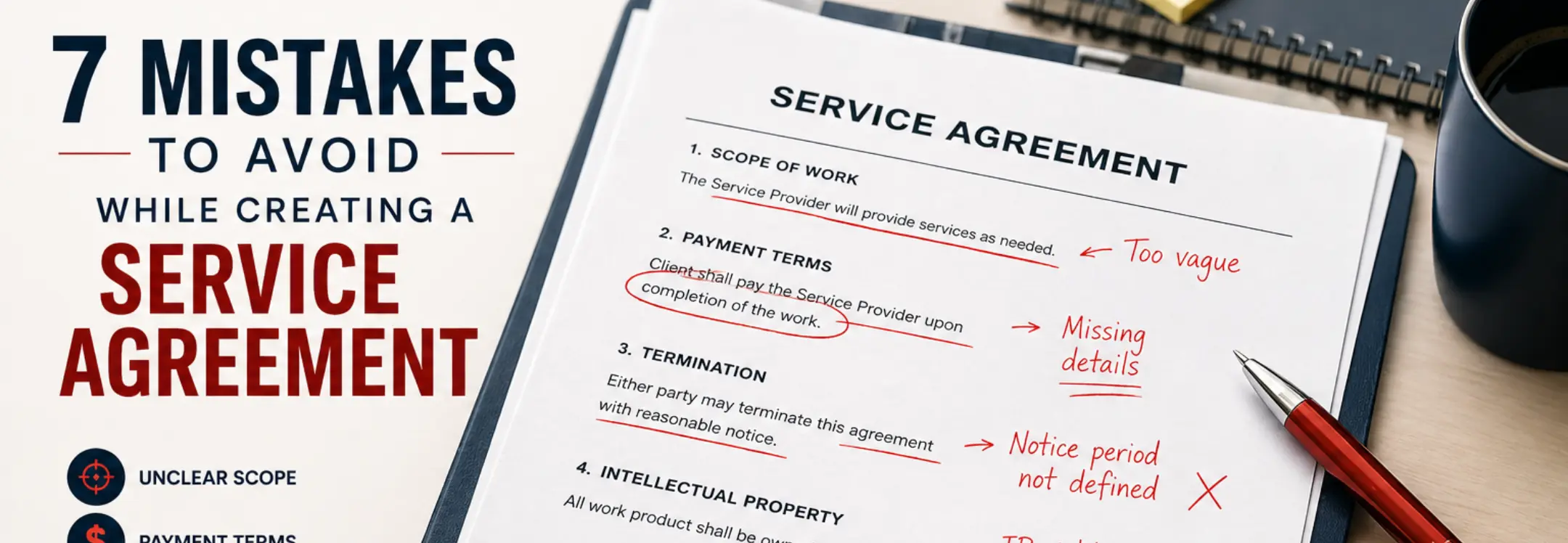
Unclear Scope of Work
A vague scope of work leads to unpaid extra tasks. If the contract does not list exact duties, clients can demand extra work.
Missing Payment Terms
Contracts without clear payment deadlines harm cash flow. Service providers must always know when and how clients will pay.
One-Sided Liability Clauses
Be careful if the contract places all risks on one party. A fair agreement shares risks evenly between the parties.
No Termination Provision
A contract without an exit clause can trap a business. Signees need a clear path to end the deal.
Undefined Ownership of Work Product
Vague ownership terms cause major disputes. The contract must state who owns the created intellectual property.
How to Create a
Service Agreement with Ziji Legal Forms
Creating professional
and compliant contracts is simple with modern digital platforms. Using Ziji
Legal Forms allows businesses to generate high quality documents tailored to
Canadian regulations.
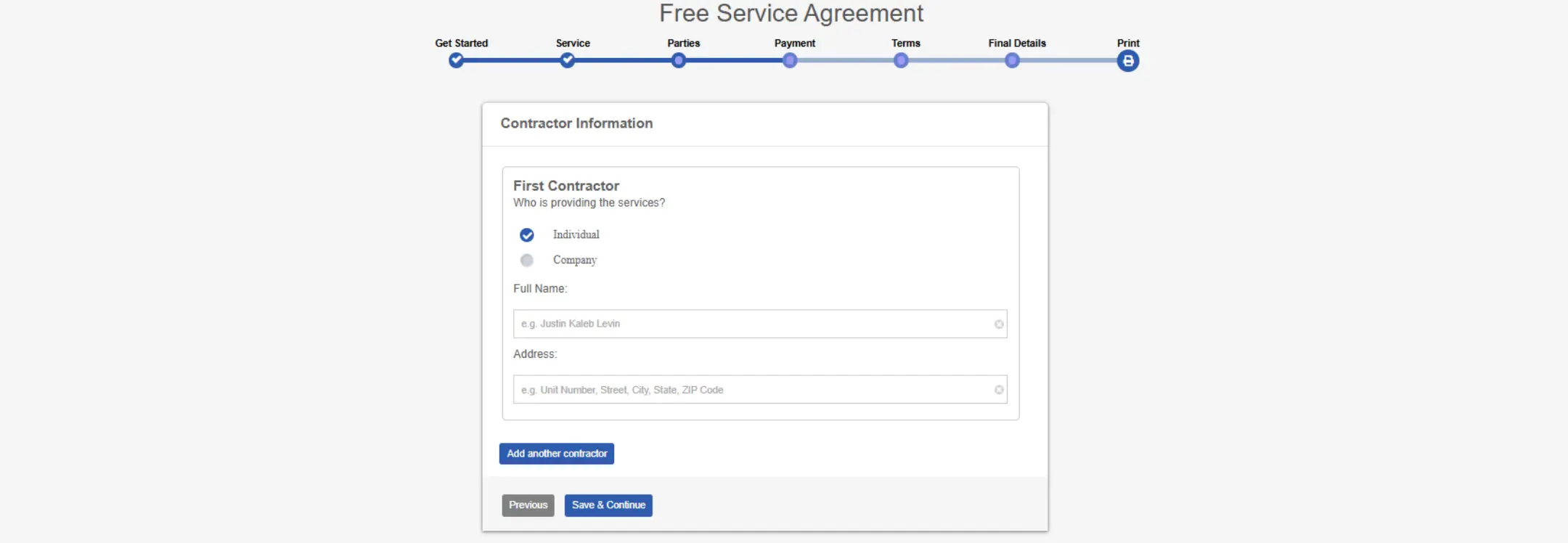
Step 1: Select
Template
Step 2: Enter Party Information
Provide the complete legal names and contact details for both the service provider and the client.
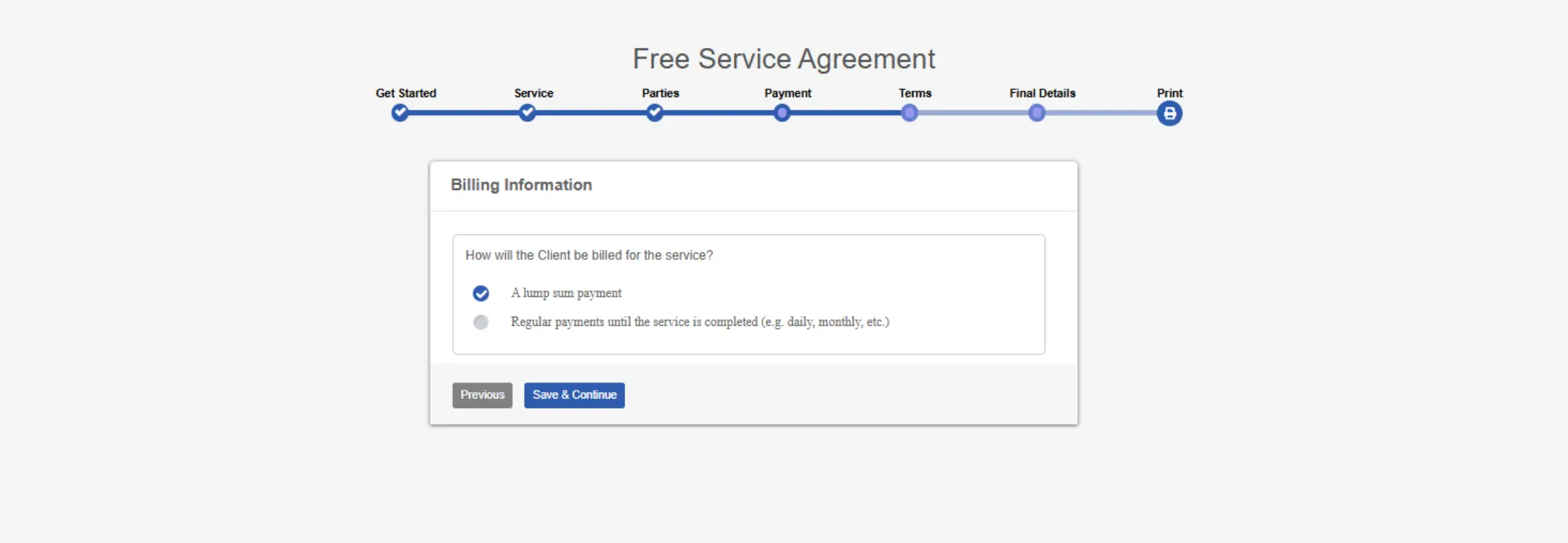
Step 3: Provide Payment Information
Enter the specific pricing structure, billing schedule, and applicable taxes such as the Goods and Services Tax.
Step 4: Enter Term Information
Define the start date, milestones, project deadlines, and termination notice requirements for the project.
Step 5: Preview Document
Review the completed contract, verify all details are accurate, and securely sign the document electronically to Create Service Agreements.
Conclusion
Evaluating a comprehensive Service Agreements Checklist is a vital commercial practice. It protects professional relationships and stabilizes business cash flow. Utilizing a pre-designed Service Agreements template allows businesses to establish a secure contractual baseline. With reliable digital tools, practitioners can easily draft secure and professional Online Service Agreements. Establishing legally binding agreements is a protective shield for modern corporate entities. Creating robust Service Agreements Canada accepts protects business operations and facilitates long term growth in the Canadian market.
Service Agreement FAQs
1. What does a Service Agreement do?
A Service Agreement defines the services to be provided, payment terms, timelines, and the responsibilities of both the contractor and the client.
2. Who should use a Service Agreement?
Freelancers, consultants, tradespeople, and businesses hiring independent contractors should use a Service Agreement.
3. Is an independent contractor considered an employee?
No. Independent contractors control how they perform their work and are generally not covered by employment standards legislation.
4. Why should a Service Agreement be in writing?
A written agreement creates a clear record of each party's obligations and helps prevent future disputes.
5. Can the contract terms be updated?
Yes. The client and contractor may amend the agreement if they both agree in writing.
6. Where can the Ziji Legal Forms Service Agreement be used?
The Ziji Legal Forms Service Agreement is available for use throughout the supported Canadian jurisdictions.
Author
Mandar Sonavane
|
Legal Content Writer at Ziji Legal Forms Inc.
Symbiosis International University
Mandar is a legal content writer specializing in the development of clear, practical, and easy-to-understand legal resources. With a strong focus on legal research, content creation, and plain-language writing, he works closely with our legal professionals to ensure that legal documents and educational materials are accurate, accessible, and user-friendly. At Ziji Legal Forms Inc., Mandar is responsible for researching legal topics, drafting and reviewing content, and helping transform complex legal concepts into straightforward guidance that empowers individuals and businesses to confidently navigate their legal needs.
Reviewed By
Histon Shek
|
General Counsel and Co-Founder at Ziji Legal Forms Inc.
University of Alberta
Histon Shek was called to the Alberta Bar in 2006. He holds a BA in Sociology and Philosophy and an LLB from the University of Alberta. As co-founder of Ziji Legal Forms Inc., he focuses on making legal documents accessible and affordable, overseeing legal integrity and content development.






 Canada
 United States