Residential Lease FAQs
What else can a residential lease agreement be called?
A residential lease agreement can also be referred to as follows: rental contract, rental agreement, residential lease, residential tenancy agreement, or a tenancy agreement.
The residential lease pertains to leasing a non-commercial property for dwelling purposes only. It may be used to rent out various property types such as apartments, basement suites, condos, duplexes, houses, mobile homes, single rooms, or townhouses etc.
What is a residential lease?
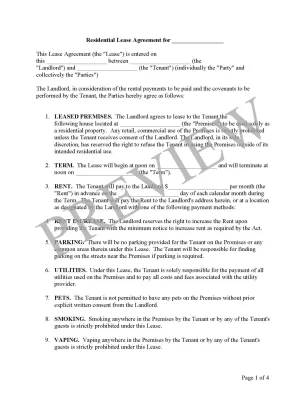
The residential lease is a rental agreement used for residential properties that outlines the terms of the tenancy between the landlord and the tenant. It is always prudent to have a residential lease in writing instead of relying on a “verbal lease” so both the landlord and tenant will have written proof and know what obligations are expected. Moreover, having a written lease will enable the parties to protect themselves if there are any future disputes in court or landlord and tenant board. Typically a lease agreement will cover the topics below:
- Property Type: What type of property is being rented out. (e.g. a house, an apartment, a single room etc)
- Term Duration: How long is the lease. (e.g. week, months, or years etc)
- Rent: How much is the rent and how often is it paid and what type of payment method is used to paid the rent.
- Security Deposit: Whether there is security deposit, and if so, how much is the deposit.
- Utilities: Whether the rent includes any utilities, and if so, which utility/utilities are included in the rent.
- Furnishing and appliances: Whether the tenant will have access to any furniture or appliances during the lease and which ones are included in the rental property.
- Subletting and termination: Whether the tenant can sublet the property and provisions including dates to terminate the lease agreement.
What is the difference between a commercial lease and a residential lease?
Residential lease is only used on property that is zoned and developed for dwelling and not for commercial business. In most jurisdictions, residential properties are covered by statutes and bylaws and they serve as basic protection and regulation for both landlords and tenants. These minimum regulations are incorporated into the lease by default and neither the landlord or tenant can contract out of them and any terms in the residential lease has to meet or be higher than the statutory minimum. (e.g. The landlord must provide a 24 hour notice before entering the property in non-emergency situation in most jurisdictions. The parties can decide to have a longer notice period that’s more than 24 hours but the notice period cannot be less than 24 hours because that is the statutory minimum.)
What is the governing law in a lease?
The governing law is basically the laws and regulations of where the property is located. If there is any dispute, whether it is in court or a landlord and tenant board, the governing law will be used to interpret the lease.
What are the landlord’s obligations?
The landlord must ensure the property meets health and safety standards of where the property is situated. In addition, the landlord must not breach the terms outlined in the lease. The landlord must respect the tenant’s peace and quiet enjoyment of the property and to ensure the property is in a habitable condition.
What are the tenant’s obligations?
A model tenant must ensure to pay the rent on time and not to damage the property. Moreover, the tenant must not endanger other tenants or conduct any illegal activities on the premises. Lastly, the tenant must not violate any of the terms outlined in the lease and move out of the property when the lease ends.
Who can live in the rental property?
Only the tenant and any minor children under the care and supervision of the tenant may reside in the rental property. The tenant may have overnight guests without interference from the landlord but this privilege cannot be abused. For example, the tenant is not allowed to have someone live permanently in the rental unit without the landlord’s permission, as that would be a violation of the lease agreement.
What is a periodic tenancy?
Periodic tenancy is a type of lease term that has a start date but without an end date. Once the lease commences, the lease will continue on until a termination notice is given by either the landlord or the tenant. The most common periodic tenancy for residential lease is month-to-month lease followed by year-to-year and week-to-week.
What is a fixed term tenancy?
Fixed term tenancy is a type of lease term that starts and ends on a specific date. (e.g. from June 1 to June 1 of next year) A fixed term tenancy typically last from 6 months to 12 months but in some uncommon cases it can be longer, lasting from 24 to 36 months. In most cases, when a fixed term tenancy ends, it automatically becomes a periodic month-to-month periodic tenancy if the parties do not terminate the lease.
What are the benefits of a periodic tenancy?
Having a flexible end date allows for inexperienced landlord to screen for quality tenants since it is much easier to get a tenant to move out in a periodic tenancy. In cases of tenants, a periodic tenancy offers a shorter notice period to terminate the lease that will allow the tenant deal with the changes in their accommodation needs. (e.g. moving away for new job, or increase in family size.)
- Ability to increase rent easier
In most cases, the landlord can increase rent in a periodic tenancy easier since they only need to give proper notice. This will typically allow landlords to maximize the rental investment in hot rental markets because there’s less wait time before rent could be increased when compared with fixed term tenancy.
What are the disadvantages of a periodic tenancy?
Most periodic tenancy is month-to-month while most fixed term tenancy is 12 months. Therefore, the landlord will generally have a shorter window to find new tenants once the tenant gives their notice in a periodic tenancy. This can negatively affect the income the landlord can earn from the rental property, especially if the tenant terminates the lease during slower rental seasons such as during the winter season.
Since it is easier for the tenant to terminate the lease in a periodic tenancy once notice is given to the landlord, the landlord will have much less stable income from the rental property.
What are the benefits of a fixed term tenancy?
Typically fixed term tenancy last 12 months, so there is more certainty in rental income for the landlord and the rental unit is less likely to be vacant.
- Fixed rent for the tenant
Typically, the landlord cannot raise the rent in a fixed term lease until after one year has passed. The tenant will enjoy more certainty in the rent payment under a fixed term lease.
What are the disadvantages of a fixed term tenancy?
The landlord will have to wait longer to end the lease if the tenant is less than ideal. Unless the tenant breaches the terms of the lease, the landlord will have to wait until the fixed term lease is over.
There is much less flexibility to accommodate for changes in the tenant’s needs. There’s little the tenant can do to terminate a fixed term lease and the tenant is responsible for the rent owed for the full term. Typically the only recourse is to sublet the property. The tenant may have a new job, family emergency, or break up and the tenant will have a more difficult time in moving to accommodate these life changes.
What is a notice to entry?
A notice to entry is a written note from the landlord notifying the tenant when the landlord will enter the rental property for inspection, to perform repairs, or to show the unit to contractors or potential tenants and buyers. The landlord cannot enter the rental property without notice unless there is an emergency within the unit. (e.g. fire or gas leak etc.) Typically, most jurisdictions require a 24 hour notice before the landlord can enter and the landlord’s entry should occur during regular business hours.
What is subletting a lease?
Subletting involves the transfer of a lease to a subtenant while the tenant will retain some interest in the premises along with the right of reentry. This is typically done when the tenant cannot find someone to assign the lease but the tenant wants to recoup some of the rent owed to the landlord. For example, the tenant got a new job offer in another city but still has 6 months left on the lease. The tenant sublets to a third party and uses the rent received from the subtenant to pay the landlord.
What is assignment in a lease?
Assignment involves the total transfer of the lease from the tenant to a third party subtenant and the tenant does not retain any interest or right to reentry to the property. Basically, the when the lease is assigned, the assignee takes over the lease completely from the tenant (assignor) and the assignee will pay rent and deals directly with the landlord.
How can I write a lease or rental agreement?
We can help you to create a lease in just a few minutes with our document creation system. Just answer a few questions and you can customize a valid lease tailored to your province or territory without having to hire a lawyer or a realtor.
What does “quiet enjoyment” mean in a rental agreement?
When a tenant signs a lease, they are entitled to occupy the home without unnecessary disturbance from the landlord, neighbors, or other parties. This includes the right to privacy, reasonable peace, and freedom from harassment. Landlords may only enter or interrupt the tenant’s use of the property under lawful circumstances, such as giving proper notice for repairs.
Are animals or pets permitted in the unit?
Pet rules vary by lease. Some rental agreements welcome certain animals, limit them by breed or size, or forbid them altogether. Landlords often set conditions such as a pet deposit, monthly pet rent, or extra cleaning requirements. Laws generally require landlords to accommodate service and assistance animals, even when there is a “no pets” clause.
Is it possible to extend the lease term?
At the end of the initial rental period, some agreements automatically switch to a month-to-month arrangement unless either party gives notice to end the tenancy. Others require both landlord and tenant to sign a fresh lease for a new term. The document should outline how renewals work, how much notice is required, and whether rent will change.
What can a tenant do if repairs are neglected?
If the landlord does not maintain the home in a livable condition, the tenant may have legal options that depend on local laws. These could include arranging the repair and deducting the cost, holding back rent, or ending the tenancy early. It’s important to follow the legal process in your area before taking action.
What’s the best way to document move-in and move-out conditions?
Many states encourage or require a joint inspection by the landlord and tenant both at the start and end of the lease. Using a checklist and dated photos can help capture the property’s condition and prevent disagreements over damages or deposit deductions later on.
What jurisdictions can use our residential lease?
You can use our template to create a legal and valid residential lease for the following jurisdictions:
|
Alberta
British Columbia
Manitoba
New Brunswick
Newfoundland and Labrador
Northwest Territories
Nova Scotia
Nunavat
Prince Edward Island
Saskatchewan
Yukon |
AB
BC
MB
NB
NL
NT
NS
NU
PE
SK
YT |







 Canada
 United States