TL;DR - Non payment of a loan document creates immediate default and civil liability for a borrower under Canadian commercial law.
- Default occurs when a debtor misses scheduled payments, breaches loan covenants, or fails to meet contractual deadlines.
- Lenders in Canada can issue formal demand letters, accelerate remaining balances, and file lawsuits within provincial limitation windows.
- Secured notes allow direct collateral recovery, whereas an Unpaid Promissory Note requires a court judgment for asset seizure.
- You can quickly Create Promissory Note tailored to Canadian legal standards using a Ziji Legal Forms template.
Borrowing money or extending credit through formal financing arrangements requires clarity and enforceable documentation. A loan agreement constructed as a formal note creates binding obligations under Canadian commercial statutes. When payment terms are ignored, the financial and legal consequences escalate rapidly for all parties involved. Understanding how default works within the Canadian legal system helps creditors protect their investments and helps debtors manage potential liabilities effectively.
Why Non Payment Consequences Matter Before You Sign
Entering into a debt contract without fully understanding the legal impact of non payment poses significant financial risks. Under Canadian federal law, specifically the Bills of Exchange Act, a promissory note is an unconditional promise made in writing to pay a specific sum of money. This instrument represents a formal financial commitment that courts enforce rigorously.
When a borrower signs this agreement, they grant the lender specific contractual rights. Failing to meet payment deadlines can trigger costly litigation, asset seizure, and severe damage to personal credit ratings. Lenders also need a thorough understanding of non payment mechanisms to ensure their capital remains legally protected. Knowing these remedies in advance fosters transparency, prevents unnecessary disputes, and promotes responsible borrowing practices across Canada.
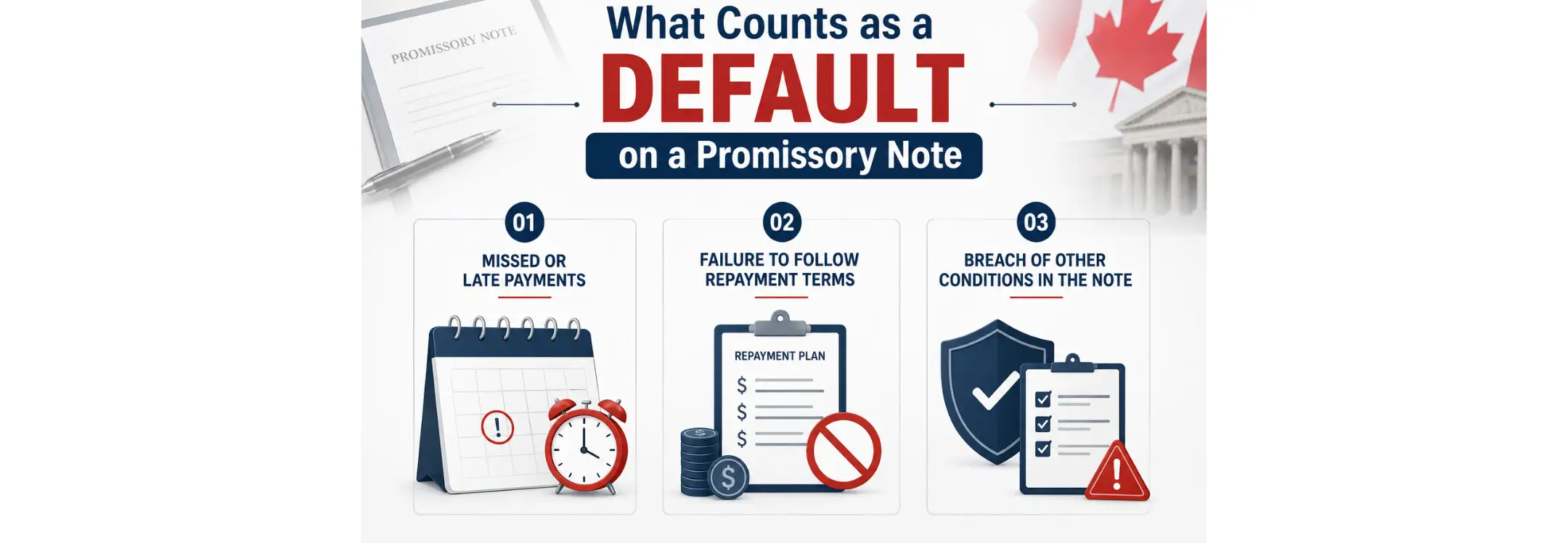
What Counts as a Default on a Promissory Note
A default happens whenever a borrower fails to satisfy any obligation set out in the signed agreement. Recognizing what constitutes default ensures that both parties understand when enforcement actions become legally permissible.
Missed or Late Payments
The most obvious form of default occurs when a debtor misses a scheduled repayment installment. Under Canadian commercial principles, a payment is considered late the day after its designated due date passes without complete receipt of funds. Even a brief delay can put the contract into default unless the written agreement explicitly offers a grace period. Repeated late payments can accumulate statutory or contractual default interest penalties.
Failure to Follow Repayment Terms
Default also arises if a borrower unilaterally alters agreed payment methods or amounts. Submitting partial payments without previous lender consent breaches the contract. Canadian courts hold that creditors are not required to accept reduced installment amounts unless a modified agreement is formally executed. Deviating from agreed payment schedules compromises the note structure and allows the lender to pursue remedies.
Breach of Other Conditions in the Note
Beyond direct payment obligations, promissory notes frequently contain protective covenants. These conditions may require maintaining insurance on pledged collateral, preventing insolvency, or providing periodic financial disclosures. Violating any non monetary condition constitutes a technical breach that puts the loan into default. Creditors rely on these covenants to preserve borrower creditworthiness throughout the loan lifecycle.
Grace Periods and Acceleration Clauses
Contractual provisions dictate how a default moves from a minor delay into a full legal dispute. Grace periods and acceleration clauses define these legal transitions.
How Grace Periods Work
A grace period grants a debtor additional time after the payment date to cure a default without facing legal remedies or immediate financial penalties. Canadian commercial legislation allows contractual flexibility regarding grace period terms. If the debtor provides full payment within this specified timeframe, the technical default is resolved, and the original terms continue smoothly. If no grace period is written into the note, the lender may act immediately upon non payment.
What Acceleration Means
An acceleration clause allows a lender to demand the immediate repayment of the entire outstanding balance upon default. Without an acceleration clause, a creditor can only sue for individual overdue installments as they fall due over time. Acceleration transforms a long term loan into an immediate single debt obligation. This drastically escalates financial pressure on the borrower while consolidating lender claims into a single legal action.
What Happens After a Default Occurs
Following an uncured default, systematic legal procedures begin to take effect to protect creditor capital.
Notice of Default and Chance to Cure
When default occurs, the lender typically issues a written notice of default to the borrower. This formal document details the missed obligation, calculates outstanding balances, and specifies a final deadline to cure the breach. Giving notice offers the borrower a structured opportunity to restore the loan to good standing. Written proof of default notice serves as critical evidence if legal claims later proceed to court.
Loan Acceleration and Demand for Full Payment
If the default remains uncured after the notice period expires, the lender formally accelerates the loan balance. The creditor delivers a final demand letter requiring full payment of principal and accrued interest. Under provincial limitation statutes across Canada, issuing a formal demand on a demand note sets the discovery date, starting the statutory clock for legal proceedings. At this stage, informal options diminish quickly.
Enforcement Options Available to Lenders
Canadian creditors possess several formal avenues to recover money owed under an unpaid loan contract.
Informal Negotiations and Demand Letters
Lenders generally attempt direct negotiations or send formal legal demand letters before filing court claims. A demand letter drafted by legal counsel outlines the legal basis of the claim, outstanding sums, and impending court action. Parties frequently negotiate structured workout plans or revised repayment timelines to avoid expensive litigation. However, if discussions fail, the creditor must transition to formal court proceedings promptly.
Lawsuits and Judgment Enforcement
If informal measures fail to secure repayment, the creditor can file a civil action in the appropriate court system. In Canada, creditors must file claims within provincial limitation periods, which generally require commencing litigation within two years from the default or demand date. Securing a court judgment authorizes civil enforcement steps, such as garnishing borrower wages, seizing bank funds, or registering liens against land.
Secured Versus Unsecured Promissory Notes
The legal paths available for debt recovery depend heavily on whether collateral secures the underlying agreement.
Recovery of Collateral in Secured Notes
A secured promissory note attaches specific personal or business assets as collateral for the debt obligation. In Canada, personal property security legislation governs these secured financial transactions. When default occurs on a secured note, the lender can repossess and sell the pledged collateral without obtaining a prior court judgment. If collateral sale proceeds fall short of the total debt, the remaining balance can still be pursued.
Court Based Recovery for Unsecured Notes
An unsecured promissory note relies strictly on the personal financial promise of the borrower. When an unsecured agreement defaults, the creditor holds no direct rights over specific debtor assets. The lender cannot seize property directly and must instead initiate civil litigation. Obtaining a court judgment is mandatory before any asset enforcement or wage garnishment can legally take place. This process increases recovery costs and extends collection timelines.
Can a Promissory Note Be Enforced in Court
Canadian judicial bodies routinely enforce valid promissory notes, recognizing them as powerful written evidence of debt.
Conditions for Enforceability
To maintain court enforceability in Canada, a note must fulfill basic statutory criteria established under federal law. The document must contain an unconditional written promise to pay a fixed monetary sum on demand or at an ascertainable future date. Additionally, interest terms must comply with Criminal Code restrictions regarding illegal interest rates. Documents meeting these core legal standards receive strong judicial support.
Importance of Clear Terms and Valid Signatures
Unambiguous contractual terms and verified signatures are essential to prevent legal challenges during trial. The borrower must be identified with total clarity, and the document must carry a genuine signature or authorized digital mark. Unclear repayment terms, vague interest calculations, or missing signatures can undermine enforceability. Properly executed contracts eliminate evidentiary confusion and allow courts to render summary judgments efficiently.
What Borrowers Should Do If They Cannot Pay
Debtors encountering unexpected financial difficulty should take active measures to manage debt liabilities responsibly.
Communicate Early with the Lender
Contacting the lender immediately upon anticipating a missed payment is the best way to prevent default escalation. Reaching out early demonstrates integrity and a genuine commitment to fulfilling obligations. Lenders often prefer modifying loan terms over initiating expensive debt recovery litigation. Open communication maintains professional goodwill and helps parties reach manageable interim solutions.
Seek Modified Terms
Borrowers can negotiate formal contract amendments to create sustainable repayment structures. Reasonable modifications include extending loan durations to decrease installment sizes, reducing interest charges, or granting temporary payment suspensions. Any revised terms must be documented in writing and signed by both parties to ensure legal validity. Written contract amendments protect borrowers from unexpected default claims while restructuring debt.
Avoid Escalation and Legal Action
Ignoring lender notices or avoiding contact leads directly to court litigation, added legal expenses, and credit impairment. Resolving debt issues through informal settlement agreements preserves credit scores and avoids public court judgments. Seeking independent legal counsel or certified credit counseling can provide valuable guidance during financial hardship. Cooperating with creditors yields far better outcomes than facing civil enforcement actions.
How a Well Drafted Promissory Note Reduces Disputes
Creating a detailed, legally compliant contract provides the strongest defense against non payment conflicts. A thoroughly drafted document explicitly defines repayment schedules, default conditions, interest rules, and enforcement mechanisms. Clear contractual wording minimizes ambiguity and prevents costly misunderstandings down the road. Standardized legal agreements ensure complete compliance with Canadian federal and provincial legal frameworks.
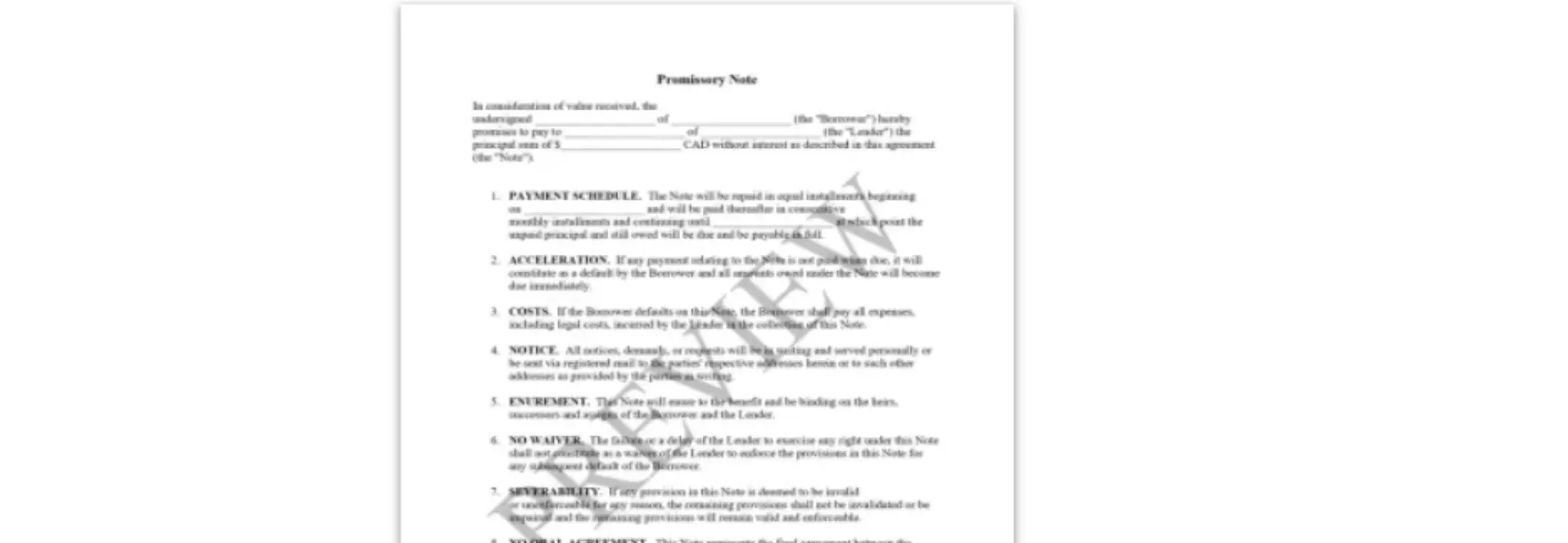
Using professional contract creation tools gives both parties confidence that their financial rights are protected. Using an established Promissory Note template ensures that all mandatory statutory elements are included without missing crucial legal protections. Investing effort into contract preparation guarantees smooth debt administration and simplifies courtroom proceedings if enforcement ever becomes necessary.
How to Create an Enforceable Promissory Note Using Ziji Legal Forms
1. Choose template
Select the Promissory Note template from Ziji Legal Forms designed specifically to comply with Canadian legal standards and federal regulations.
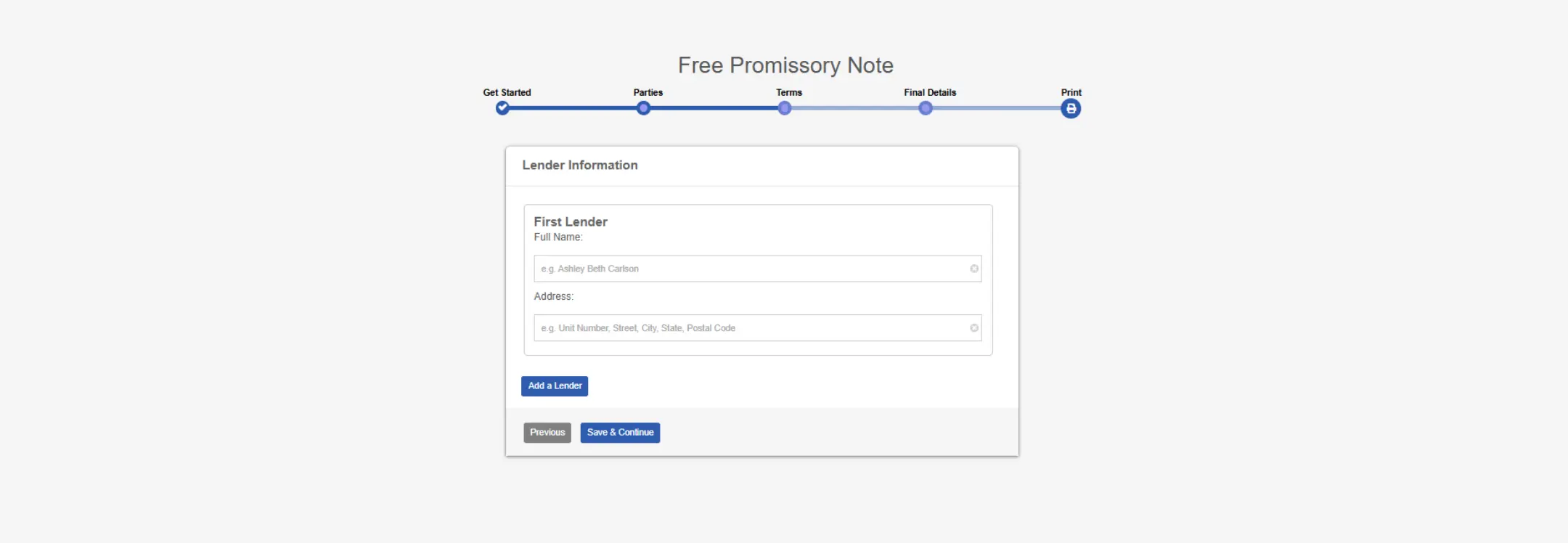
2. Add Party Details
Input the full legal names, physical contact addresses, and official roles of both the borrower and the lender.
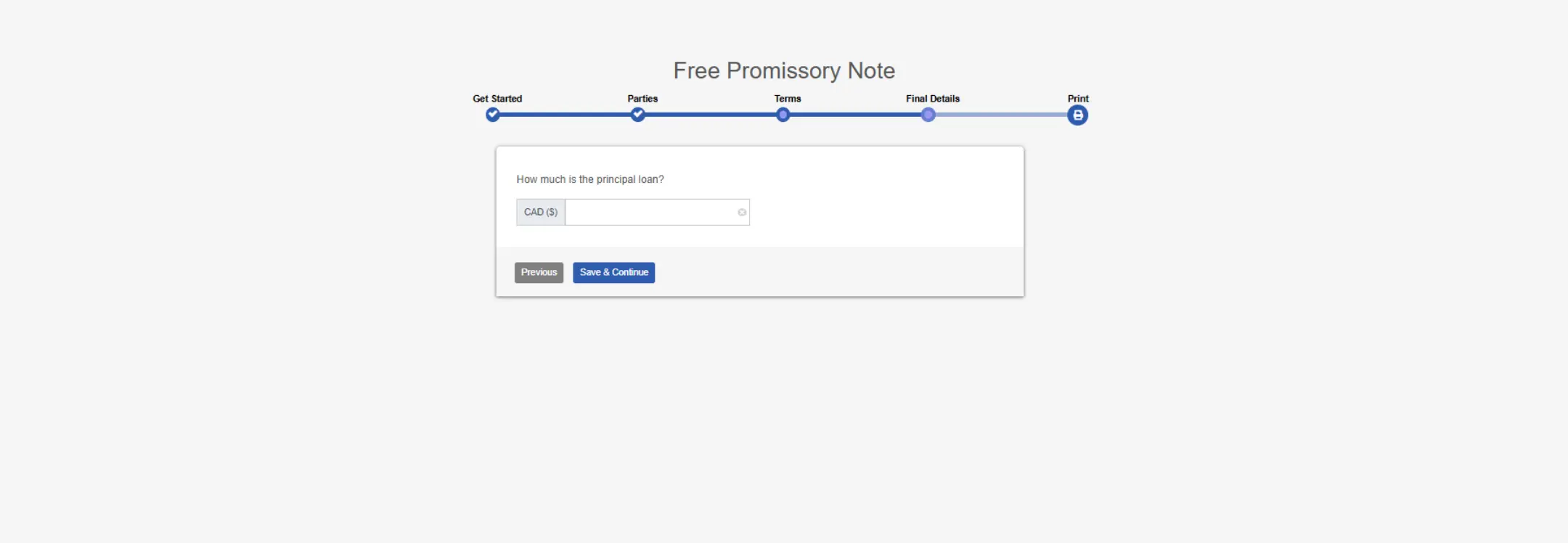
3. Add Term Details
Define the principal loan sum, applicable interest rates, repayment schedule, default terms, and acceleration covenants.
4. Preview and print
Review the generated document for contractual accuracy, then save, print, and sign the finalized Online Promissory Note.
Conclusion: Treat Non Payment as a Planning Issue, Not Just a Crisis
An unpaid debt obligation creates serious legal complications under Canadian commercial law, but strategic preparation minimizes exposure. Understanding default triggers, grace periods, and acceleration clauses empowers parties to navigate financial relationships effectively. Lenders gain access to robust civil recovery options, while borrowers benefit from early negotiation and proactive loan modification. Using clear legal contracts protects capital and prevents unnecessary courtroom litigation. Relying on standardized legal forms guarantees full compliance with Canadian statutory standards. Addressing loan terms carefully transforms potential financial risk into a manageable business process.
Promissory Note FAQs
1. How does a Promissory Note protect lenders and borrowers?
It clearly records the loan amount, repayment obligations, and agreed terms, helping reduce misunderstandings.
2. Who should use a Promissory Note?
Anyone lending or borrowing money can benefit from using a written Promissory Note to document the arrangement.
3. Is collateral required for a Promissory Note?
No. Collateral is optional and is only included when the parties choose to create a secured loan.
4. Should every Promissory Note be notarized?
Many Promissory Notes are legally valid without notarization, although notarizing the document can provide additional reassurance.
5. Can a Promissory Note be modified later?
Yes. The lender and borrower may revise the terms at any time if both parties agree in writing.
6. What jurisdictions are covered by the Ziji Legal Forms Promissory Note?
The Ziji Legal Forms Promissory Note is suitable for use throughout all supported provinces and territories in Canada.
Author
Mandar Sonavane
|
Legal Content Writer at Ziji Legal Forms Inc.
Symbiosis International University
Mandar is a legal content writer specializing in the development of clear, practical, and easy-to-understand legal resources. With a strong focus on legal research, content creation, and plain-language writing, he works closely with our legal professionals to ensure that legal documents and educational materials are accurate, accessible, and user-friendly. At Ziji Legal Forms Inc., Mandar is responsible for researching legal topics, drafting and reviewing content, and helping transform complex legal concepts into straightforward guidance that empowers individuals and businesses to confidently navigate their legal needs.
Reviewed By
Histon Shek
|
General Counsel and Co-Founder at Ziji Legal Forms Inc.
University of Alberta
Histon Shek was called to the Alberta Bar in 2006. He holds a BA in Sociology and Philosophy and an LLB from the University of Alberta. As co-founder of Ziji Legal Forms Inc., he focuses on making legal documents accessible and affordable, overseeing legal integrity and content development.



 Canada
 United States