- In Canada, medical consent relies on cognitive capacity rather than a strict legal age of majority in most jurisdictions.
- Biological and adoptive parents generally share equal decision-making authority unless restricted by a specific court order.
- Relatives and temporary caregivers have no automatic legal right to authorize medical treatment without written delegation.
- Written medical consent forms protect children by preventing administrative delays at hospitals and clinics during emergencies.
- A formal document allows parents to outline exact boundaries for routine and emergency healthcare decisions.
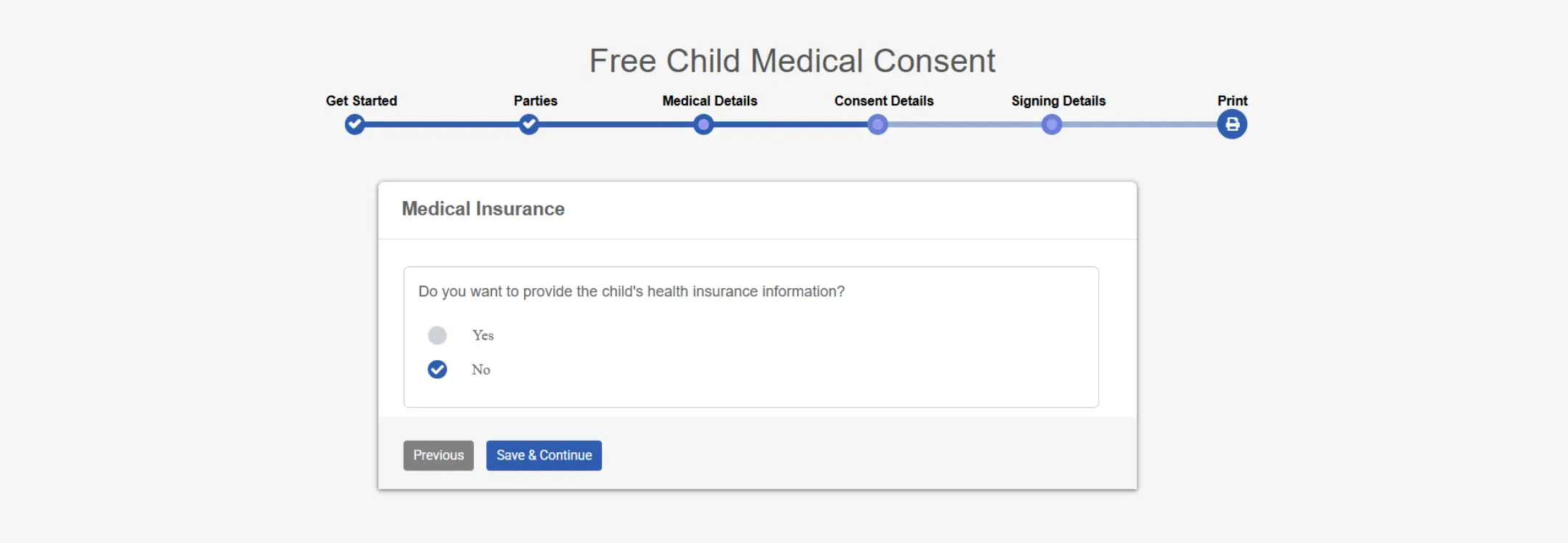
- You can use Ziji Legal Forms' online templates to create a Child Medical Consent Form
Introduction: Navigating the Legalities of Pediatric Healthcare Consent
When a child is temporarily away from home, parents want to know that their medical needs will be handled promptly and legally. In Canada, the rules governing healthcare decisions for minors are unique and require careful navigation. Unlike some jurisdictions where a strict age of majority dictates medical authority, Canadian laws prioritize cognitive capability. When a child traveling without parental supervision requires urgent clinical attention, established legal frameworks in Canada dictate who can authorize treatment.
Except in the province of Quebec, where the legal age of medical consent is generally set at fourteen years, Canadian healthcare providers evaluate minors on a case-by-case basis. This approach, known as the mature minor doctrine, allows capable children to consent to their own treatments without parental involvement. When a minor is assessed and lacks this capacity, a parent or legal guardian must act as the substitute decision-maker. Preparing Online Child Medical Consent Forms in advance is the most secure way to handle these situations.
Parental Status and Legal Decision-Making Rights
The primary responsibility for a child's health rests with their parents under Canadian family law. It is crucial to understand how this authority is distributed between parents in different domestic situations.
Rights of Biological and Adoptive Parents
Biological and adoptive parents possess equal, inherent authority to make important medical decisions for their children. This legal authority is recognized across all Canadian provinces and territories, ensuring that parents can guide their children's physical and emotional development. This power includes consenting to routine checkups, vaccinations, dental work, and surgical interventions. When parents are physically present, they can provide immediate verbal or written consent at the clinic.
However, when parents must travel or leave their children under the care of others, this authority is temporarily suspended unless delegated. In such instances, parents often utilize a Child Medical Consent Forms template to grant temporary decision-making power to a trusted adult. This proactive delegation ensures that the child has continuous protection and access to necessary medical services while away from home.
Situations Requiring Joint Consent from Both Parents
While a single parent can often authorize routine treatments, certain situations demand the consent of both parents. Major surgical procedures, non-essential elective operations, or experimental therapies with significant risks typically require joint authorization. Healthcare providers often seek signatures from both parents to avoid civil disputes. This joint consent serves to protect the healthcare team from potential legal challenges later.
Additionally, separation agreements and parenting plans frequently specify that both parents must consult and agree on major healthcare choices. In these joint-custody or shared-responsibility arrangements, a single parent cannot unilaterally authorize treatment without consulting the other parent. This requirement highlights the need to have clear, mutually signed documents when children travel or stay with third parties.
Circumstances Where a Parent Lacks Healthcare Decision-Making Power
There are specific legal scenarios where a biological parent does not have the authority to make medical decisions for their child. For instance, if a court order grants sole decision-making responsibility to one parent, the non-custodial parent loses the right to consent. In these cases, the clinic will only accept decisions from the authorized parent.
Furthermore, a parent's decision-making power is legally suspended if a child is determined to be a mature minor. If a doctor finds that a teenager fully understands the benefits, risks, and consequences of a treatment, that teenager can consent or refuse care independently. In such instances, parental consent is not legally required, and the teenager's medical records remain entirely confidential.
The Legal Domain of Guardians and Custodians
When parents are absent or unable to care for their children, legal guardians and court-appointed custodians take over the responsibility of managing healthcare needs.
Understanding the Distinction Between Guardianship and Custody
Canadian family law has undergone significant reforms to move away from adversarial language. Under the federal Divorce Act and various provincial family statutes, traditional terms like custody and access have been largely replaced. The law now focuses on the concepts of parenting time, guardianship, and decision-making responsibility. This modern distinction is highly relevant to pediatric healthcare.
Parenting time refers to the physical period a child spends with a parent or caregiver, during which they manage daily routines. Guardianship and decision-making responsibility, however, denote the legal authority to make major, long-term healthcare decisions. A person may have physical care of a child during parenting time without having the legal right to authorize significant medical treatments.
Medical Decision-Making Authority of Court-Appointed Guardians
If parents are deceased, incapacitated, or deemed unfit by a court, a judge will appoint a legal guardian or tutor to protect the minor. These court-appointed guardians assume full parental responsibilities, which include ensuring the child receives adequate medical care, nutrition, and shelter. They act as the primary substitute decision-makers for the child.
In managing these duties, court-appointed guardians must always act in the child's absolute best interests. They are legally empowered to provide consent for surgical procedures, dental work, and psychological therapies. Healthcare providers are bound to honor their decisions just as they would honor those of a biological parent.
Verifying Authority: Crucial Documents Canadian Hospitals Seek
In non-emergency scenarios, Canadian medical institutions must verify the legal identity and authority of anyone accompanying a minor. Hospital staff and clinic administrators are trained to avoid legal liabilities by demanding official proof of custody or guardianship before administering treatment.
To establish this authority, a guardian must present relevant legal documents to the admitting staff. These documents typically include certified copies of court orders, official parenting arrangements, or a signed temporary delegation form. Without these documents, hospital administrators may refuse to proceed with non-emergency treatments until they verify the parental relationship.
Delegated Caregiver Roles and Temporary Medical Authority
Many parents frequently leave their children with temporary caregivers such as babysitters, teachers, coaches, or family friends. It is essential to understand what these caregivers can and cannot legally authorize.
Clear Limits: What Temporary Caregivers Can and Cannot Authorize
A temporary caregiver does not possess inherent legal authority to make medical decisions for a minor. While they are responsible for the child's immediate physical safety, their decision-making power is strictly limited to basic daily care and coordinating first aid.
Without a formal written form, a caregiver cannot consent to routine checkups, elective surgeries, vaccinations, or blood transfusions. If a child falls ill or suffers a non-life-threatening injury, the hospital will delay treatment while trying to contact the parents. To avoid these complications, parents should Create Child Medical Consent Forms to define the exact scope of the caregiver's authority.
Why Having Written Authorization is Paramount
Relying on verbal agreements when leaving children with others is highly risky. Written authorization provides clear, undisputed proof of delegated authority, ensuring that medical staff can act without hesitation.
Extended Family Members Acting in Place of Parents
When parents are traveling or working, they often rely on grandparents, aunts, uncles, or older siblings to look after their children.
Healthcare Rights of Grandparents, Aunts, Uncles, and Siblings
Under Canadian law, close relatives do not have any default legal standing to make medical decisions for a minor. Even though grandparents and adult siblings are close family members, they are considered third parties by healthcare professionals. They cannot sign medical intake forms or authorize treatments unless they have been explicitly granted written permission.
This lack of automatic authority is especially critical when a child is traveling across borders or provinces. For international travel, border officials frequently request proof that the accompanying relative has permission to supervise and seek care for the child. Having a written document prevents complications not only at the hospital but also at international border crossings.
General Misconceptions Surrounding Automatic Relative Consent
Many families mistakenly believe that a grandparent or aunt can automatically consent to a child's medical care due to their biological relationship. This misconception can lead to severe issues if a child requires urgent but non-emergency care while staying with relatives. Hospitals must prioritize patient safety and legal compliance, meaning they will not accept verbal consent from an unauthorized relative.
When a medical dispute arises, healthcare practitioners must follow a strict hierarchy of substitute decision-makers established by provincial legislation. If a parent is unavailable and there is no written consent, the hospital must systematically contact the next available legal representative. This administrative search can consume valuable time, causing the child to wait in discomfort for necessary treatments.
Bridging the Gap: Formalizing Caregiver Rights with Written Forms
To prevent these stressful scenarios, parents must formalize their temporary arrangements before leaving their children with relatives. Utilizing a Child Medical Consent Forms Canada document bridges this legal gap. This written form clearly communicates the parents' intent to delegate their authority, allowing the relative to make necessary medical choices without delay.
A properly drafted form provides immediate clarity to any triage nurse or admitting physician. It outlines the specific healthcare actions the relative is authorized to take, ensuring that there are no questions about the validity of the consent. By formalizing this relationship, parents protect both their child and their family members from legal and medical gridlock.
Medical Crises and the Limits of Implied Consent
The law provides special exceptions for life-threatening emergencies, but these exceptions are narrow and should not be relied upon for general care.
Critical Scenarios Where Physicians Can Act Without Direct Consent
In extreme situations where a child's life is in imminent danger, Canadian doctors are legally authorized to provide immediate medical treatment without waiting for consent. This principle of implied consent is designed to ensure that life-saving interventions, such as emergency surgeries or blood transfusions, are not delayed by administrative barriers.
For this emergency exception to apply, the attending medical practitioner must believe that withholding treatment would endanger the life or seriously impair the health of the minor. In such critical moments, the law recognizes that saving the child's life is the paramount concern, overriding the typical requirement for prior parental consent.
Understanding the Statutory Boundaries of Implied Consent
The authority granted under implied consent is strictly limited to procedures necessary to address the immediate threat to the child's life or health. Doctors cannot use this emergency exception to perform diagnostic tests or routine procedures that are not directly related to the critical crisis. As soon as the child is stable and the immediate danger has passed, standard consent requirements apply once more.
Furthermore, physicians must respect any known, pre-existing wishes of a capable minor or their legal guardians. If a doctor has reasonable grounds to believe that a parent previously refused a specific treatment based on religious or personal beliefs, they cannot proceed under implied consent. This statutory limitation highlights that implied consent is not a blanket authorization for clinical interventions.
The Practical Risks of Relying Entirely on Emergency Exceptions
Relying solely on emergency exceptions is highly risky because many urgent health issues do not meet the legal threshold of a life-threatening crisis. A chipped tooth, complex bone fractures and dislocated joints are painful and require prompt care, but they are not typically considered imminent threats to life. In these scenarios, without a signed consent form, treatment will be delayed while hospital staff attempt to track down the parents.
These delays can cause unnecessary suffering for the child and immense stress for the caregiver. By proactively completing a consent form, parents ensure their child has access to immediate, comfortable care for any injury or illness, regardless of how minor it may be. When resolving who can give consent, Child Medical Consent Forms are the single most effective legal instrument for family protection.
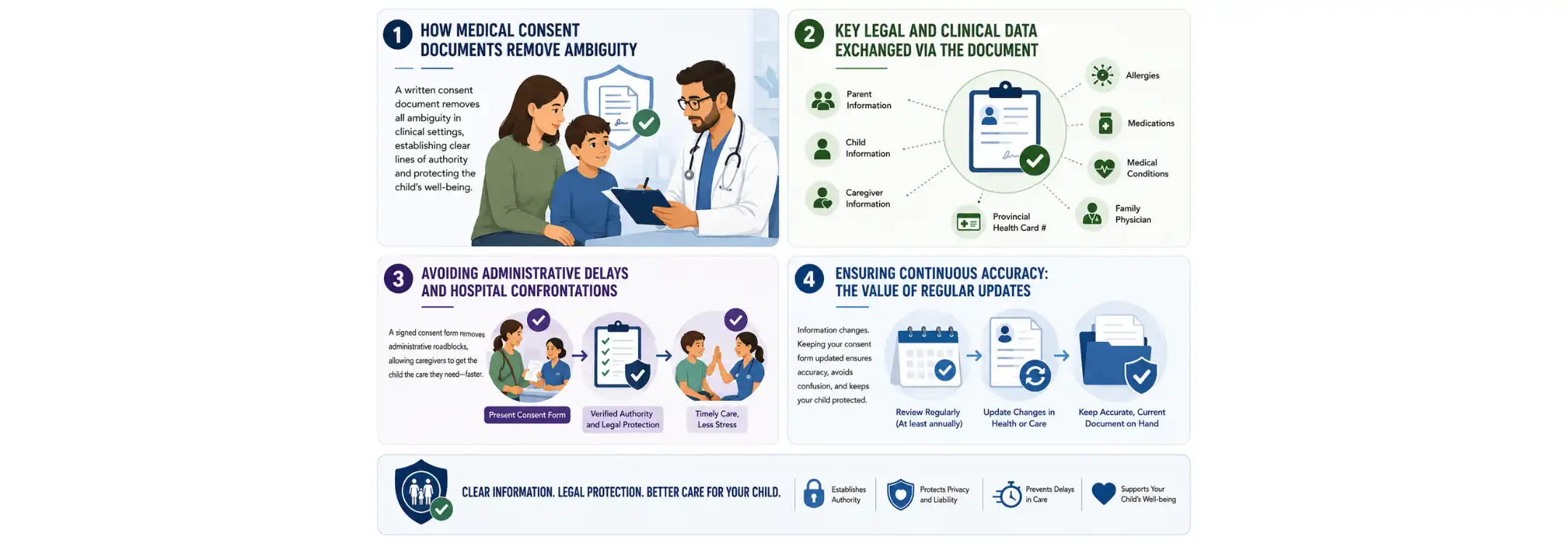
Restoring Clarity: How Medical Consent Documents Remove Ambiguity
A written consent document removes all ambiguity in clinical settings, establishing clear lines of authority and protecting the child's well-being.
Key Legal and Clinical Data Exchanged via the Document
A comprehensive medical consent form serves as a central source of vital legal and medical details. The form contains the full legal names and contact details of the parents, the child, and the temporary caregiver. It also lists critical healthcare information, including the child's provincial health card number, known allergies, current medications, existing medical conditions, and family physician details.
By consolidating this essential information into a single document, parents ensure that caregivers have immediate access to the child's medical history. This is particularly valuable in stressful hospital environments where a caregiver might struggle to recall specific details about the child's allergies or medications. The form acts as both a legal authorization and a clinical guide.
Avoiding Administrative Delays and Hospital Confrontations
When a caregiver brings a child to a clinic with a signed consent form, it eliminates administrative obstacles. Admitting staff can quickly verify that the parents have legally authorized the caregiver to make decisions, allowing them to proceed with treatment. This proactive step prevents stressful disputes and ensures the child receives care as quickly as possible.
Medical institutions must follow strict privacy and liability protocols under provincial health legislation. A formal written consent document provides the hospital with the necessary legal protection to share health information and administer treatments. It reassures healthcare practitioners that they are acting within the boundaries of the law, preventing bureaucratic gridlock.
Ensuring Continuous Accuracy: The Value of Regular Updates
Medical conditions, contact numbers, and insurance policies change frequently, making it vital to keep consent forms updated. An outdated form with old contact numbers or incorrect health details can lead to confusion and delays during an emergency. Parents should review and update their consent forms annually, or whenever there is a major change in the child's health or caregiving arrangements.
Regularly updating the document also ensures that the named caregiver remains the most appropriate person to make decisions. If family relationships or living arrangements shift, the consent form must reflect these changes to avoid disputes between different family members. Keeping a current, accurate form on hand is a simple but vital part of family planning.









 Canada
 United States