TL;DR- Canadian provincial laws utilize capacity assessments rather than strict chronological ages to determine when a minor can consent to their own healthcare.
- Emergency medical treatment can only proceed without consent when there is an imminent threat to the child's life or bodily integrity.
- Travel across domestic or international borders requires a notarized travel consent letter to prevent delays or entry denials.
- Co-parents must navigate the joint decision-making responsibilities defined under the federal Divorce Act to delegate medical authority.
- Proactively preparing online legal forms helps families avoid administrative delays in schools, daycares, and hospitals.
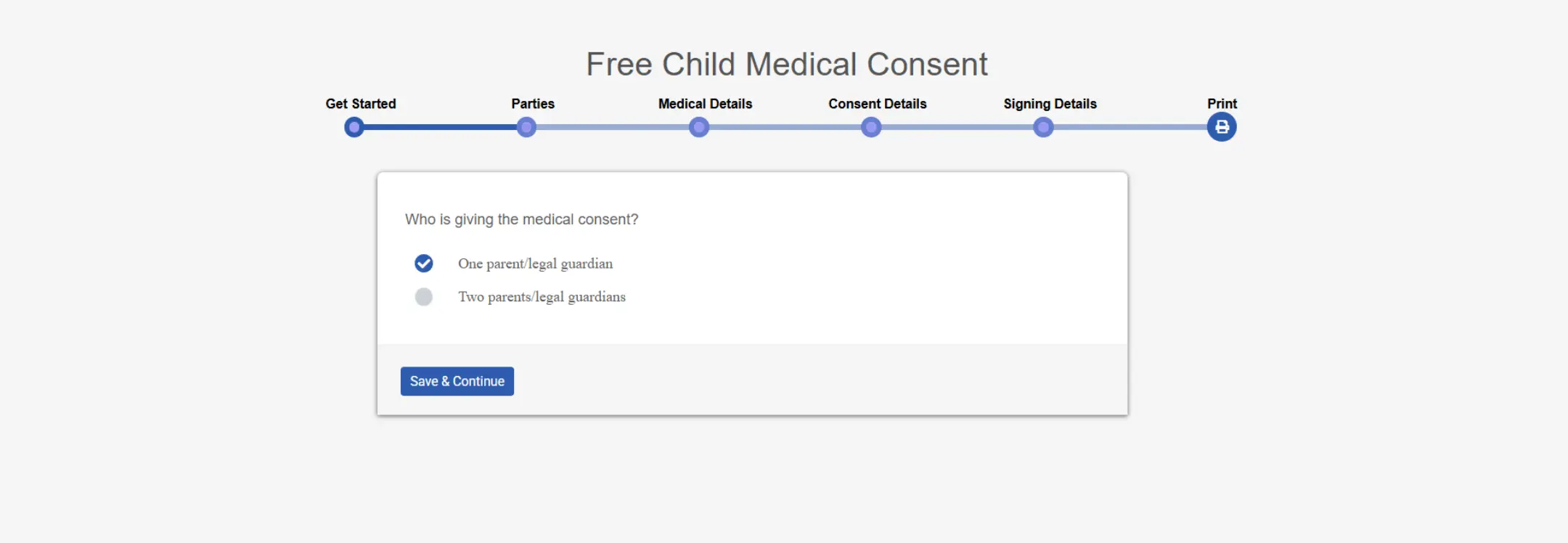
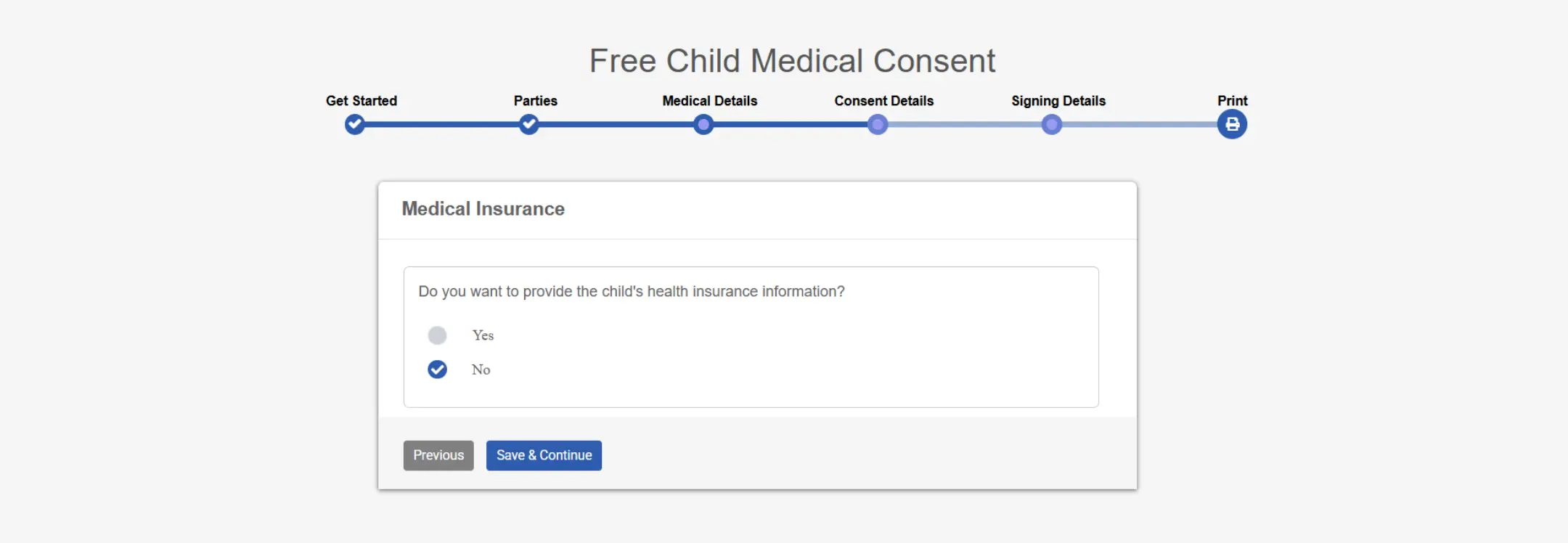
- A walkthrough on how to create a custom Child Medical Consent Forms using Ziji Legal Forms.
Why Guardians Frequently Misunderstand the Purpose of Medical Authorization
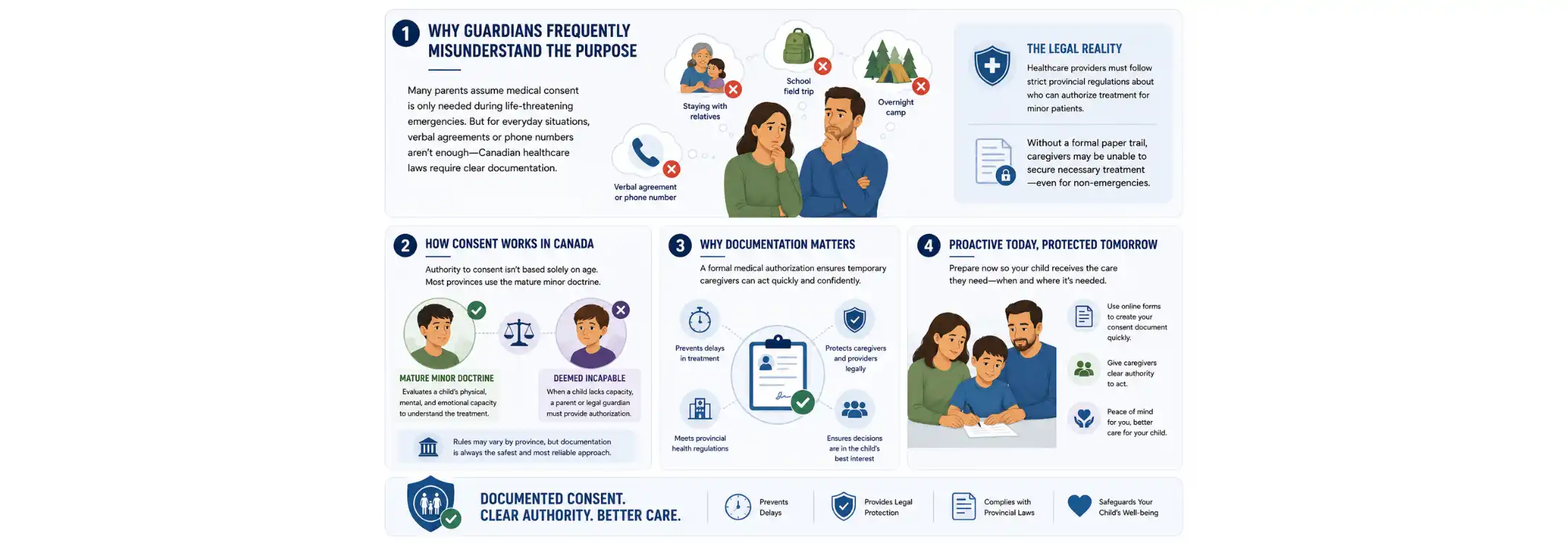
Many Canadian parents mistakenly assume that medical consent is only a concern during catastrophic, life-threatening crises. They believe that if a child is staying with a close relative, attending a local school field trip, or spending the weekend at an overnight camp, a verbal agreement or an emergency phone number is sufficient. However, the legal reality of healthcare across Canadian provinces is highly structured and demands clear documentation. Healthcare providers operate under strict provincial regulations that govern who is authorized to make medical decisions for minor patients. Without a formal paper trail, temporary caregivers and family members can find themselves unable to secure necessary treatment during non-emergency situations, which can lead to painful delays in clinical care.
In Canada, the authority to consent to medical care is not determined solely by a child's age. Instead, most provinces utilize the mature minor doctrine, which evaluates a child's physical, mental, and emotional capacity to understand a proposed treatment. When a child is deemed incapable of consenting, a parent or legal guardian must provide authorization on their behalf. Proactively preparing a formal document ensures that temporary caregivers have the explicit authority to act in the best interests of the child. Utilizing Online Child Medical Consent Forms allows families to quickly draft these protective documents, ensuring that administrative delays do not compromise a child's health.
Scenario 1: Critical Situations When Parents Cannot Be Reached
Unforeseen accidents can occur at any moment, and when parents are unreachable, having a clear legal document is essential. Under Canadian law, medical practitioners cannot simply accept the word of an unauthorized adult during a healthcare crisis.
Circumstances Requiring Urgent Clinical Intervention
Under provincial laws across Canada, healthcare practitioners can proceed with emergency medical treatment without parental consent only if there is an imminent threat to the child's life or health. In cases of severe trauma, such as a serious car accident, the law implies consent to the extent necessary to stabilize the minor. However, if the injury is painful but not immediately life-threatening, such as a sprains or bruises or even minor burns, clinical teams must secure authorized consent before performing diagnostic procedures or administering non-emergency treatments. This legal boundary can leave a child waiting hours in severe discomfort while hospital staff attempt to contact the legal guardians.
This delay is a direct consequence of the legal requirement for informed consent, which mandates that the authorizing party understand the risks and benefits of the procedure. While the above situations might seem like a medical emergency to a parent, a hospital triage team must view it as a stable injury that requires formal authorization. A pre-authorized medical consent form bridges this gap, allowing a designated caregiver to approve necessary diagnostics, pain management, and non-invasive treatments without waiting for parents to respond. This document ensures that the child receives prompt, compassionate care when they need it most.
The Practical Limitations of Oral Directives
Many parents believe that they can easily solve any communication gap by providing verbal consent over a telephone call. In practice, Canadian healthcare institutions are highly risk-averse and frequently reject verbal authorizations because they are difficult to verify. Triage nurses and hospital administrators cannot easily verify the identity or the legal custody rights of a caller over the phone. An oral statement cannot provide legally binding proof of authorization, leaving the treating physician vulnerable to civil claims if a parent later disputes the treatment. Written documentation remains the gold standard for healthcare providers seeking to minimize their liability.
Because physicians risk facing disciplinary action or lawsuits for treating a minor without valid consent, hospital risk management policies strictly enforce written documentation rules. A signed, written instrument provides immediate, verifiable proof of delegated authority that clinical teams can trust. This level of legal clarity is particularly important in Canada, where medical practitioners must carefully document the consent process to protect their licenses. Proactively establishing written permissions using Child Medical Consent Forms ensures that caregivers have the verifiable authority needed to navigate hospital administration during a crisis.
Typical Urgent Scenarios in Daily Life
Consider a situation where a child is staying with a babysitter and suffers a deep cut after falling on a playground. While the wound requires professional stitches to heal properly and prevent infection, it does not constitute an imminent threat to life that would trigger emergency implied consent. In this scenario, a clinical team will hesitate to proceed without a signed document showing that the babysitter has the right to authorize care. Similar challenges arise when a child experiences a severe asthma attack or a sudden high fever while under temporary supervision.
Without a completed Child Medical Consent Forms Canada document, caregivers may find themselves turned away from walk-in clinics or forced to wait in emergency rooms while staff attempt to locate the parents. This situation causes unnecessary distress for both the child and the caregiver, who is left feeling helpless during a stressful moment. Having a signed form on hand ensures that the present adult can immediately authorize minor medical procedures, prescription medications, or diagnostic tests. This simple precaution guarantees that common childhood injuries are treated swiftly, keeping the child comfortable and secure.
Scenario 2: Daycare Programs, Schools, and Group Outings
Schools, daycares, and athletic clubs are responsible for children for a significant portion of the day, making structured medical consent protocols a top priority for educational administrators.
Excursions and Extended Overnight Retreats
When students participate in school field trips or attend overnight summer camps, they are often located far from their parents and local healthcare facilities. If a child develops an acute ear infection, or requires prescription adjustments during an outdoor retreat, camp directors must have the legal authority to seek care. Because these excursions can cross provincial boundaries, camp staff must carry written consent forms that comply with local healthcare regulations. Without these forms, clinics may refuse to treat a student for non-emergency conditions, leaving camp staff in a difficult position.
Educational institutions across Canada routinely mandate that parents complete detailed medical consent forms before their children are allowed to participate in any off-campus travel. These documents must detail the child's health history, insurance details, and authorized caregivers to ensure complete coverage during the trip. This administrative requirement protects the school board from liability while ensuring that teachers can act quickly if a student falls ill. By providing a comprehensive medical consent document, parents can ensure that their children are fully protected during extended retreats.
Organized Athletic Tournaments and Campus Events
Organized sports are a frequent source of minor physical trauma, including sprains, dental fractures, and concussions. When a minor participates in an athletic tournament, coaching staff must have the immediate authority to secure professional medical evaluations. If an athlete suffers a concussion, a prompt clinical assessment is critical to prevent long-term neurological complications. A written medical consent form allows the coach to transport the athlete to a nearby clinic and authorize immediate diagnostics, which is vital when games occur in different municipalities.
In many cases, athletic leagues operate under detailed risk management policies that prohibit players from stepping onto the field without a signed medical release. These forms ensure that if a dental fracture or joint injury occurs, coaching staff can immediately coordinate with local dental clinics or hospitals. Having a structured document on file minimizes the time spent verifying parental relationships during a sports crisis, allowing medical teams to focus entirely on the athlete. This rapid response is essential for minimizing the long-term impact of sports-related injuries.
Educational Board Directives and Administrative Rules
Daycare facilities and public schools are bound by strict safety guidelines that prohibit employees from administering any medication to a student without written parental authorization. This rule applies not only to complex prescription treatments but also to everyday items like asthma inhalers, allergy medications, and over-the-counter fever reducers. School boards enforce these rules to eliminate the risk of adverse drug reactions, dosage errors, or medical liability on campus. Consequently, parents must provide detailed, written instructions and signed authorizations at the start of every academic term.
Utilizing a professional Child Medical Consent Forms template allows families to supply these critical, compliant records quickly and easily to school administrators. These templates provide a structured format that covers all necessary medical details, ensuring that school staff can administer daily medications without legal hesitation. This organization is particularly important for children with chronic conditions like asthma, diabetes, or severe allergies, who require consistent access to medication. Proactively providing this documentation ensures a safe, uninterrupted educational experience for the child.
Scenario 3: Border Crossings and Travel Without Guardians
Traveling without parents introduces unique legal challenges, particularly when crossing provincial or international borders where immigration officials are on high alert for child welfare concerns.
Crossing Provincial Boundaries within Canada
Parents often assume that domestic travel within Canada does not require formal paperwork because of the national healthcare system. However, provincial health plans do not always provide seamless coverage across borders, and services like ambulance transport or out-of-hospital prescriptions are often not covered. Furthermore, if a child requires non-emergency medical care in another province, local hospitals still require valid consent to administer treatment. A child traveling with a hockey team or visiting relatives in another province should always carry a signed medical consent document.
This precaution ensures that out-of-province medical staff can verify the accompanying adult's authority to make healthcare decisions without delay. Each province operates under its own specific healthcare legislation, and local clinics must adhere to their provincial consent rules. Having a localized consent document helps avoid administrative confusion and ensures that the child receives care in accordance with local regulations. It also provides peace of mind to the accompanying relative, who can focus on the trip rather than worrying about potential medical roadblocks.
International Flights and Foreign Entry Demands
Crossing international borders without both legal guardians triggers intense scrutiny from border security officials worldwide. Immigration authorities are trained to look for signs of international child abduction, and they frequently demand proof of travel authorization. The Canadian government strongly recommends that any child under the age of nineteen traveling abroad carry a signed travel consent letter. If an international medical emergency occurs, foreign hospitals will require verified parental consent before performing any surgical procedures.
A notarized medical consent form is the most reliable way to satisfy both border guards and foreign medical practitioners. Border officials have the right to deny entry or exit if they suspect a minor is traveling without proper parental permission. Carrying an original, notarized document ensures that the authenticity of the parental signatures is legally verified, minimizing the risk of travel delays. This document is a vital safety measure for any child participating in international school exchanges, sports competitions, or family vacations.
Why Insurance Policies Do Not Grant Treatment Authority
A common misconception is that a comprehensive travel insurance policy is sufficient to handle any medical situation abroad. While travel medical insurance is essential to cover the high costs of international care, it does not grant legal authority to make clinical decisions. Furthermore, travel insurance policies are subject to complex regulations, such as stability clauses that can invalidate coverage for pre-existing conditions. An insurance representative cannot sign a surgical release form or authorize an emergency blood transfusion for a minor child.
Only a designated caregiver armed with a valid medical consent form can provide the legal authorization that foreign physicians require to proceed with treatment. Relying solely on insurance leaves the child vulnerable to delayed care while doctors attempt to secure consent from parents who may be in a different time zone. A signed consent document acts as a companion to travel insurance, ensuring that financial coverage and treatment authorization are both securely in place. This combination is the only way to guarantee comprehensive protection during international travel.
Scenario 4: Delegation to Professional Child Caretakers and Sitters
Nannies, babysitters, and other temporary caregivers need clear legal boundaries to perform their duties safely and effectively.
Empowering Temporary Caregivers for Daily Needs
Professional child caretakers and long-term nannies are often responsible for taking children to routine healthcare appointments, such as dental checkups or annual vaccinations. Under Canadian healthcare laws, medical practitioners must confirm that the adult presenting the child has the legal authority to consent to these elective procedures. A written consent document allows the nanny to act as an authorized agent, ensuring that routine appointments proceed without administrative friction. Without this document, clinics are legally obligated to turn the caregiver away, disrupting the child's healthcare schedule and creating unnecessary scheduling conflicts for busy parents.
This administrative requirement is designed to protect the minor's privacy and ensure that medical decisions are made by authorized individuals. Healthcare providers cannot simply assume that a babysitter has the parents' permission to authorize vaccinations or diagnostic tests. By providing a formal consent document, parents can delegate this authority clearly, allowing the caregiver to manage routine health needs efficiently. This delegation is particularly helpful for families with demanding work schedules, as it ensures that the child's healthcare remains a priority.
Defining the Scope of Permitted Medical Decisions
A well-structured consent form outlines the exact boundaries of a temporary caregiver's decision-making power. Parents can choose to limit the caregiver's authority strictly to emergency stabilization, or they can expand it to include routine dental work, diagnostic imaging, and general checkups. Specifying these parameters in writing prevents any confusion regarding what treatments the caregiver is allowed to approve. It also ensures that the caregiver does not authorize major, non-essential medical procedures without first discussing them with the parents.
This division of responsibility keeps parents in control of major healthcare decisions while allowing caregivers to handle daily needs. For example, parents may want to restrict the administration of specific medications or require that they be contacted before any sedative is used. Highlighting these restrictions in the medical consent document ensures that the caregiver can act confidently within the permitted boundaries. It also prevents misunderstandings between the parents and the caregiver, fostering a more secure and collaborative caregiving environment.
Legal Safeguards for Families and Staff Alike
Using formal documentation protects both the parents and the temporary caregivers from legal vulnerability. If a nanny must authorize a medical procedure during a sudden illness, having a signed consent form protects them from claims that they acted unlawfully or exceeded their role. For parents, the form ensures that the caregiver cannot make major, unauthorized changes to the child's treatment plan. This legal clarity is particularly important in Canada, where medical practitioners are highly sensitive to liability issues.
In the absence of a written document, a caregiver who authorizes treatment could face personal liability or accusations of negligence if the child experiences complications. Conversely, parents could face unexpected medical bills for procedures they did not personally approve. Establishing a formal agreement using Child Medical Consent Forms eliminates these risks, providing a clear legal framework that protects all parties. This simple step is an essential part of hiring a professional caregiver, ensuring that the child's health is managed safely and legally.
Scenario 5: Shared Parenting and Custody Divisions
Co-parenting after a separation or divorce introduces complex legal rules regarding who can authorize medical care for a minor child.
Identifying Limitations in Unilateral Decision Making
Under the federal Divorce Act, major healthcare decisions are classified as decision-making responsibilities, which were formerly referred to as custody. Unless a court order grants sole decision-making authority to one parent, both parents retain equal rights to make major medical decisions for their children. This joint responsibility means that one parent cannot unilaterally delegate medical authority to a third party without the other's consent. Medical practitioners in Canada are increasingly cautious about family law disputes and may refuse to accept a consent form signed by only one parent if they suspect a custody disagreement exists.
If a medical provider administers treatment based on the consent of only one parent during a dispute, they could face complaints or legal challenges from the other parent. To avoid these complications, healthcare clinics often require that both parents sign any medical consent forms before treatment is administered. This rule ensures that both guardians are in agreement regarding the child's care, preventing unilateral decisions that could lead to litigation. Understanding these legal limitations is essential for separated parents seeking to manage their children's healthcare smoothly.
Utilizing Written Consent to Mitigate Disputes
A mutually executed medical consent form is an effective tool for preventing post-treatment disputes between separated parents. By signing a joint document, both parents formally agree on who can authorize medical care and under what circumstances. This written record prevents claims that one parent acted behind the other's back or made decisions that went against the child's best interests. It also provides clear, undisputed guidance to temporary caregivers, ensuring they can act without fear of being caught in the middle of a parental conflict.
In many cases, the consent document can be integrated into the family's broader parenting plan or separation agreement. This integration ensures that medical decision-making is handled in a consistent, legally binding manner that aligns with court orders. By establishing these guidelines proactively, co-parents can minimize the potential for conflict and ensure that their child's healthcare is managed cooperatively. This written agreement is a powerful way to prioritize the child's physical and emotional well-being.
Managing Critical Incidents Amid Ongoing Family Disagreements
In high-conflict custody situations, a sudden medical issue can easily escalate into a major legal dispute. If a child requires immediate treatment while in the care of a third party, a pre-authorized consent form signed by both parents provides clear direction to physicians. This document prevents delays that could occur if one parent attempts to block a necessary procedure. By relying on a verified, written agreement, healthcare providers can focus entirely on patient care rather than navigating parental disputes.
If a parent refuses to consent to necessary medical treatment, the other parent or the healthcare provider may be forced to seek a court order to proceed. This legal process is time-consuming and stressful, highlighting the importance of having a pre-existing agreement in place. A signed medical consent form provides immediate clarity, ensuring that the child's health is not compromised by parental disagreements. Proactively establishing these boundaries is a critical way to prioritize a child's health during a difficult separation.
Scenario 6: Extended Separation and Temporary Custody Arrangements
Long-term parental absences, whether due to work or family circumstances, require a robust approach to delegating childcare responsibilities.
Professional Relocation and Overseas Work Terms
In today's global economy, many parents must travel abroad for extended periods due to military deployments, corporate relocations, or humanitarian assignments. During these long absences, children are often left under the care of a designated guardian or a close relative. Because parents may reside in different time zones with limited communication, real-time consultation during a medical crisis is often impossible. A formal medical consent document is indispensable in these situations, granting the temporary guardian full authority to manage the child's ongoing health needs, including prescription renewals, specialized therapy sessions, and dental treatments.
Without a written document, the temporary guardian may face significant hurdles when attempting to enroll the child in a local school or register them with a new family physician. Many healthcare providers will refuse to establish a relationship with a minor patient without proof of authorized guardianship or medical consent. Proactively creating a formal consent document ensures that the child's healthcare transition is seamless, preventing gaps in treatment. This planning is essential for protecting the child's health and well-being during extended parental absences.
Prolonged Residencies with Extended Family Members
It is common for children to spend summer vacations or academic semesters staying with grandparents, aunts, or uncles. While these arrangements are built on trust, Canadian healthcare providers cannot legally recognize informal familial relationships for consent purposes. A hospital will not accept a grandparent's signature for a non-emergency surgical procedure or diagnostic test without documented authorization. Securing a formal child medical consent document before the stay begins ensures that relatives can seamlessly navigate local clinics and secure necessary care.
This proactive step prevents stressful administrative roadblocks and guarantees that the child's healthcare remains uninterrupted. Even close family members must be legally authorized to act as substitute decision-makers if the child lacks the capacity to consent. By executing a formal consent document, parents provide their relatives with the legal tools required to manage routine and emergency medical situations confidently. This preparation is a vital part of planning any extended stay with extended family members.
The Dangers of Relying on Verbal Agreements
Relying on informal, verbal agreements for long-term childcare is highly risky for both parents and caregivers. If a major medical issue arises, a verbal agreement cannot be verified by healthcare providers, leaving caregivers unable to authorize critical care. Furthermore, child welfare authorities may intervene if they discover a minor is living with an adult who lacks legal decision-making authority. Formalizing the arrangement with a written document ensures that the caregiver's temporary role is legally recognized, protecting the child from administrative delays.
For non-urgent medical care, clinics must confirm who has the legal authority to consent and the absence of documentation can delay treatment. A signed consent document provides immediate, written proof of the caregiver's authority, preventing any misunderstandings with medical or legal authorities. This document is a simple yet powerful way to safeguard the child's well-being and protect the caregiver from legal jeopardy. Proactively using a structured template is the safest way to manage extended separations.
Draft Your Own Documents with Ziji Legal Forms
Drafting a legally binding document is simple when using the intuitive, step-by-step drafting tools provided by Ziji Legal Forms.
Step 1: Select the Proper Form Template
Step 2: Identify the Involved Parties
The user enters the full legal names, physical addresses, and contact details for the parents, children, and appointed caregivers.
Step 3: Detail the Child’s Health History
The user inputs critical medical data, including known allergies, current prescriptions, provincial health card details, and primary physician contacts.
Step 4: Outline the Scope of Authority
The user specifies whether the caregiver can authorize emergency treatment, routine care, or specific medical procedures with explicit exclusions.
Step 5: Review, Execute, and Print the Form
The user previews the completed document for accuracy, prints the final version, and signs it before a witness or notary public.
Customizing Document Options for Diverse Circumstances
The Ziji platform offers flexible customization options that allow families to tailor documents to their exact needs. Parents can establish precise start and end dates, appoint multiple alternative caregivers, and detail specific cultural or religious healthcare preferences. This level of detail is particularly valuable for addressing complex family arrangements, such as shared parenting agreements, athletic travel schedules, or long-term family stays. By ensuring that every document is precise and legally robust, the platform helps families protect their children with absolute confidence. Utilizing a trusted online service is the most efficient way to Create Child Medical Consent Forms that stand up to legal scrutiny.
Concluding Thoughts: Guarantee Peace of Mind with Proper Legal Records
Securing a proper medical consent document is an essential step in protecting minor children during parental absences. By formalizing authorization, parents eliminate the legal ambiguities that often delay critical healthcare interventions in daycares, camps, and travel settings. Utilizing a structured template ensures that all provincial legal requirements and medical details are accurately recorded and easily accessible. Ultimately, these documents provide temporary caregivers with the clear legal standing necessary to act swiftly and decisively in a crisis. Taking a few moments to establish this written authority offers invaluable peace of mind for families across Canada.
Child Medical Consent FAQs
1. What does a Child Medical Consent do?
A Child Medical Consent authorizes a trusted adult to approve medical treatment for a child when the parents or legal guardians are unavailable.
2. Who should have a Child Medical Consent?
Parents or legal guardians who expect another adult to care for their child should consider preparing a Child Medical Consent.
3. Who can be appointed to make medical decisions?
Any trusted adult aged 18 or older may be authorized to make medical decisions on the child's behalf.
4. Should a Child Medical Consent be notarized?
Although not generally required by law, notarization helps verify the document and may make it more readily accepted.
5. How long does a Child Medical Consent remain valid?
It remains valid for the period specified in the document or until it is revoked by the parent or legal guardian.
6. Where can the Ziji Legal Forms Child Medical Consent be used?
The Ziji Legal Forms Child Medical Consent is available for use throughout the supported Canadian jurisdictions.
Author
Mandar Sonavane
|
Legal Content Writer at Ziji Legal Forms Inc.
Symbiosis International University
Mandar is a legal content writer specializing in the development of clear, practical, and easy-to-understand legal resources. With a strong focus on legal research, content creation, and plain-language writing, he works closely with our legal professionals to ensure that legal documents and educational materials are accurate, accessible, and user-friendly. At Ziji Legal Forms Inc., Mandar is responsible for researching legal topics, drafting and reviewing content, and helping transform complex legal concepts into straightforward guidance that empowers individuals and businesses to confidently navigate their legal needs.
Reviewed By
Histon Shek
|
General Counsel and Co-Founder at Ziji Legal Forms Inc.
University of Alberta
Histon Shek was called to the Alberta Bar in 2006. He holds a BA in Sociology and Philosophy and an LLB from the University of Alberta. As co-founder of Ziji Legal Forms Inc., he focuses on making legal documents accessible and affordable, overseeing legal integrity and content development.








 Canada
 United States