TL;DR
- Establishing clear Payment Terms in Service Agreement documents protects business cash flow and prevents invoice collection delays.
- Under Canadian federal law, late interest provisions must explicitly state the annual interest rate to remain enforceable above five percent per year.
- Canadian service providers earning over thirty thousand dollars must register for GST or HST and include tax details on commercial invoices.
- Structured payment schedules tied to concrete project deliverables ensure mutual clarity for both service providers and clients.
- Using a customized Ziji Legal Forms Service Agreement template allows businesses to draft legally compliant contracts quickly.
Introduction
Commercial relationships across Canada depend on clear financial agreements established before work begins. A formal contract defines how services are priced, billed, and collected throughout a commercial project. Establishing thorough Payment Terms in Service Agreement documents prevents misunderstandings and protects ongoing operational cash flow.
In Canada, commercial service contracts must conform to federal statutes and provincial common law principles. Service providers need to balance steady business revenue with strict legal compliance. Vague payment provisions expose companies to financial losses and legal recovery hurdles. Drafted correctly, explicit Service Agreement Clauses build client trust and ensure enforceability if invoices go unpaid.
Why Poor Payment Terms Cause Problems
Unclear payment provisions present major operational risks for growing companies. When a contract lacks precise payment terms, service providers face extended collection cycles and higher administrative overhead. Unpredictable revenue streams make cash flow forecasting and payroll management difficult.
Vague payment terms also weaken your legal position during invoice disputes. Clients may delay payments without fearing contractual consequences if due dates remain loose. Recovering unpaid amounts without established terms requires time-consuming collection efforts or costly civil litigation.
Misaligned Expectations and Lack of Penalties
Disagreements arise when vendors and clients hold differing assumptions about payment timelines. A service provider may expect immediate payment upon submitting work, while a client assumes a thirty day review period. Without formal written terms, projects stall while parties argue over expectations.
Failing to set clear late penalties leaves service providers without leverage. Under Canadian contract law, vendors cannot add late fees after contract execution. Courts reject unilateral interest charges added to invoices if the original agreement was silent. Without valid penalty clauses, businesses must rely on statutory court interest rates that rarely cover collection expenses.
Choosing the Right Fee Structure
Selecting a suitable pricing model is a crucial step when drafting an Online Service Agreement. The fee structure determines how financial risk is shared between the vendor and the client. Different commercial projects require specific payment arrangements to remain fair and profitable. Choosing the right fee model protects profit margins while offering clear value to buyers.
Fixed Fee vs Hourly vs Retainer
Fixed fee contracts set a definitive price for a defined scope of work. This model offers price certainty for clients, but places scope expansion risk on the service provider. Fixed pricing works best when project requirements are fully understood from the start.
Hourly billing charges clients for the exact time spent delivering services. This structure protects vendors against unexpected scope changes, but can create budget uncertainty for clients. Hourly billing requires accurate time logs and detailed invoicing records.Retainer agreements establish recurring fees for ongoing service access or dedicated operational capacity.
Retainers deliver predictable cash flow for vendors and priority support for clients. Combining retainer models with explicit scope boundaries prevents work overload while securing recurring income.
How to Structure Payment Schedules That Actually Work
Designing effective payment schedules requires balancing vendor capital needs with client security. Good schedules divide total project costs into manageable portions spread across the timeline.
Balanced payment schedules reduce final invoice amounts, which minimizes default risks. They also ensure steady cash flow throughout long service engagements.
Upfront vs Milestone vs Completion-Based
Upfront payments require partial or full deposits before work begins. Initial deposits secure client commitment and cover early project initiation costs. Asking for a deposit between twenty and fifty percent is standard practice across commercial sectors.
Milestone schedules break payments into distinct project stages. Installments become due only after specified deliverables pass review. This strategy offers cash flow to vendors while giving clients clear risk protection.
Completion-based models defer total compensation until final delivery. Deferring all payment creates severe cash flow strain and exposes vendors to non-payment risks. Vendors should avoid deferring total payment until completion on long projects.
Aligning Payments with Deliverables
Linking payment schedules directly to concrete deliverables creates logical project progression. Payment obligations should attach to tangible outputs rather than calendar dates alone. When payments depend on completed deliverables, client disputes decrease significantly. Both parties maintain clear visibility into the quality standards required to trigger payment.
Designing Effective Milestone Payments
Milestone structures serve as the standard for complex commercial contracts. Building effective milestones requires clear descriptions aligned with project phases.
Structured milestones establish measurable checkpoints that confirm progress before funds transfer. This setup reduces friction and supports healthy operational cash flow.
Defining Clear Milestones
Defining milestones requires clear and objective acceptance criteria. Vague descriptions like partial progress or draft review cause subjective disagreements and payment delays.
Every milestone clause must state the required deliverable, review timeframe, and payment amount. Setting clear acceptance procedures within a Service Agreement Canada document prevents arbitrary payment holds.
Sample Milestone Breakdown
A typical creative or technical project can split fees across four key stages. Stage one involves research and design, linked to a twenty-five percent deposit upon signing the agreement.
Stage two covers core asset development, triggering a thirty percent payment upon initial delivery. Stage three addresses system integration and testing, unlocking thirty percent upon client review. Stage four concludes with final deployment, releasing the remaining fifteen percent upon project sign-off.
How to Handle Late Payments Professionally
Overdue accounts disrupt cash flow and consume administrative energy. Managing unpaid invoices professionally requires valid contract terms built around Canadian legal guidelines. Setting formal contractual consequences encourages prompt payment while protecting ongoing client relationships.
Setting Late Fees
Charging interest on overdue balances requires strict compliance with Canadian federal law. Under Section 4 of the federal Interest Act, stating a monthly interest rate without specifying the annualized rate caps recoverable interest at five percent per year. Writing two percent per month without stating twenty-four percent per annum reduces your recoverable rate to five percent per year.
In addition, Section 347 of the Criminal Code limits interest rates in Canada. Federal law caps allowable interest rates at thirty-five percent per annum. Commercial contracts usually set late interest between eighteen and twenty-four percent per annum, listing both monthly and annual figures clearly. For smaller invoice totals, fixed administrative late fees between twenty and fifty Canadian dollars work well.
Adding Grace Periods
Grace periods give clients a brief window after due dates before penalties apply. Offering a grace period of five to ten business days demonstrates flexibility and goodwill.
Including grace periods in standard contracts prevents friction over short administrative delays. Once the grace period expires, interest accrues automatically from the original due date.
Right to Pause Services
An essential protective clause gives service providers the explicit right to stop work if invoices remain unpaid. Without this clause, pausing work during a payment dispute could breach the agreement.
The suspension clause should state that work stops if an invoice remains unpaid past a set threshold, such as fifteen days past due. Work resumes only after outstanding balances and accrued late fees are settled.
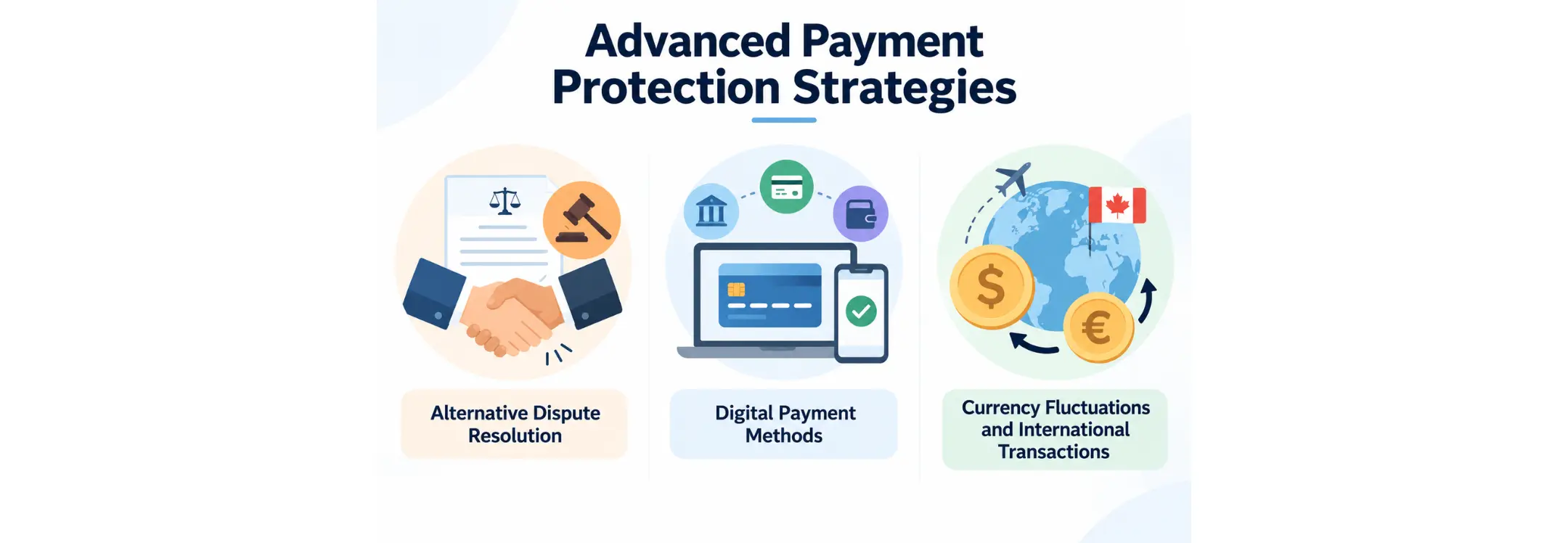
Advanced Payment Protection Strategies
Sophisticated contracts include extra financial protections to minimize revenue risks. These strategies guard against formal legal disputes, credit card processing fees, and exchange rate shifts.
Implementing modern contract protections reduces legal exposure while maintaining secure business operations.
Alternative Dispute Resolution for Payment Conflicts
Including Alternative Dispute Resolution mechanisms provides a fast path for resolving fee disagreements. Court claims through provincial small claims or superior courts bring major delays and high legal costs.
Clauses requiring informal negotiation followed by binding arbitration offer private and affordable conflict resolution. Arbitral decisions carry legal force and help recover debts much faster than civil litigation.
Digital Payment Methods and Processing Fees
Modern agreements should specify acceptable electronic payment methods clearly. Common choices include direct bank transfers, credit card payments, and online payment gateways.
Contracts must state which party pays processing fees attached to digital transactions. Standard clauses clarify that credit card transaction fees are added to invoice totals or absorbed by the buyer.
Currency Fluctuations and International Transactions
Cross-border contracts must name the required payment currency explicitly to avoid currency losses. Contracts should mandate payment settlement in Canadian dollars or another agreed currency.
International transactions must also account for cross-border bank charges and withholding taxes. Specifying that clients must cover transfer fees ensures you collect your full invoice value.
Common Payment Term Mistakes
Businesses often make costly errors when setting payment terms. A frequent mistake is attempting to add late fees on invoices when the initial contract omitted late charge terms.
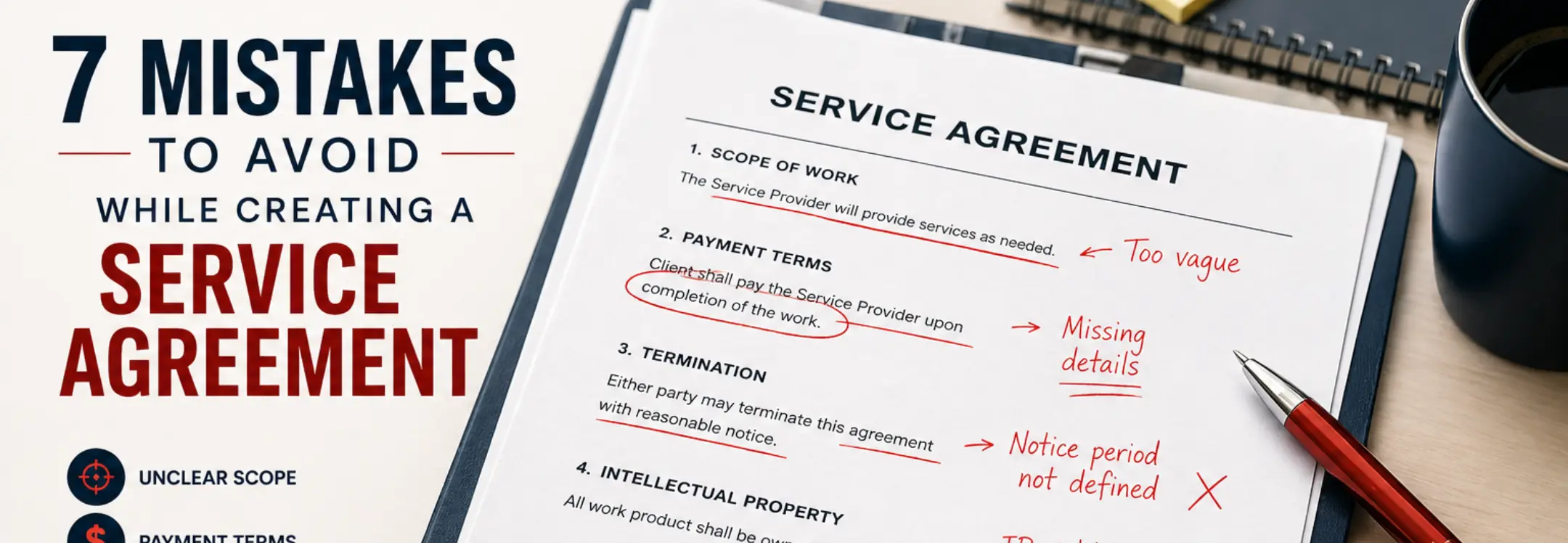
Another major error is omitting annual interest rates alongside monthly rates, triggering the Interest Act rate reduction. Furthermore, failing to handle sales tax requirements under the Excise Tax Act causes tax compliance issues. Canadian businesses earning over thirty thousand dollars in taxable sales must register for GST or HST and show tax numbers on invoices. For more informaton, read our blog on common mistakes while creating a service agreement.
Creating a Service Agreement with Ziji Legal Forms
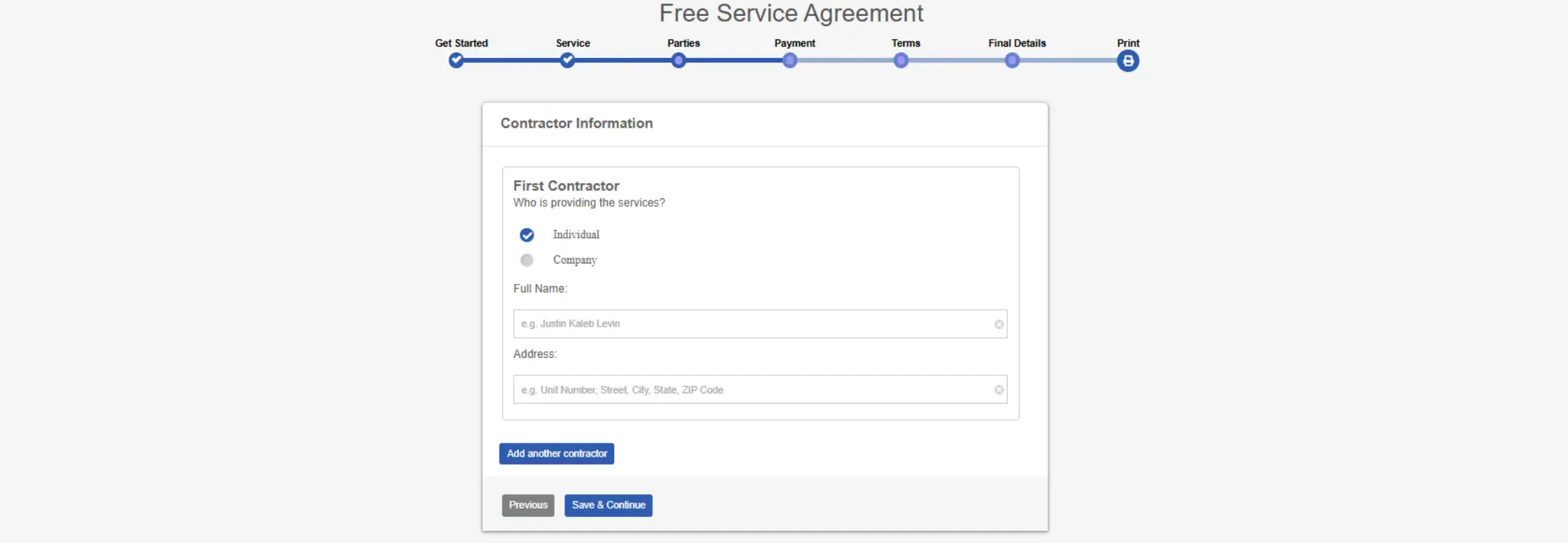
1. Choose Template
2. Add Party Details
Enter legal business names, corporate registration numbers, and official operating addresses for both vendor and client.
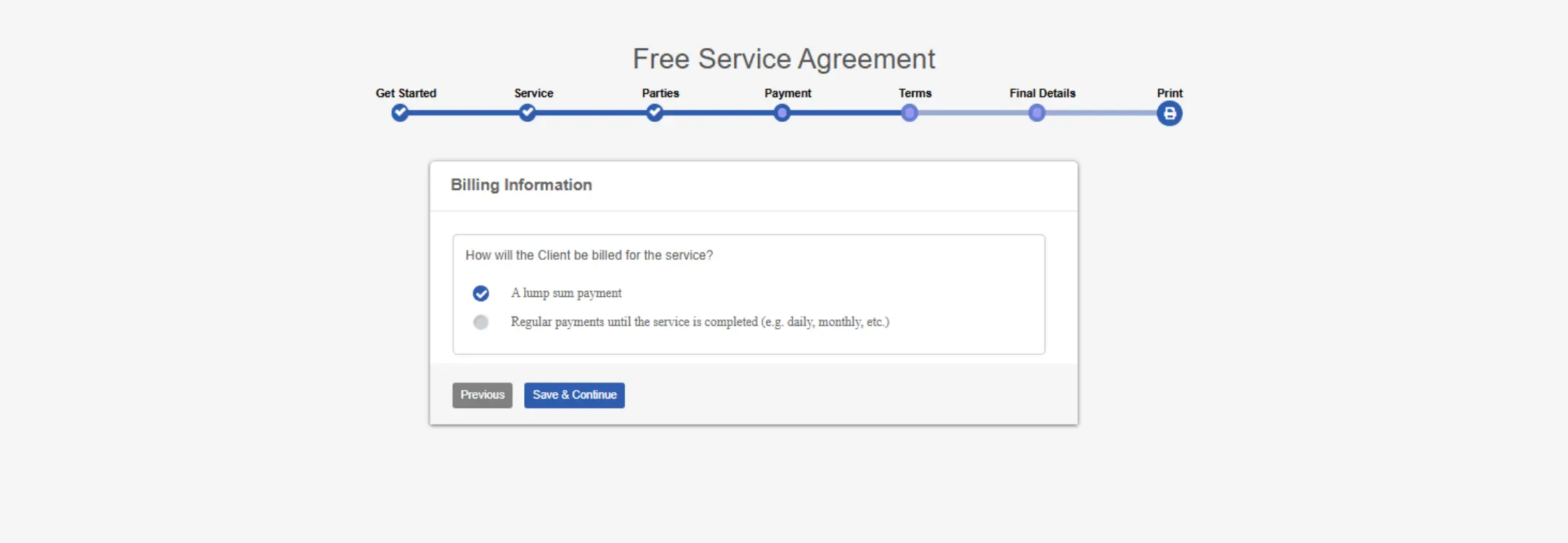
3. Add Payment Details
Specify fee structures, milestone dates, tax collection terms, and Interest Act compliant late fee percentage clauses.
4. Add Term Details
Set contract start dates, project deadlines, renewal terms, cancellation notice periods, and work suspension thresholds.
5. Preview
Review your completed agreement online to verify terms, clause accuracy, and compliance before final signing.
Conclusion
Drafting clear and legally sound payment provisions is vital for protecting business cash flow across Canada. Service providers must ensure late fee clauses list both monthly and annual rates to comply with Section 4 of the Interest Act. Choosing appropriate pricing models and defining clear deliverable milestones prevents billing disagreements. Businesses must also comply with Canadian tax rules by registering for GST or HST when earnings cross statutory limits. Establishing solid contract terms provides financial security and supports strong commercial relationships. You can Create Service Agreement documents quickly by using a customized online Service Agreement template built for Canadian law.
Service Agreement FAQs
1. What information should a Service Agreement include?
A Service Agreement should clearly describe the services being provided, payment terms, duration of the work, responsibilities of each party, and any important conditions such as confidentiality or intellectual property rights.
2. When should I use a Service Agreement?
You should use a Service Agreement when hiring an independent contractor, consultant, freelancer, or other service provider to perform specific work.
3. How should payment terms be addressed in a Service Agreement?
The agreement should state how much the contractor will be paid, when payment is due, the payment method, and any applicable deposits, expenses, or late-payment terms.
4. Can a Service Agreement include confidentiality terms?
Yes. A Service Agreement can include confidentiality provisions that restrict how sensitive business or client information may be used or disclosed.
5. Who owns work created under a Service Agreement?
Ownership depends on the terms of the agreement. The contract should clearly state whether intellectual property created while providing the services belongs to the contractor or the client.
6. Which Canadian jurisdictions support the Ziji Legal Forms Service Agreement?
The Ziji Legal Forms Service Agreement can be used in all supported Canadian provinces and territories.
Author
Mandar Sonavane
|
Legal Content Writer at Ziji Legal Forms Inc.
Symbiosis International University
Mandar is a legal content writer specializing in the development of clear, practical, and easy-to-understand legal resources. With a strong focus on legal research, content creation, and plain-language writing, he works closely with our legal professionals to ensure that legal documents and educational materials are accurate, accessible, and user-friendly. At Ziji Legal Forms Inc., Mandar is responsible for researching legal topics, drafting and reviewing content, and helping transform complex legal concepts into straightforward guidance that empowers individuals and businesses to confidently navigate their legal needs.
Reviewed By
Histon Shek
|
General Counsel and Co-Founder at Ziji Legal Forms Inc.
University of Alberta
Histon Shek was called to the Alberta Bar in 2006. He holds a BA in Sociology and Philosophy and an LLB from the University of Alberta. As co-founder of Ziji Legal Forms Inc., he focuses on making legal documents accessible and affordable, overseeing legal integrity and content development.





 Canada
 United States