TL;DR
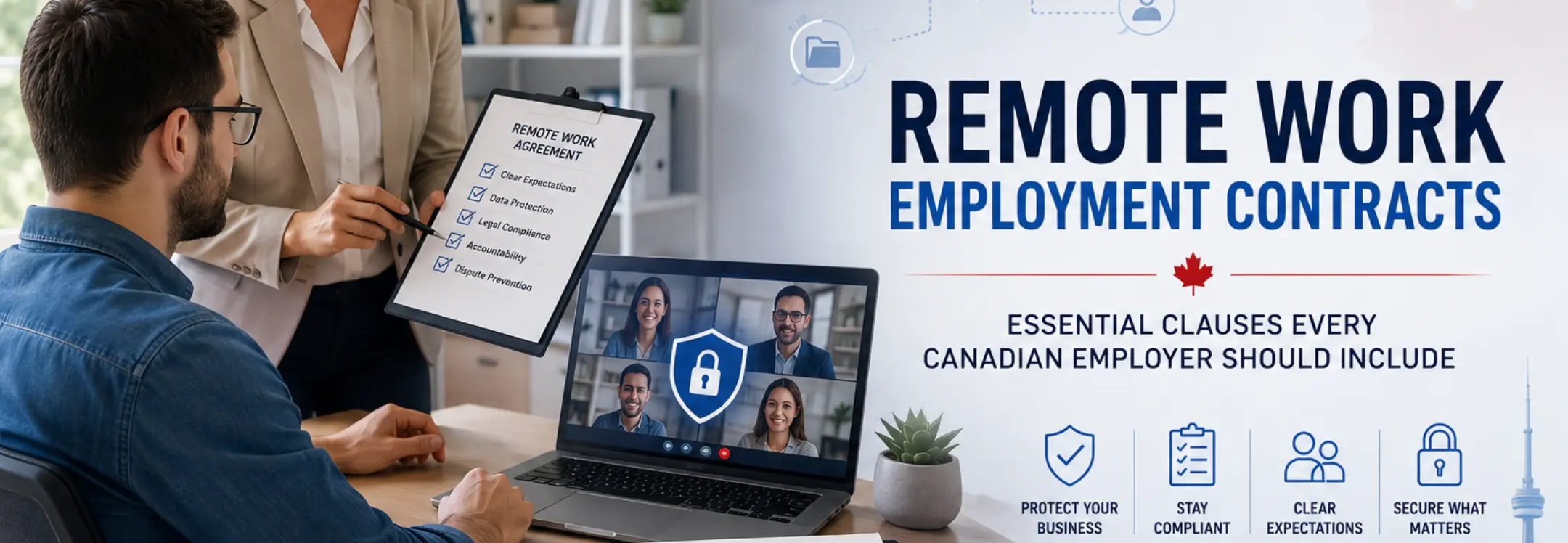
- A specialized Remote Work Employment Contract is vital for Canadian businesses to define expectations and manage legal liabilities across different provinces.
- Standard contracts fail to address telecommuting issues such as home safety, tax attachment, and digital monitoring policies.
- Written agreements must specify approved work locations, hardware ownership, and home office expense rules under current Canadian tax guidelines.
- Employers can easily create custom contracts and professional Employment Contracts with Ziji Legal Forms to ensure compliance with provincial standards.
Introduction
Modern businesses across Canada are shifting to distributed teams, making flexible work a permanent feature of the professional market. While employees value this flexibility, employers must proactively manage new legal and operational challenges. Managing a remote workforce is not as simple as sending a computer home and tracking digital logins. Without clear guidelines, businesses risk facing severe liabilities under provincial labor codes and tax regulations.
A specialized Remote Work Employment Contract provides essential structure for these distributed arrangements. Traditional contracts are often silent on critical telecommuting risks, leaving significant operational gaps. A well-designed agreement ensures that both parties are aligned on performance, communication, and home office safety protocols from day one. Taking this step prevents misunderstandings that can easily lead to costly constructive dismissal claims.
What Is a Remote Work Employment Agreement?
A remote work employment agreement is a formal contract between an employer and an employee that defines the terms of a remote work arrangement. It can be integrated into a standard Employment Contract Canada or drafted as a standalone addendum. This document establishes clear guidelines for working outside the traditional physical office space.
Definition
In Canadian labor law, this agreement is a legally binding contract that establishes a telecommuting arrangement. It modifies the physical location of the workplace, moving it from the employer's premises to an approved remote location, typically the employee's residence. Formalizing this change ensures that provincial employment standards are continually met in the home workspace.
Why Standard Employment Contracts May Not Be Enough
Standard employment contracts are designed for centralized offices and lack rules for home safety or digital network security. They also fail to address the tracking of hours or the retrieval of company gear when a remote arrangement ends. When a worker transitions to a home office, standard agreements leave these critical areas completely unregulated.
Furthermore, traditional contracts do not handle cross-provincial legal changes. If a remote worker relocates to a different province, local labor laws will automatically apply to their employment. A standard contract cannot address these geographic shifts, leading to compliance failures. Relying on a generic Employment Contract template exposes your business to unexpected legal claims.
Why Employers Need a Written Remote Work Agreement
Drafting a written agreement is a vital step for any Canadian business looking to build a compliant remote workforce. Verbal promises are highly vulnerable to misinterpretation and carry no legal weight during disputes. A written contract provides a reliable roadmap, protecting the employer from liability while offering essential clarity to the employee.
Clarifies Expectations
A written contract explicitly clarifies what is expected of the remote worker regarding daily performance and availability. It defines daily working hours, mandatory meeting attendance, and response times. This structural clarity helps remote staff stay focused and productive without direct, in-person supervision.
Protects Confidential Information
Remote work naturally increases the risk of data breaches, as sensitive business files are accessed from home networks. A written agreement protects proprietary data by setting strict digital security protocols. It requires secure network use, regular password updates, and restricts family access to company-provided devices.
Reduces Workplace Disputes
Misunderstandings about working hours, home expenses, or equipment ownership are common sources of conflict in remote settings. A written agreement reduces these disputes by answering key operational questions upfront. Clear terms help build trust and support workplace harmony, allowing teams to focus on productivity.
Supports Legal and Regulatory Compliance
Canadian employers must comply with provincial labor standards and occupational health and safety rules. A written agreement supports compliance by aligning the remote work setup with these statutory duties. It outlines safety protocols and injury reporting procedures, helping the firm fulfill its legislative obligations.
Creates Accountability for Both Parties
A remote contract creates a healthy system of mutual accountability. It outlines clear consequences for failing to meet performance or data security standards. The contract ensures that employees protect company assets while working, while holding the employer accountable for providing necessary tools.
Essential Clauses Every Remote Work Employment Agreement Should Include
To ensure your remote working arrangement is legally secure, specific clauses must be integrated into the employment contract. These terms establish a clear framework that governs the daily relationship and protects both parties. Canadian employers must carefully customize these provisions to align with provincial standards.
Employee Work Location Clause
The employee work location clause defines the approved physical boundary of the workspace. It must state the specific home office address and require written approval for any changes. This prevents employees from relocating to other provinces without notice, avoiding unexpected tax and legal liabilities.
Work Schedule and Availability Clause
A clear schedule clause defines the specific hours during which the remote employee must be accessible. It establishes daily start times, end times, and response windows. This term prevents unpaid overtime claims by outlining the process for obtaining advance approval for extra hours worked.
Job Duties and Performance Expectations
This clause outlines the primary responsibilities, tasks, and deliverables of the remote position. It states that performance will be measured by results and outputs rather than physical presence in an office. Clear benchmarks allow managers to maintain productivity and address performance issues quickly.
Communication Requirements
Effective communication is vital for any distributed workforce. This provision defines the mandatory channels for daily check-ins and team meetings, such as secure messaging platforms. It sets professional standards for communication, ensuring that remote workers remain fully connected to their colleagues.
Equipment and Technology Clause
This clause establishes guidelines regarding the hardware and tools required for the remote role. It specifies whether the employer will provide the computer or if the employee will use personal devices. It also defines strict rules for returning company property upon termination.
Expense Reimbursement Clause
An expense reimbursement clause outlines which remote-related costs will be covered by the employer. It specifies stipends or reimbursement rules for internet and home utilities. Clear expense rules are vital for tax compliance when issuing mandatory tax forms under Canadian guidelines.
Confidentiality and Data Security Clause
This clause is vital for protecting sensitive business data accessed from a remote location. It requires the employee to use encrypted networks and follow strict password protocols. It also restricts the printing of sensitive files and prohibits unauthorized device access by family members.
Intellectual Property Ownership Clause
The intellectual property ownership clause ensures that all software and creative works produced during employment remain company property. It states that the employee assigns all rights in work-related creations to the employer. This provision prevents future ownership disputes over assets created outside the office.
Monitoring and Privacy Clause
A monitoring and privacy clause is essential for transparency and legal compliance. It discloses whether the employer tracks device activity or software usage, explaining the business purpose. This clause ensures compliance with federal and provincial privacy frameworks while respecting the employee's rights.
Health and Safety Clause
Canadian safety laws require employers to protect telecommuters, as the home office is considered an extension of the workplace. This clause requires workers to maintain an ergonomic, hazard-free workspace. It also outlines the procedures for reporting work-related injuries to provincial compensation boards.
Remote Work Revocation Clause
A remote work revocation clause preserves the employer's right to end the remote arrangement and recall the worker. It specifies the notice period required for recall, typically thirty days. Without this explicit clause, a unilateral recall can trigger a constructive dismissal claim.
Additional Clauses Employers Should Consider
While essential terms establish the foundation of a remote agreement, adding specific supplementary clauses can further protect your business. These terms address modern digital workflows and prevent common compliance challenges before they impact your operations, such as international tax liabilities or post-employment restrictions.
Cybersecurity Requirements
This clause details the specific security measures the remote employee must maintain. It requires active antivirus software, regular updates, and multi-factor authentication. It also prohibits the use of public networks to protect company systems from external cyber threats.
Bring Your Own Device Policies
If employees use personal devices for work, a dedicated policy must govern this practice. It outlines the mandatory security software that must be installed on personal devices. It also grants the employer the right to wipe company data upon contract termination.
International Remote Work Restrictions
Working across borders introduces massive tax, immigration, and legal complications that most Canadian businesses are unprepared to handle. This clause strictly prohibits employees from working outside of Canada without prior written approval. It helps prevent accidental violations of foreign payroll standards.
Non-Compete and Non-Solicitation Provisions
These covenants protect client relationships and proprietary markets from exploitation by former workers. Since non-compete clauses are heavily restricted or banned under Canadian laws, non-solicitation clauses are a vital alternative. This term prevents former workers from poaching clients or staff for a set period.
Business Travel Requirements
This clause specifies mandatory in-person travel, such as attending quarterly team meetings or onsite training. It outlines how travel costs will be covered and sets professional expectations. This term ensures that remote staff remain fully aligned with the central business operations.
Common Mistakes Employers Make in Remote Work Agreements
Understanding where other businesses falter can help you avoid costly legal disputes and regulatory failures. Many Canadian employers make critical mistakes when establishing informal remote arrangements. Proper planning and formal written contracts help eliminate these compliance risks.
Failing to Address Data Security
Ignoring data security is a significant mistake that exposes your business to severe data leaks. Employers often assume employees maintain secure home networks. Without explicit contractual requirements, sensitive company information is left highly vulnerable to external cyber threats.
Not Defining Working Hours
Failing to define clear working hours can lead to a build-up of unpaid overtime claims. Without structured boundaries, remote workers may check messages late, which standards define as work. Establishing firm start and end times prevents costly regulatory disputes.
Ignoring Provincial Employment Laws
Employment standards follow the worker's physical location, meaning an out-of-province employee is subject to their local regulations. Ignoring these differences can lead to compliance errors. For example, a Temporary Employment Contract or a Fixed Term Employment Contract may be ruled invalid if local standards are not met.
Unclear Equipment Ownership Rules
Vague rules make it difficult to retrieve company computers or monitors when an employee leaves. Without a clear return policy, businesses can lose thousands of dollars in hardware. Explicit terms in your agreement protect physical assets and ensure secure digital offboarding.
Using Generic Employment Contract Templates
Relying on a generic Employment Contract template that lacks remote-specific terms leaves major operational areas exposed. These basic documents do not address home safety or electronic monitoring. Customizing your agreements is essential to ensure they align with the actual realities of remote work.
Remote Work Agreement vs Traditional Employment Contract
It is vital to understand how a remote work agreement differs from a traditional contract. While both establish an employment relationship, their operational focus is different. Remote agreements must address digital security, home workspace safety, and geographic boundaries.
Work Location and Equipment Policies
A traditional contract designates the company office as the workplace and assumes physical hardware is provided onsite. In contrast, a remote agreement designates a private residence as the workspace, clearly defining who provides the equipment and how home office utilities are covered.
Data Security and Communication Expectations
Traditional agreements rely on physical office locks and secure local servers. Remote contracts must establish comprehensive digital security rules, encrypted networks, and define mandatory communication platforms. This ensures that remote staff remain fully secure in their daily professional tasks.
Home Office and Remote Policies
Remote agreements contain extensive rules on ergonomic setup and checking on lone workers. These vital safety guidelines are completely absent from standard office-based contracts, where the employer has direct control over the physical environment. This ensures full legislative compliance for home offices.
Legal Considerations for Multi-Province Remote Employees
Hiring remote workers across multiple Canadian provinces offers access to great talent, but it also introduces complex regulatory duties. Employers must proactively manage provincial differences in tax and labor standards to ensure seamless and compliant business operations.
Tax Implications
The Canada Revenue Agency bases payroll deductions on whether a remote worker is attached to a physical establishment. Accurate analysis of where the employee receives instructions is required to ensure correct provincial tax remittances for income tax and pension contributions.
Wage and Hour Compliance
Minimum wage rates vary across Canada. Some provinces require a higher minimum wage for homeworkers to cover overhead. Remote agreements must respect the specific wage and hour laws of each worker's province to avoid costly regulatory penalties and wage disputes.
Provincial Employment Laws
Each province has its own employment standards for vacation pay and termination. If an employee resides in a different province, local laws govern. For example, in Ontario, terminating a fixed-term contract early requires paying the remaining term with no duty to mitigate.
Leave and Benefit Requirements
Statutory leave entitlements vary significantly across Canadian provinces. Under the Interjurisdictional Agreement on Workers' Compensation, employers must also pay safety premiums to the local board where the remote work is performed. Remote agreements must accurately reflect these regional structures.
Why Employers Should Review Local Regulations
Canadian labor laws are constantly evolving. For instance, some provinces require written policies regarding the right to disconnect or digital monitoring. Staying informed of these regional shifts prevents costly regulatory penalties and protects your business from potential constructive dismissal claims.
How Ziji Legal Forms Helps
Ziji Legal Forms provides a reliable way to create professional, legally compliant contracts. The intuitive platform simplifies contract drafting, allowing employers to quickly generate an Employment Contract template that aligns with provincial standards and addresses the unique demands of remote work.
Steps to Create Your Agreement using Ziji Legal Forms
Creating a compliant remote agreement on the platform is straightforward and can be completed in just a few minutes. Employers can follow these simple steps to protect their business and remote workforce.
1. Choose Template
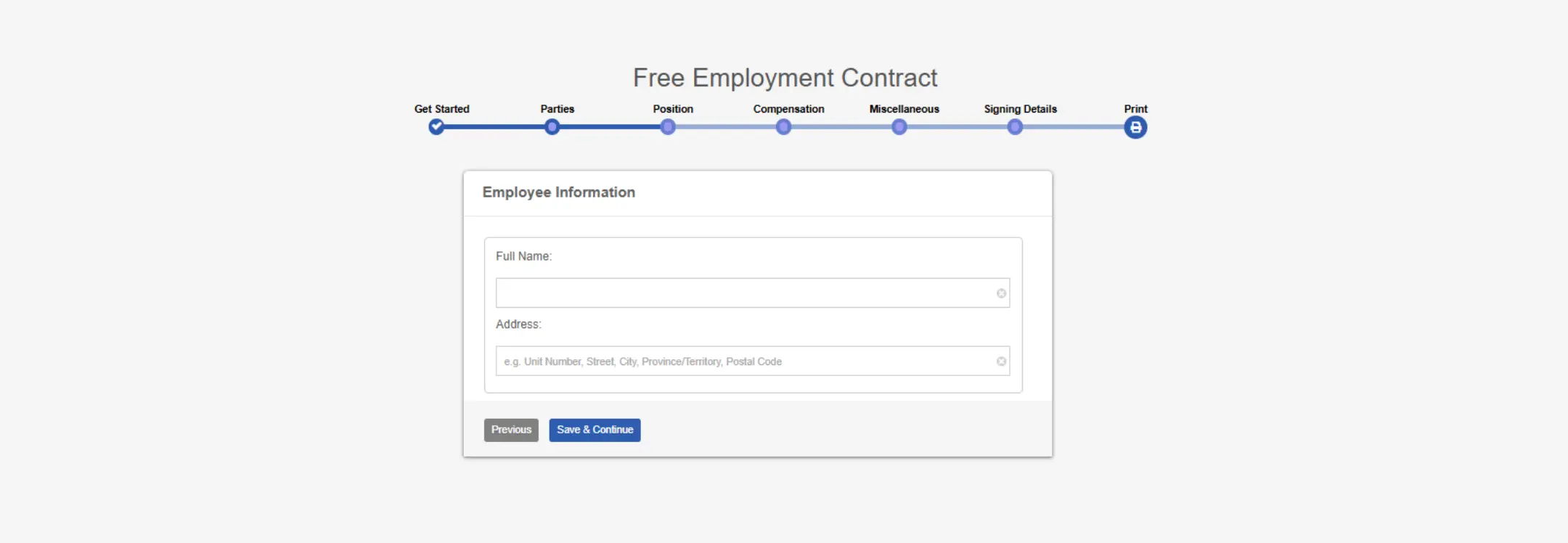
2. Add Party Details
Input the legal names and physical home addresses of both the employer and remote employee to establish the signing parties.
3. Add the Position and Job Role Details
Define the job title, main duties, reporting structure, and approved remote work location to set clear professional boundaries.
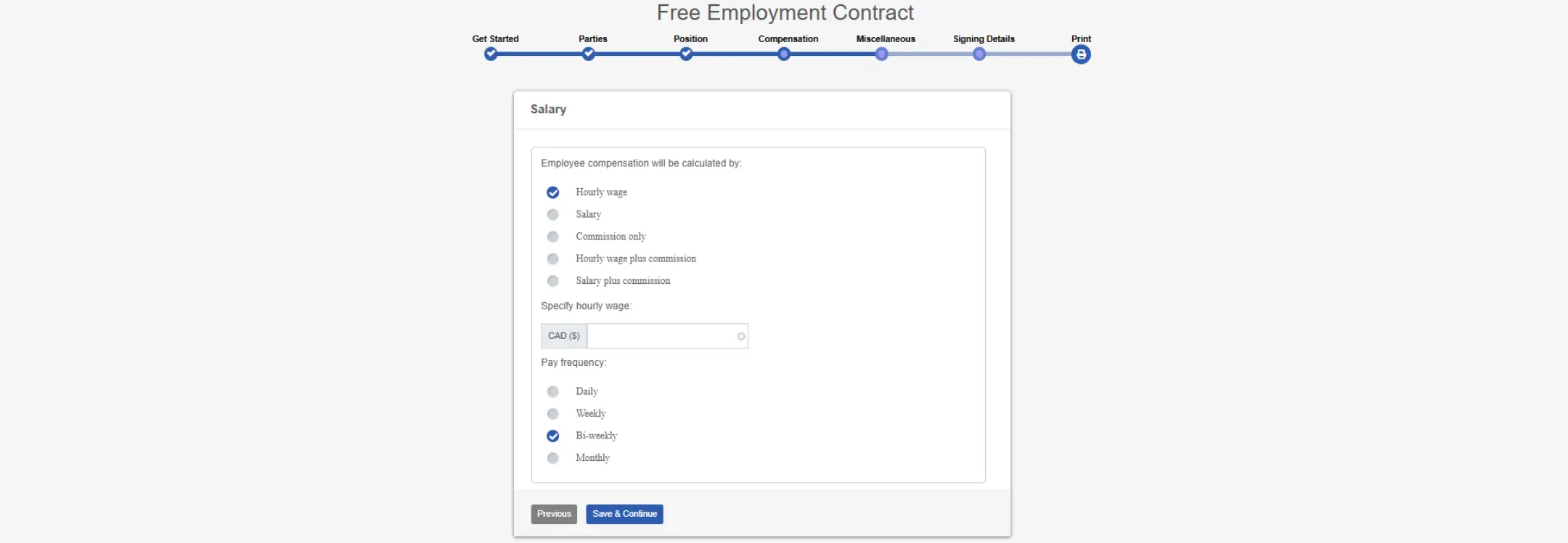
4. Add Compensation Details
Outline the base salary, benefit eligibility, and specific home office expense reimbursement rules to prevent future financial disputes.
5. Download and Preview
Generate the finished document, review all clauses for accuracy, and download the file in your preferred format.
Conclusion
Establishing a clear Remote Work Employment Contract is the most effective way to build a secure distributed team in Canada. A well-drafted agreement protects sensitive company data, maintains operational consistency, and ensures compliance with provincial laws. Relying on outdated or generic templates can expose your business to costly legal disputes and payroll audits. By using Ziji Legal Forms, Canadian employers can easily generate comprehensive contracts and professional Service Agreements. Taking the time to formalize remote working rules today will protect your company assets and drive long-term business growth.
Employment Contract FAQs
1. What is the purpose of an Employment Contract?
Its purpose is to define the legal rights and responsibilities of both the employer and employee during the employment relationship.
2. Why should employers use a written Employment Contract?
A written contract clearly records the agreed employment terms and helps reduce the risk of future disputes.
3. What is the difference between an Employment Contract and an Independent Contractor Agreement?
An Employment Contract is used for employees, while an Independent Contractor Agreement is intended for self-employed contractors providing services independently.
4. Can an Employment Contract include a probation period?
Yes. Many Employment Contracts include a probation period that allows the employer to evaluate a new employee, subject to applicable employment legislation.
5. Can an Employment Contract be modified after signing?
Yes. Any amendments should be made in writing and signed by both the employer and employee.
6. Can the Ziji Legal Forms Employment Contract be used anywhere in Canada?
The Ziji Legal Forms Employment Contract can be used in all supported Canadian provinces and territories.
Author
Mandar Sonavane
|
Legal Content Writer at Ziji Legal Forms Inc.
Symbiosis International University
Mandar is a legal content writer specializing in the development of clear, practical, and easy-to-understand legal resources. With a strong focus on legal research, content creation, and plain-language writing, he works closely with our legal professionals to ensure that legal documents and educational materials are accurate, accessible, and user-friendly. At Ziji Legal Forms Inc., Mandar is responsible for researching legal topics, drafting and reviewing content, and helping transform complex legal concepts into straightforward guidance that empowers individuals and businesses to confidently navigate their legal needs.
Reviewed By
Histon Shek
|
General Counsel and Co-Founder at Ziji Legal Forms Inc.
University of Alberta
Histon Shek was called to the Alberta Bar in 2006. He holds a BA in Sociology and Philosophy and an LLB from the University of Alberta. As co-founder of Ziji Legal Forms Inc., he focuses on making legal documents accessible and affordable, overseeing legal integrity and content development.








 Canada
 United States