TL;DR - A written Employment Contract Canada is the most effective tool for limiting employer liability to statutory minimums and avoiding the much higher costs of common law reasonable notice.
- Contracts must explicitly include details on job responsibilities, compensation, benefits, and termination procedures to be considered legally enforceable by the courts.
- Recent legislative changes have introduced mandatory requirements for policies such as the right to disconnect and electronic monitoring for many organizations.
- Fixed-term contracts carry specific risks, as continued work past the end date can automatically convert the relationship into an indefinite permanent arrangement.
- Using an Online Employment Contract Template for Ziji Legal Forms helps ensure compliance with the differing provincial and federal labor standards across the country.
Introduction: Why Employment Contracts Matter
The professional landscape in Canada is governed by a complex and ever-evolving set of legal standards that prioritize the protection of the worker while providing a framework for business operations. In this environment, the Employment Contract Canada serves as the primary governing document that defines the relationship between the employer and the employee. It is far more than just a formality for hiring; it is a foundational pillar of risk management and organizational clarity. Without a robust written agreement, the parties are left to navigate the uncertainties of common law, which often results in unexpected financial and legal consequences for the business.
Establishing Legal Clarity
A well-crafted agreement removes the ambiguity that often plagues verbal offers or informal arrangements. By documenting the specific terms of work, including duties and compensation, both the hiring party and the new hire enter the relationship with a shared understanding of expectations. This clarity is essential for fostering a stable workplace where performance can be measured against agreed-upon standards. Furthermore, the contract serves as a reliable reference point if disputes arise regarding job scope or payment structures.
Limiting Financial Liability
One of the most critical reasons to Create Employment Contract documents is the mitigation of termination costs. In the absence of a written clause that limits notice to the minimums required by legislation, Canadian courts typically award common law reasonable notice. This can result in payouts that far exceed statutory requirements, sometimes amounting to months or years of salary for long-tenured employees. A precise contract allows an organization to predict and control these costs effectively.
Protecting Business Assets
Beyond the daily mechanics of work, contracts provide a mechanism for safeguarding a company's unique value. This is achieved through clauses that address confidentiality and the ownership of intellectual property created during the tenure. By securing these rights in writing before the start of service, the employer ensures that trade secrets and proprietary processes remain within the organization. This protection is vital in competitive industries where human capital is the primary driver of innovation.
Fostering Professionalism and Trust
The act of providing a formal Online Employment Contract demonstrates a commitment to transparency and fairness. It signals to the employee that the organization is professional and respects the legal protections afforded to workers. This professional start can set a positive tone for the entire employment relationship, leading to higher levels of engagement and retention. In a market where talent is highly mobile, the clarity of a written agreement can be a significant advantage in attracting top-tier candidates.
Compliance with Modern Standards
The Canadian legal framework has recently seen significant shifts regarding remote work and work-life balance. Modern contracts must now account for right to disconnect policies and electronic monitoring disclosures to remain compliant with provincial and federal laws. Using an Employment Contract template that is regularly updated allows businesses to stay ahead of these regulatory changes without needing constant legal consultation. This proactive approach to compliance is a hallmark of successful Canadian enterprises.
Types of Employment Contracts
In the Canadian market, the classification of a worker is a decision that carries significant legal and financial weight. There are several distinct types of arrangements, and choosing the wrong one can lead to administrative penalties and unpaid benefit liabilities. Every business should be familiar with the differences between permanent roles, fixed-term projects, and part-time shifts to ensure they are using the correct Online Employment Contract for each situation. This classification determines the level of protection the worker receives and the obligations the employer must fulfill.
Permanent Full-Time Contracts
The most common and stable form of employment is the permanent full-time contract, which is intended to be of indefinite duration. These agreements do not have a set end date and continue until one party decides to terminate the relationship. Full-time workers are generally entitled to a comprehensive set of benefits, including paid vacation and participation in group health plans. For the employer, this type of contract provides a dedicated resource and the ability to build long-term institutional knowledge.
Expectations in Permanent Roles
In a permanent full-time role, the employee is usually expected to work a standard number of hours per week, often between 37.5 and 44 hours. These workers have the highest level of statutory protection, including rights to pregnancy and parental leave. Because the relationship is intended to be long-term, the legal requirements for termination are also the most stringent. This makes a precise Employment Contract Canada essential for managing the potential risks of ending the relationship in the future.
Part-Time Employment Arrangements
Part-time contracts are designed for roles that require fewer hours than the standard full-time work week. These arrangements offer significant flexibility for businesses that have fluctuating workloads or need coverage only during specific times of the day. While the hours are fewer, part-time workers in Canada are still entitled to many of the same basic legal protections as full-time staff. This includes minimum wage and protection from discrimination and harassment under human rights codes.
Prorated Benefits and Rights
In many jurisdictions, part-time employees receive prorated vacation and statutory holiday pay based on the number of hours they work. It is important for the contract to clearly state the expected hours and whether there is a guarantee of a minimum amount of work. This clarity prevents disputes regarding availability and ensures that the worker can manage their personal schedule effectively. For the employer, these arrangements provide a cost-effective way to manage staffing without the full expense of a permanent full-time salary.
Fixed-Term Employment Contracts
A fixed-term contract is used when the hiring party needs someone for a specific period or for the duration of a particular project. These are ideal for temporary situations such as maternity leave coverage or a short-term consulting engagement. One of the primary benefits of this arrangement is that when the term expires, the relationship ends naturally without the need for notice or severance pay. However, this benefit only applies if the contract is written correctly and specifies the exact end date.
Risks of Early Termination
If an employer decides to end a fixed-term contract before the agreed-upon date, they may be liable for a significant payout. In the absence of a specific clause allowing for early termination with notice, courts often require the employer to pay the worker for the entire remaining balance of the contract. This can be a substantial financial burden, making it vital to include a termination clause even in a temporary agreement. This highlights the importance of using a well-vetted Employment Contract template.
The Danger of Contract Rollovers
Another risk with fixed-term arrangements is the possibility of them becoming permanent by accident. If a worker continues to perform their duties after the contract expires without signing a new one, the relationship is legally presumed to have converted into an indefinite permanent contract. This gives the worker full termination rights under common law. Furthermore, if a business repeatedly renews fixed-term contracts for the same person over many years, a court may rule that the role was actually permanent all along.
Specialized Agreement Additions
Certain roles within an organization require more than just a standard set of terms and conditions. For example, senior executives often have specialized additions to their contracts that address stock options and large severance packages in the event of a merger. Sales roles might include detailed commission structures and non-solicitation clauses that are much more robust than those for administrative staff. These specialized additions ensure that the unique risks of the role are properly managed.
Addressing Remote and Gig Work
With the rise of the digital economy, many organizations are also adding clauses that address remote work and gig-worker protections. New laws in several provinces have introduced specific rights for people working through digital platforms, making it essential to have a modern contract that reflects these changes. These additions help protect the organization from misclassification claims and ensure that everyone understands their rights in a non-traditional work setting. This level of customization is a key benefit of being able to Create Employment Contract Online.
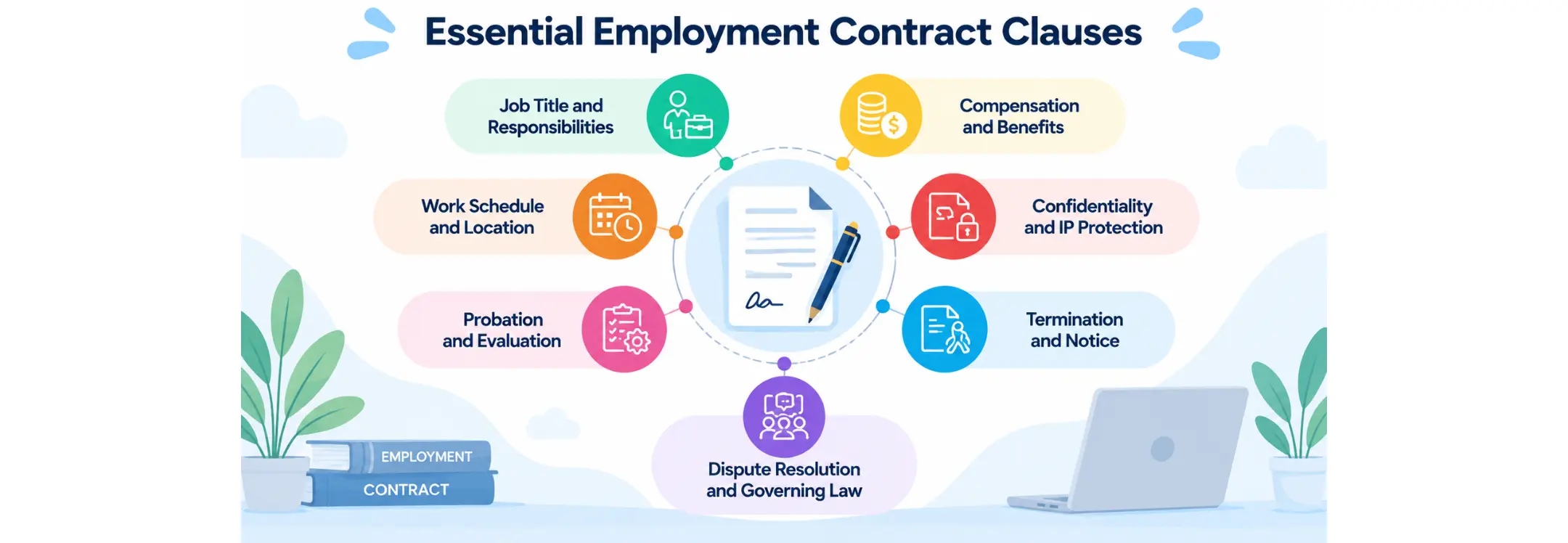
Essential Clauses Every Employment Contract Should Include
For an Employment Contract Canada to be legally effective, it must contain a series of essential clauses that address the core components of the working relationship. These sections must be drafted with extreme precision to ensure they do not fall below the minimum standards set by provincial and federal labor laws. A single poorly written clause can jeopardize the entire agreement, leaving the business exposed to significant legal risk. This makes it imperative for every employer to understand what must be included and how it should be phrased.
Job Title and Responsibilities
The contract should start by clearly identifying the job title and providing a thorough description of the duties the person is expected to perform. This provides the employee with a clear understanding of their role and prevents the employer from fundamentally changing the job without a new agreement. While the description should be detailed, it is also wise to include a provision that allows for other duties as reasonably assigned to maintain operational flexibility. This prevents the relationship from becoming too rigid in a dynamic business environment.
Compensation and Benefits Structure
The financial terms of the agreement are the most important part for the worker and must be documented with absolute clarity. This clause must state the base salary or hourly wage and the frequency of payments, as well as whether the pay is inclusive of all hours or if overtime applies. It should also detail any bonuses, commissions, or health benefits the worker is entitled to receive. Being transparent about compensation prevents future disputes and ensures that the payroll process is handled correctly from the start.
Work Schedule and Location Requirements
The contract must define the expected work hours and the primary location where the work will be performed. This is particularly important in the modern era of remote and hybrid work, as the laws of the province where the worker is located will generally govern the relationship. Specifying the location ensures that both parties are clear on which labor standards apply and helps the business manage its regulatory obligations. It also helps set boundaries for availability, which is essential for complying with right to disconnect requirements.
Confidentiality and Intellectual Property Protection
Protecting a company's competitive advantage is a key function of an Online Employment Contract. The confidentiality clause should explicitly forbid the disclosure of trade secrets and proprietary information both during and after the relationship ends. Similarly, an intellectual property clause should state that any work produced by the person during their time with the company belongs to the employer. These clauses must be narrowly focused on protecting legitimate business interests to be enforceable by Canadian courts.
Probation and Evaluation Periods
A probation clause provides the employer with a trial period to assess whether a new hire is a good fit for the role. In Canada, a probationary period is not automatic and must be clearly stated in the written contract to be legally valid. This clause typically allows for termination with little to no notice during the first three months of employment. However, the employer still has a duty to act in good faith and provide the worker with a fair opportunity to demonstrate their skills. This transparency helps manage expectations and reduces the risk of a wrongful dismissal claim early in the relationship.
Termination and Notice Procedures
The termination clause is often the most litigated section of an Employment Contract Canada and requires the most careful drafting. It must clearly define how much notice or pay in lieu the employer will provide if they end the relationship without cause. To be enforceable, the clause must meet or exceed the minimum standards set by the applicable employment standards act. If the clause even suggests a payout that is less than the legal minimum, a court may strike it down entirely. This highlights why many businesses rely on a professional Employment Contract template.
Dispute Resolution and Governing Law
Finally, every contract should include a clause that specifies which jurisdiction's laws will govern the agreement. This ensures that if a dispute occurs, both parties know which court or tribunal will handle the case. The agreement should also outline any required steps for mediation or arbitration before a lawsuit can be initiated. This provides a structured path for resolving conflicts and can help prevent expensive and time-consuming litigation. This section provides the final layer of protection for the employment relationship.
The Reality of Common Law Notice and the "Bardal Factors"
When an employment contract lacks an explicit, legally compliant termination clause, Canadian employers are forced to look beyond provincial statutory minimums and face the much costlier realm of common law. In these scenarios, Canadian courts calculate "reasonable notice" or pay in lieu of notice by weighing specific criteria known as the Bardal factors.
Judges scrutinize the employee’s age, their total length of service, the specialized nature of their position, and the availability of similar employment in the market. For mid-to-senior level or long-tenured employees, these factors can quickly escalate an employer's financial liability from a few weeks of statutory pay to up to twenty-four months of full salary and benefits.
The High Legal Bar of Just Cause Dismissal
Unlike jurisdictions where an employee can be terminated summarily for minor infractions, Canadian law sets an exceptionally high bar for "just cause" dismissal. Terminating an individual instantly without any notice or severance is considered the capital punishment of employment law and is strictly reserved for severe, irremediable misconduct such as theft, fraud, or a fundamental breach of trust.
For performance issues or general unsuitability, Canadian courts will routinely rule against the employer unless there is a meticulous, written paper trail demonstrating progressive discipline and clear warnings that the individual's livelihood was at risk. A robust contract acts as a critical safety net, providing a clear mechanism to end the relationship without needing to meet this nearly impossible standard of cause.
Avoiding the Trap of Constructive Dismissal
Another unique risk within the Canadian framework is constructive dismissal, which occurs when an employer unilaterally makes a fundamental, substantial change to a core term of the employment relationship without the worker's explicit consent. Actions such as slashing a salary, altering a commission structure, demoting a title, or forcing an unwanted geographic relocation can be legally viewed as a termination of the original contract.
In these cases, the employee is legally entitled to resign and sue the business for full severance pay exactly as if they had been fired without cause. To mitigate this operational hazard, employment contracts must be strategically drafted from the outset to grant management the explicit contractual flexibility to reasonably adjust duties, reporting structures, and geographic locations as business needs evolve.
Benefits of Having a Written Employment Contract
Deciding to Create Employment Contract documents for every member of the team is one of the most effective ways to build a professional and stable organization. While it may seem like a significant administrative task, the benefits far outweigh the initial investment of time. A written contract provides a clear set of rules that protects everyone involved and ensures that the business is operating in full compliance with the law. This formal structure is essential for long-term growth and success.
Advantages for Employers
The primary benefit for an employer is the mitigation of legal and financial risk. By having a written agreement that limits termination notice to statutory minimums, an organization can save hundreds of thousands of dollars in potential severance payouts. A written contract also provides the legal authority to enforce essential policies, such as those regarding confidentiality and non-solicitation. This protection is vital for maintaining a company's reputation and its competitive edge in the marketplace.
Managing Workplace Flexibility
A robust contract also gives management the power to lead the workforce effectively. It allows for the inclusion of clauses that address temporary layoffs, which can give a company the flexibility it needs to survive an economic downturn without needing to permanently fire its staff. Furthermore, having a standard Employment Contract template ensures that all workers are treated consistently, which reduces the likelihood of internal friction and potential discrimination claims. This consistency is a hallmark of a well-run and professional business.
Benefits for Employees
Workers also receive significant benefits from having their terms and conditions in writing. A formal agreement provides them with a guaranteed record of their compensation and benefits, which prevents the employer from making arbitrary changes to their pay. It also ensures they are fully aware of their rights regarding vacation time and leaves of absence. This clarity provides a sense of security and professional respect that can significantly improve a worker's job satisfaction and loyalty to the firm.
Guaranteed Legal Protections
Having a written contract ensures that the employee will receive at least the minimum notice or pay in lieu required by law if they are let go without cause. It also outlines the expectations for their performance and the process for career advancement, which gives them a clear professional roadmap. For many people, the presence of a formal Online Employment Contract is a sign that the employer is stable and trustworthy, which is a key factor in deciding to join a new organization.
Mutual Benefits and Risk Mitigation
Both the hiring party and the individual benefit from the reduction of uncertainty in the relationship. When the rules are clearly documented, there is much less chance of a misunderstanding leading to a major conflict. The contract sets a professional tone from the very beginning and ensures that both parties understand their mutual obligations. This clarity is the best way to prevent the types of disputes that often end up in court.
Ensuring Regulatory Compliance
A major mutual benefit is the guarantee that the relationship complies with all regional and federal laws. A well-crafted contract ensures that the business is meeting its requirements for health and safety, human rights, and employment standards. This reduces the risk of government audits and expensive fines that can hurt both the company's bottom line and the workers' security. In the end, the investment in professional documentation is an investment in the stability and future of the entire organization.
Common Mistakes to Avoid
Even the most well-meaning leaders can make critical errors when they attempt to Create Employment Contract documents without the right guidance. In the Canadian legal system, the courts are notoriously protective of employees and will look for any reason to invalidate a clause that appears unfair or non-compliant with the law. Avoiding these common pitfalls is essential for any business that wants to maintain a legally sound and professional workforce.
Ambiguous or Missing Critical Clauses
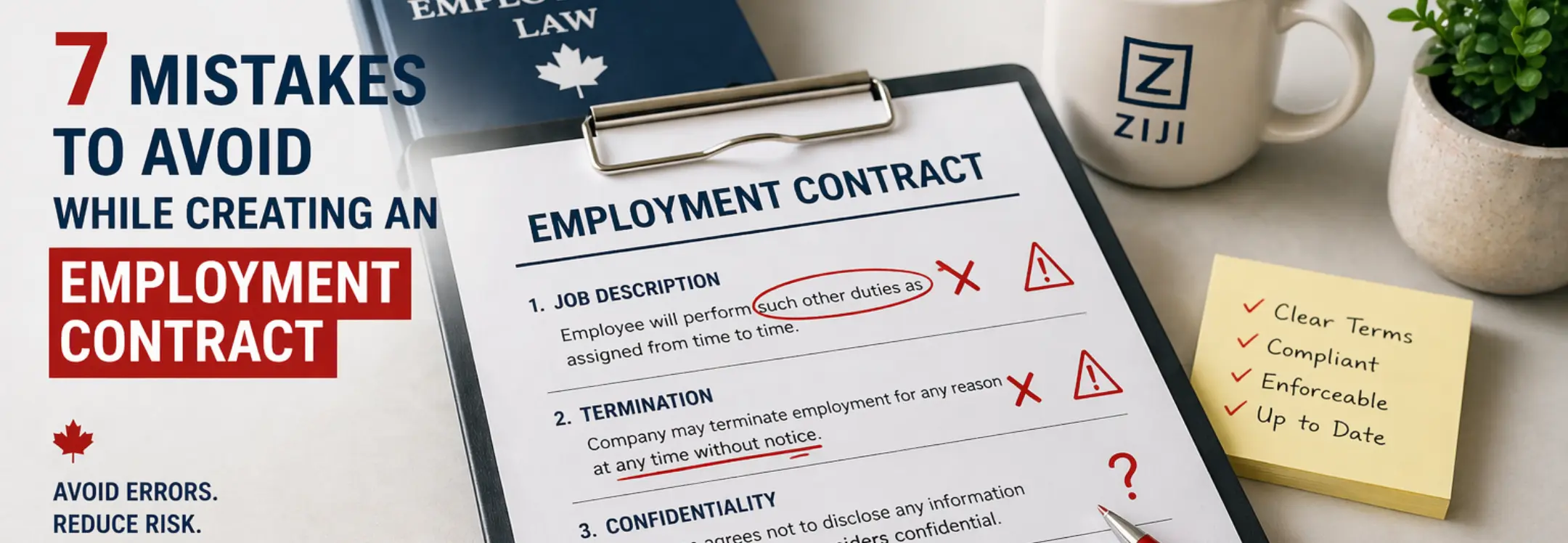
Vague language is often the downfall of an otherwise good contract. Using terms like at any time or at the company's absolute discretion in a termination clause can lead a court to strike the entire section down. This is because such language might suggest that the employer can ignore the mandatory minimum notice required by legislation. Every part of the agreement must be clear, unambiguous, and explicitly linked to the relevant legal standards to be enforceable.
Forgetting Key Provisions
Equally dangerous is failing to include essential details about how bonuses or benefits are handled during the notice period. If a contract is silent on these issues, a judge may award the cash equivalent of every benefit for the entire duration of the common law notice period. Similarly, missing a probation clause means the business must provide full notice from the very first day of work, even if the person is clearly not a fit for the role. These omissions can lead to budgetary shocks that could have been avoided with a comprehensive Employment Contract Canada.
Generic Template Problems
Many smaller businesses make the mistake of using generic templates found online that are based on American laws. These templates also frequently fail to account for the unique requirements of different provinces, such as the specific rules for calculating overtime or vacation pay in regions like British Columbia. This is why it is so important to use an Online Employment Contract that is specifically designed for the Canadian market.
Failing to Seek Local Legal Advice
Relying on a one size fits all approach is a recipe for disaster in a country with such diverse regional laws. Each province has its own employment standards act, human rights code, and workers' compensation system. A contract that is legal in one province might be completely unenforceable in another due to a minor difference in how holiday pay is calculated. Using a professional platform to generate an Employment Contract template ensures that these regional nuances are addressed correctly.
Federal Law Compliance Oversights
Companies that operate in federally regulated sectors must follow the Canada Labour Code rather than provincial acts. This includes industries like banking, telecommunications, and interprovincial transportation. The federal code has very specific requirements, such as a graduated approach to termination notice based on years of service. Failing to recognize whether a business is provincially or federally regulated is a major mistake that can lead to expensive unjust dismissal complaints.
Ignoring Mandatory Benefit Statements
Recent changes to the federal code now require employers to provide a detailed statement of benefits during any termination. This statement must outline the person's final wages, vacation pay, and any other benefits they are entitled to receive. Many businesses are still using old processes that do not include this requirement, which can lead to administrative penalties and legal challenges. Staying current with these high-level regulatory shifts is a critical part of modern employment management.
Update and Maintenance Failures
The law is constantly changing, and a contract that was perfect five years ago might be useless today. Landmark court decisions frequently change how specific clauses are interpreted, making it essential to regularly review and update standard agreements. Furthermore, many companies fail to update a worker's contract when they receive a major promotion or a significant raise. This contract drift can make the original agreement unenforceable if a court decides it no longer reflects the true nature of the relationship.
The Need for Fresh Consideration
Whenever a major change is made to an existing contract, the employer must provide something of value in return, known as fresh consideration. This could be a salary increase, a signing bonus, or a new benefit. Without this consideration, the new terms may not be legally binding. Many businesses overlook this requirement and simply ask people to sign a new agreement, which is a mistake that often comes back to haunt them during a dispute. Professional platforms help manage these updates correctly to maintain the integrity of the employment relationship.
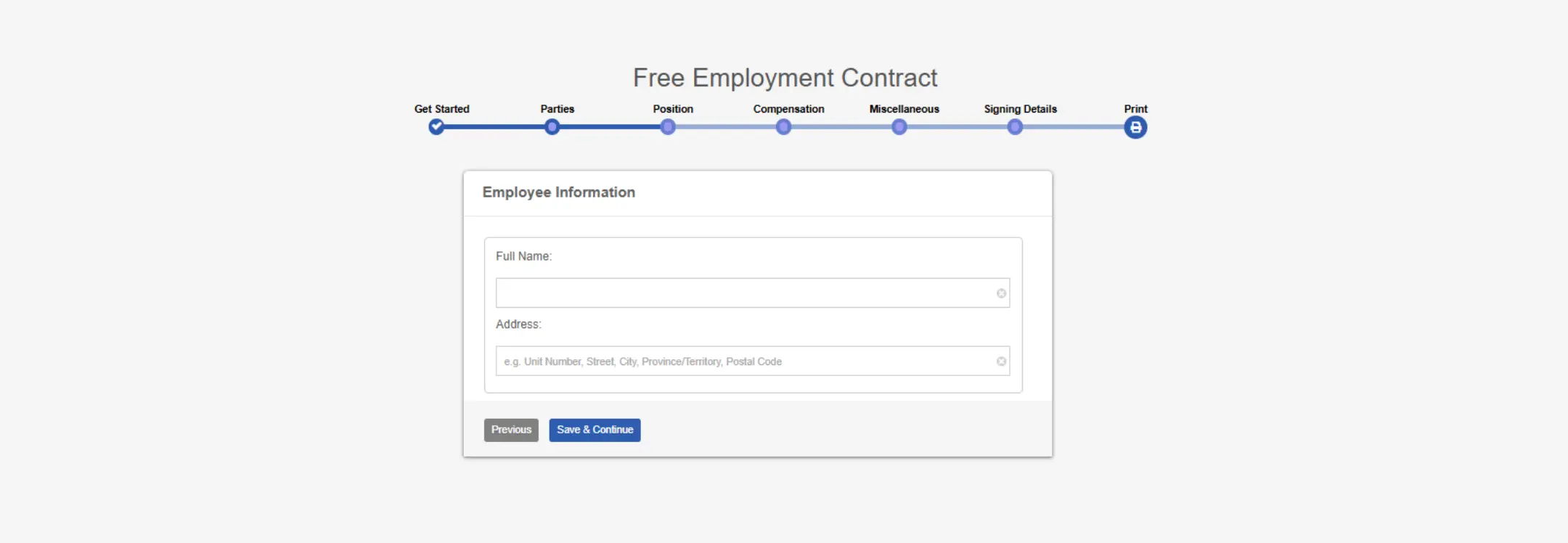
Creating an Employment Contract in 5 Steps Using Ziji Legal Forms
Modern technology has made it easier than ever for businesses to generate professional and legally compliant documents. By using a specialized platform, an organization can Create Employment Contract Online with the confidence that the language is vetted and tailored to the latest standards. Following a structured process ensures that no critical details are missed and that the final agreement provides the maximum protection for both parties.
1. Select Employment Contract Template
2. Specify Information of Parties Involved
Users must provide the accurate legal names and registered addresses of both the hiring business and the new staff member to clearly establish the participants in the agreement.
3. Add Job Position, Work Location, and Work Schedule
The platform will prompt for the entry of the specific job title along with the primary work address and the expected daily or weekly hours to define the operational scope of the role.
4. Enter Compensation Details
It is essential to list the salary or hourly rate along with any bonuses or benefits to make the financial terms of the relationship fully transparent and legally binding.
5. Preview and Download
The generated draft should be reviewed for accuracy before the final version is saved as a high quality file that is ready to be shared and signed by both parties.
Advanced Contract Considerations
As the nature of work continues to change, a basic employment agreement is no longer sufficient to protect a modern business. Organizations must now consider a range of advanced issues, from the nuances of remote work to the complexities of data privacy and work-life balance legislation. Integrating these considerations into the Employment Contract Canada ensures that the business is resilient and prepared for the future of work.
Remote Work and Hybrid Arrangements
Remote work is now a permanent feature of many industries, but it carries unique legal risks if not managed properly. A modern contract should explicitly define the person's home office as their primary place of work and outline the organization's right to recall them to a physical office if necessary. Without these details, a request to return to the office could be successfully challenged as a constructive dismissal. The agreement should also address the reimbursement of home office expenses and the security of company-provided equipment.
Managing Jurisdictional Issues
One of the biggest challenges of remote work is that the labor laws of the province where the worker is physically located will usually apply. If a worker moves from one province to another, the business may suddenly find itself subject to different rules regarding overtime, vacation pay, and statutory holidays. Every Online Employment Contract for a remote worker should state that they must notify the employer before moving to ensure that the company remains in compliance with all regional standards. This proactive approach prevents unexpected legal and administrative headaches.
Technology and Data Security Requirements
In a digital workplace, protecting sensitive information is a paramount concern for every business. The contract should include detailed protocols for how the person must handle data on both company-provided and personal devices. This includes mandatory use of secure connections and adherence to strict password and encryption policies. For remote workers, the agreement should also outline the process for returning all equipment and securely wiping any company data from personal devices upon termination.
Disclosing Electronic Monitoring
New laws in several jurisdictions now require employers to be transparent about how they monitor their workforce electronically. In provinces like Ontario, organizations with 25 or more staff must have a written policy that describes the circumstances and purposes of any monitoring. The contract should reference this policy and ensure that the worker is aware of the tools being used, such as keystroke logging or screen recording. This transparency helps build trust and ensures that the business is meeting its privacy obligations.
Evolving Legal and Regulatory Requirements
The Canadian legal landscape is currently undergoing a period of rapid change, with an increased focus on mental health and work-life balance. Many provinces and the federal government have recently introduced right to disconnect laws that require employers to set clear boundaries for after-hours communication. These policies must be documented and reviewed regularly to ensure they are being followed in practice. Using a modern Employment Contract template helps businesses incorporate these new requirements quickly and effectively.
Addressing Pay Transparency and Equity
Another major trend is the introduction of pay transparency laws that require businesses to disclose salary bands in job postings and prevent them from asking about a candidate's pay history. These laws are designed to close the gender pay gap and promote fairness in the workplace. Modern contracts should be reviewed to ensure that compensation structures are equitable and that the organization is meeting all regional disclosure requirements. This commitment to fairness is not only a legal requirement but also a key part of a strong employer brand.
Prioritizing Psychological Safety
Health and safety regulations are also expanding to include protection from psychological harm and workplace violence. Employers are now expected to actively assess and mitigate risks of harassment, including in virtual and online environments. The contract and accompanying policies should clearly state that there is zero tolerance for such behavior and provide a safe process for reporting incidents. By prioritizing psychological safety, a business can reduce absenteeism and turnover while building a much more productive and positive workplace culture.
Conclusion
Creating a detailed and legally compliant Employment Contract Canada is a fundamental step for any business that wants to protect its assets and build a professional workforce. By addressing key issues like termination notice, remote work, and data security in writing, an organization can effectively manage its risks while providing clarity and security for its employees. This proactive approach ensures that the relationship is built on a foundation of mutual respect and legal certainty. Using professional tools like Ziji Legal Forms allows any employer to generate high quality documents that are tailored to the unique requirements of the Canadian market.
Employment Contract FAQs
1. What is an Employment Contract?
An Employment Contract is a legal agreement that sets out the terms and conditions of the working relationship between an employer and an employee.
2. Why do I need an Employment Contract?
A written Employment Contract clearly defines the rights, responsibilities, and expectations of both the employer and employee, helping prevent misunderstandings.
3. What's the difference between an employee and an independent contractor?
Employees work under the employer's direction and are generally covered by employment laws, while independent contractors provide services independently under a separate contract.
4. What is a probation period?
A probation period is an initial period of employment during which the employer evaluates whether the employee is suitable for the role, subject to applicable employment laws.
5. Can an Employment Contract be changed after it is signed?
Yes. Any amendments should be agreed to by both the employer and employee and documented in writing.
6. Which jurisdictions can use the Ziji Legal Forms Employment Contract?
The Ziji Legal Forms Employment Contract can be used in all supported Canadian provinces and territories.
Author
Mandar Sonavane
|
Legal Content Writer at Ziji Legal Forms Inc.
Symbiosis International University
Mandar is a legal content writer specializing in the development of clear, practical, and easy-to-understand legal resources. With a strong focus on legal research, content creation, and plain-language writing, he works closely with our legal professionals to ensure that legal documents and educational materials are accurate, accessible, and user-friendly. At Ziji Legal Forms Inc., Mandar is responsible for researching legal topics, drafting and reviewing content, and helping transform complex legal concepts into straightforward guidance that empowers individuals and businesses to confidently navigate their legal needs.
Reviewed By
Histon Shek
|
General Counsel and Co-Founder at Ziji Legal Forms Inc.
University of Alberta
Histon Shek was called to the Alberta Bar in 2006. He holds a BA in Sociology and Philosophy and an LLB from the University of Alberta. As co-founder of Ziji Legal Forms Inc., he focuses on making legal documents accessible and affordable, overseeing legal integrity and content development.







 Canada
 United States