TL;DR- A Canadian Bill of Sale functions as an immediate transfer of legal ownership and serves as a financial receipt.
- A Sales Agreement is a forward-looking contract that outlines terms and conditions before ownership actually changes hands.
- Choosing between these documents depends on the timing of the transfer and whether conditions must be fulfilled.
- Parties can easily create a legally valid Bill of Sale document in minutes using Ziji Legal Forms.
Navigating the world of personal property transactions in Canada requires a clear understanding of legal documentation. Whether purchasing a used vehicle, acquiring commercial equipment, or transferring household assets, selecting the correct contract is vital. Many Canadians mistakenly use the terms Bill of Sale and Sales Agreement interchangeably, but doing so can lead to significant legal confusion. In Canada, these documents serve entirely different purposes under provincial laws, particularly the Sale of Goods Act. Understanding their unique roles protects both parties, establishes clear ownership, and ensures seamless compliance with tax and licensing authorities. This guide breaks down the essential differences, timing, and legal functions of these two crucial transactional instruments.
Understanding the Purpose of a Bill of Sale
A Bill of Sale in Canada is a formal legal document that records the immediate transfer of ownership of personal property from a seller to a buyer. Often referred to as a sales receipt or proof of purchase, it acts as evidence that a transaction is complete and that payment has been exchanged. Under Canadian common law, this document applies specifically to tangible, movable property, legally known as chattels.
Core Components of a Valid Document
To ensure a Bill of Sale Canada is legally binding, it must contain several critical details. The document must explicitly state the names and physical addresses of both the buyer and the seller. It must also provide a detailed description of the asset being sold, such as the serial number or unique identifiers, to prevent future identification disputes.
The financial terms of the transaction must be clearly documented. This includes the exact purchase price or a declaration of value if the item is being transferred as a gift. Finally, both parties must sign and date the document to confirm that the legal title has officially changed hands.
Chattel Ownership and Transfer under Common Law
In Canadian common law jurisdictions, the transfer of ownership of a chattel is fundamentally linked to delivery or a clear written substitute. A Bill of Sale serves as this written substitute, legally documenting that the transferor is the rightful owner and has the full legal title to convey the property. This document is critical when transactions occur without immediate physical delivery, such as when goods are left in the temporary possession of the seller.
Provincial Regulatory Requirements
Provincial regulations often dictate additional specific requirements, especially for registered assets. When selling a vehicle, provinces like Ontario, Alberta, and Saskatchewan require detailed specifications. These details include the vehicle identification number, make, model, year, and the exact odometer reading.
Furthermore, provincial ministries of finance use the Bill of Sale to assess appropriate sales taxes. In provinces like Ontario, a completed Bill of Sale must be accompanied by a Used Vehicle Information Package to ensure there are no outstanding liens. Failing to provide an accurate Bill of Sale will prevent the buyer from registering the vehicle in their province.
Explaining the Function of a Sales Agreement
A Sales Agreement is a legally binding contract that establishes the terms and conditions of a transaction before the actual exchange of ownership occurs. Rather than finalizing a sale, it outlines a future promise to sell, making it an executory contract under the provincial Sale of Goods Act. This contract acts as a roadmap, guiding both parties through the steps required to complete the transaction.
Detailed Contingencies and Payment Terms
Unlike a simple receipt, a Sales Agreement contains detailed provisions regarding the responsibilities of both parties. It often outlines complex payment schedules, third-party financing arrangements, and shipping or delivery schedules. These details ensure that both parties have a clear understanding of their financial obligations before any assets change hands.
Additionally, Sales Agreements frequently include protective clauses such as inspection contingencies. For example, a buyer might include a clause stating the transaction is contingent on a successful mechanical inspection or obtaining financing approval. If these conditions are not met, the agreement allows the parties to cancel the deal without legal penalty.
The Legal Status of Future and Conditional Goods
Under provincial Sale of Goods Acts, contracts can govern either existing goods or future goods. Future goods are those that the seller does not yet own or which have not yet been manufactured. A Sales Agreement is the only legal vehicle capable of handling future goods because it accommodates the contingency of their acquisition or production. This forward-looking nature makes it indispensable for commercial ordering and supply chain operations.
Legal Warranties and Dispute Resolution
The agreement also houses representations and warranties regarding the condition of the goods. While a Bill of Sale often sells items on an as-is basis, a Sales Agreement can specify ongoing performance guarantees. It also contains dispute resolution clauses, such as mediation or arbitration, to handle any breaches of contract before the final sale is executed.
Distinguishing a Bill of Sale vs Sales Agreement
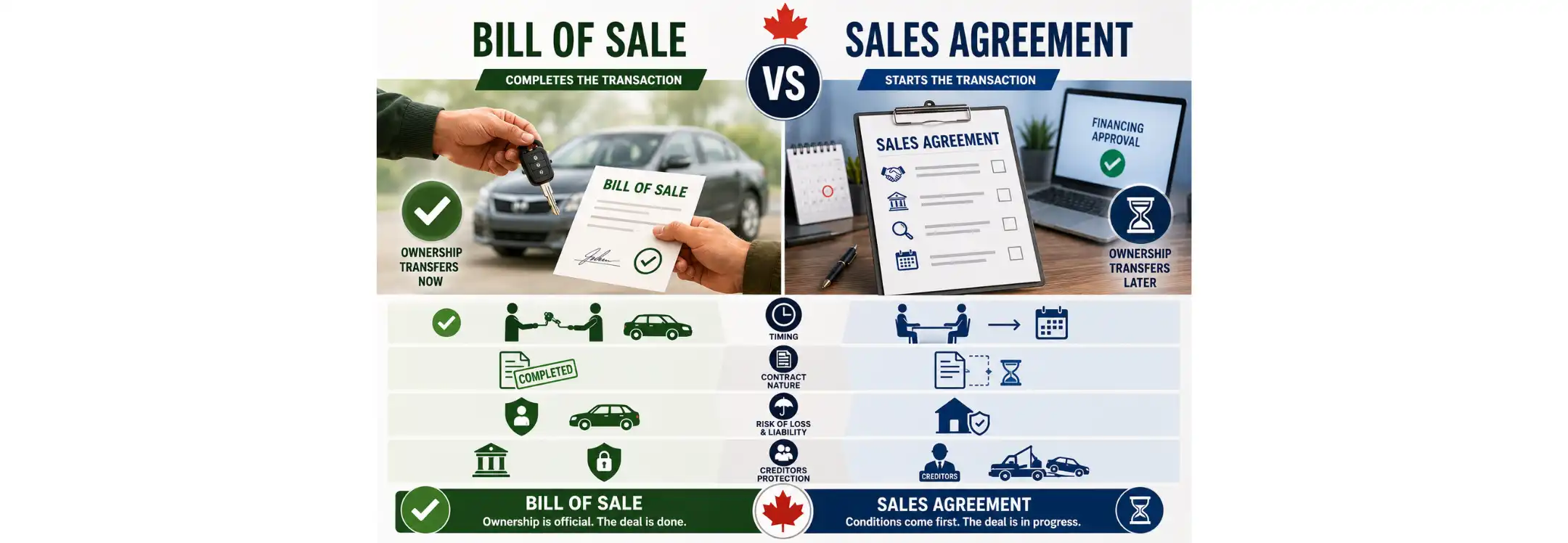
While some people use these terms interchangeably, doing so is a significant legal mistake in Canada. The distinction between a Bill of Sale vs Sales Agreement centers on timing, the status of the contract, and the immediate transfer of ownership rights.
Timing of the Transaction
The most obvious difference is when each document is executed. A Sales Agreement is signed at the beginning of a transaction, setting out the rules for a future sale. A Bill of Sale is executed at the very end of the transaction, acting as the final receipt that confirms the transfer of ownership has successfully occurred.
Executive vs Executory Nature
In Canadian contract law, a Bill of Sale is an executed contract, meaning the transaction is completed immediately upon signing. Ownership and physical control of the asset pass to the buyer on the spot. A Sales Agreement is an executory contract, meaning the core obligations, specifically the transfer of title, remain pending until future conditions are met.
Risk of Loss and Liability
This distinction heavily impacts legal liability and risk. Once a Bill of Sale is signed, the buyer assumes all risk of loss or damage to the goods. If the item is damaged afterward, the buyer bears the financial loss. Under a Sales Agreement, the risk of loss generally remains with the seller until the final transfer of ownership occurs.
Furthermore, the legal status of the parties in the event of bankruptcy differs. If a seller becomes insolvent after a Sales Agreement is signed but before the Bill of Sale is executed, the buyer is merely an unsecured creditor. If a Bill of Sale has been signed, the buyer is the legal owner and can legally claim the physical property.
Legal Protections and Third-Party Creditors
The distinction also carries massive implications for third-party creditors under provincial laws. If a seller retains physical possession of an asset after a sale, a registered Bill of Sale protects the buyer's title from the seller's creditors. Conversely, under an unexecuted Sales Agreement, the seller's creditors can seize the asset because legal ownership has not formally transferred. This risk makes a timely executed Bill of Sale vital for completing high-value acquisitions.
Guidelines on When to Use Each Document
Choosing the correct document is essential for legal compliance and financial protection. Each document serves a unique operational purpose depending on the complexity of the sale.
Appropriate Scenarios for a Bill of Sale
A Bill of Sale is appropriate for straightforward, immediate transactions. This is typical in private sales where the buyer pays the full purchase price in cash or bank draft and takes possession of the item immediately. It is the standard document used for buying or selling a used vehicle, watercraft, or agricultural equipment privately.
It is also recommended when transferring property as a gift. Even when no money changes hands, having a Bill of Sale Canada provides a legal record of the transfer. This protects the recipient by proving they are the rightful owner and helps avoid potential disputes with estate executors or tax authorities.
Appropriate Scenarios for a Sales Agreement
A Sales Agreement is necessary for complex, multi-stage transactions. If a buyer is financing a purchase and making structured monthly payments, a Sales Agreement is essential. It outlines the payment terms and states that the seller retains legal ownership until the final payment is received.
This document is also required when a sale is conditional upon future events. If a business is purchasing custom machinery that must first be manufactured or inspected, a Sales Agreement secures the deal. It protects both parties during the interim period while the conditions are being satisfied.
Estate Transfers and Family Gifts
Canadian estate planning also highlights the unique application of these documents. When an individual passes away, estate executors must provide a valid Bill of Sale alongside probate letters to transfer vehicle registration. Similarly, when transferring property as a gift between qualifying family members, a Bill of Sale acts as the supporting documentation to claim provincial tax exemptions.
Combining Both for Comprehensive Protection
In many major transactions, Canadians use both documents in tandem. First, the parties execute a Sales Agreement to lock in the purchase price and detail the closing conditions. Once all conditions are fulfilled and final payment is made, the seller issues a Bill of Sale. This completes the transaction and officially transfers the legal title.
Creating a Legally Binding Bill of Sale Canada Document
Drafting a legally binding Bill of Sale Canada document does not require hiring an expensive lawyer. Utilizing an Online Bill of Sale template allows Canadians to protect their interests quickly and affordably. Ziji Legal Forms offers an intuitive, professional platform designed specifically to meet Canadian federal and provincial legal requirements, making it easy to create Bill of Sale documents in minutes.
1. Choose Template
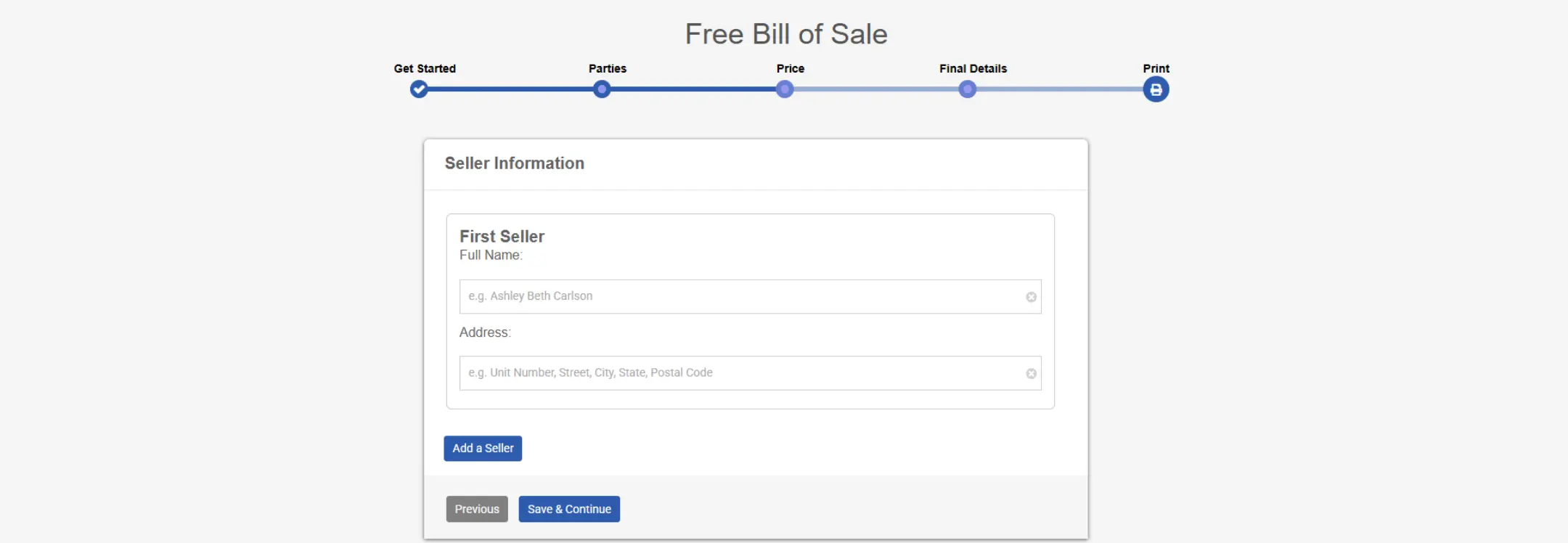
2. Add Party Details
Input the legal names and physical addresses of both the purchaser and the seller to clearly identify the parties involved.
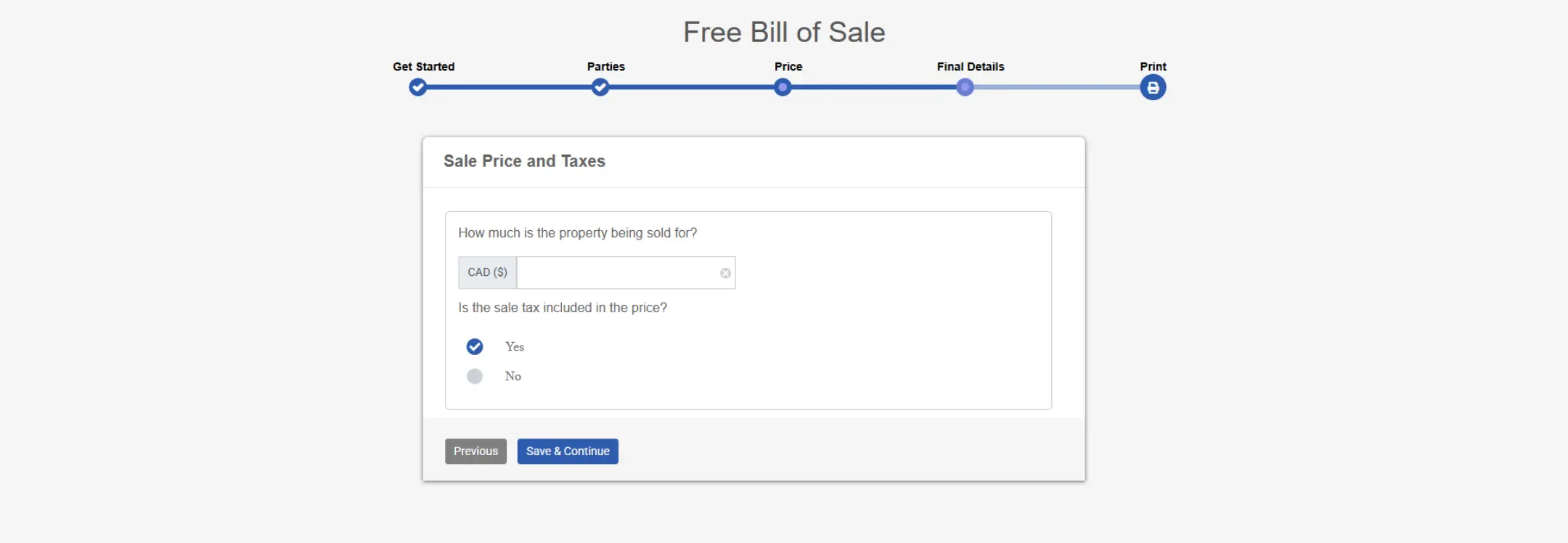
3. Add Pricing Details
Enter the exact purchase price and indicate the payment method being used for the transfer.
4. Add Final Details
Incorporate specific asset descriptions like serial numbers and disclose any existing liens or loans on the property.
5. Preview and Print
Review the instantly generated draft for accuracy and then download the document to print and sign.
Final Thoughts
Navigating personal property transactions in Canada is simple when the correct legal documents are used. Understanding the difference between a Bill of Sale vs Sales Agreement ensures that buyers and sellers are fully protected under provincial Sale of Goods Acts. While a Sales Agreement outlines the terms of a future transaction, a Bill of Sale finalizes the deal by immediately transferring legal ownership. Choosing the appropriate document depends on whether the transaction is immediate or conditional. Utilizing a professional Bill of Sale template from Ziji Legal Forms allows Canadians to create legally valid documents with confidence. This simple step secures your legal rights, satisfies provincial registration requirements, and provides peace of mind.
Bill of Sale FAQs
1. What is the purpose of a Bill of Sale?
Its purpose is to document the sale of personal property and confirm that ownership has transferred to the buyer.
2. Can I use a Bill of Sale for private sales?
Yes. It is commonly used for private sales involving vehicles, trailers, boats, equipment, and other valuable personal property.
3. What does an "as is" sale mean for the buyer?
It means the buyer purchases the item in its current condition and accepts any existing defects unless otherwise agreed.
4. Is it better to notarize a Bill of Sale?
While not generally required, notarization can help verify the authenticity of the transaction.
5. Does a Bill of Sale require both signatures?
Yes. Having both parties sign helps confirm the sale and the transfer of ownership.
6. Can the Ziji Legal Forms Bill of Sale be used anywhere in Canada?
The Ziji Legal Forms Bill of Sale can be used in all supported Canadian provinces and territories.
Author
Mandar Sonavane
|
Legal Content Writer at Ziji Legal Forms Inc.
Symbiosis International University
Mandar is a legal content writer specializing in the development of clear, practical, and easy-to-understand legal resources. With a strong focus on legal research, content creation, and plain-language writing, he works closely with our legal professionals to ensure that legal documents and educational materials are accurate, accessible, and user-friendly. At Ziji Legal Forms Inc., Mandar is responsible for researching legal topics, drafting and reviewing content, and helping transform complex legal concepts into straightforward guidance that empowers individuals and businesses to confidently navigate their legal needs.
Reviewed By
Histon Shek
|
General Counsel and Co-Founder at Ziji Legal Forms Inc.
University of Alberta
Histon Shek was called to the Alberta Bar in 2006. He holds a BA in Sociology and Philosophy and an LLB from the University of Alberta. As co-founder of Ziji Legal Forms Inc., he focuses on making legal documents accessible and affordable, overseeing legal integrity and content development.








 Canada
 United States