TL;DR- A legally sound Bill of Sale is essential for establishing proof of ownership and completing vehicle registration across Canadian provinces.
- The purchase price listed on a Car Bill of Sale is used by provincial registries to calculate applicable retail sales taxes based on market valuation.
- Using an adaptable Bill of Sale template protects both transacting parties by establishing clear conditions such as an as-is clause.
- Sellers and buyers can easily create Bill of Sale documents tailored to provincial regulations using the intuitive online platform from Ziji Legal Forms.
- Conducting a thorough lien check on the provincial Personal Property Security Register prevents buyers from assuming undisclosed vehicular debt.
The Crucial Role of Private Vehicle Transfer Documents
Private automotive transactions across Canada demand a high level of diligence to ensure that the rights of both parties are protected. A proper Bill of Sale is not merely an optional receipt but a critical legal instrument that records the official transfer of ownership. Private used vehicle transactions operate primarily under the legal doctrine of caveat emptor, meaning buyer beware, which places the responsibility of verification squarely on the purchaser. Without a robust written record, resolving disputes over mechanical issues, previous accidents, or financial liabilities after the transaction is completed becomes exceptionally difficult.
Provincial authorities rely heavily on these transaction records to update their administrative databases. For instance, when a buyer registers a used automobile, provincial entities like Service Ontario or Service Alberta require an original completed document to finalize the transfer of the vehicle permit. The purchase price recorded on this contract directly influences the sales tax the buyer must pay at the registration center. Therefore, understanding how to utilize a standard template to execute this transaction is vital for a seamless administrative transfer.
Defining a Car Bill of Sale Template
A Car Bill of Sale template is a pre-formatted legal document designed to capture all essential details of a private vehicle transaction. Rather than attempting to draft an agreement from scratch, using a structured template ensures that no critical information is overlooked. This standardized document serves as formal evidence that the purchaser has acquired legal rights to the vehicle in exchange for a specified sum of money. Once executed by both parties, it serves as a legally binding contract that protects the financial interests of everyone involved.
Utilizing a reliable Bill of Sale template is particularly important in Canada due to the decentralized nature of vehicle registration. Since there is no single federal system, each province dictates its own administrative requirements for private sales. A well-designed template is structured to satisfy these regional variations while maintaining a clear and professional layout. This balance of structure and flexibility makes it an indispensable tool for private sellers and buyers who want to ensure compliance without hiring expensive legal counsel.
Vital Contractual Elements
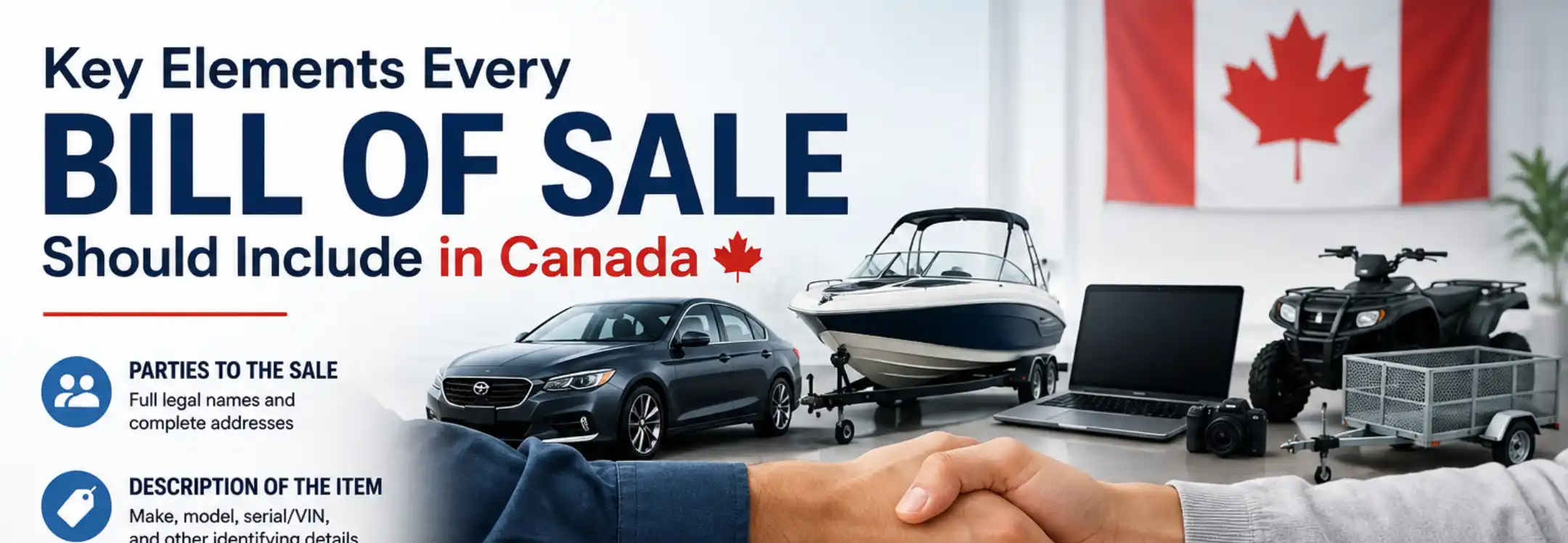
Every valid Bill of Sale Canada must contain specific components to be accepted by provincial registration authorities. First, it must clearly state the full legal names, physical addresses, and contact numbers of both the buyer and the seller. Verifying this information against valid government-issued identification is a critical step that prevents fraudulent transactions. The document must also specify the date of the sale, which establishes the official timeline for registration and insurance coverage.
Second, the template must include an exhaustive description of the motor vehicle being sold. This description comprises the year, make, model, body type, and color of the vehicle. Most importantly, the seventeen-character vehicle identification number must be copied with absolute accuracy. Provincial registries use this unique serial number as the primary identifier, and any typographical error will result in immediate rejection. Finally, the current odometer reading must be documented to establish a verified mileage record at the time of transfer.
Adaptability and Regional Modification Options
A key advantage of using a customizable template is the ability to adapt the agreement to meet specific provincial guidelines. For example, in Ontario, private sellers are legally mandated to provide the buyer with a Used Vehicle Information Package. While this package contains a simple built-in transfer form, a customized template allows the parties to outline more detailed terms and protective clauses. This ensures that the transaction complies with local laws while addressing the unique circumstances of the sale.
In other parts of the country, regional regulations require different disclosures. In Saskatchewan, used vehicles purchased privately for personal use with a purchase price of five thousand dollars or less are exempt from provincial sales tax. A tailored contract can explicitly note this exemption to prevent confusion during the registration process. By using a flexible document, the transacting parties can easily incorporate these local legal nuances, ensuring that the agreement is fully compliant with the laws of their specific province or territory.
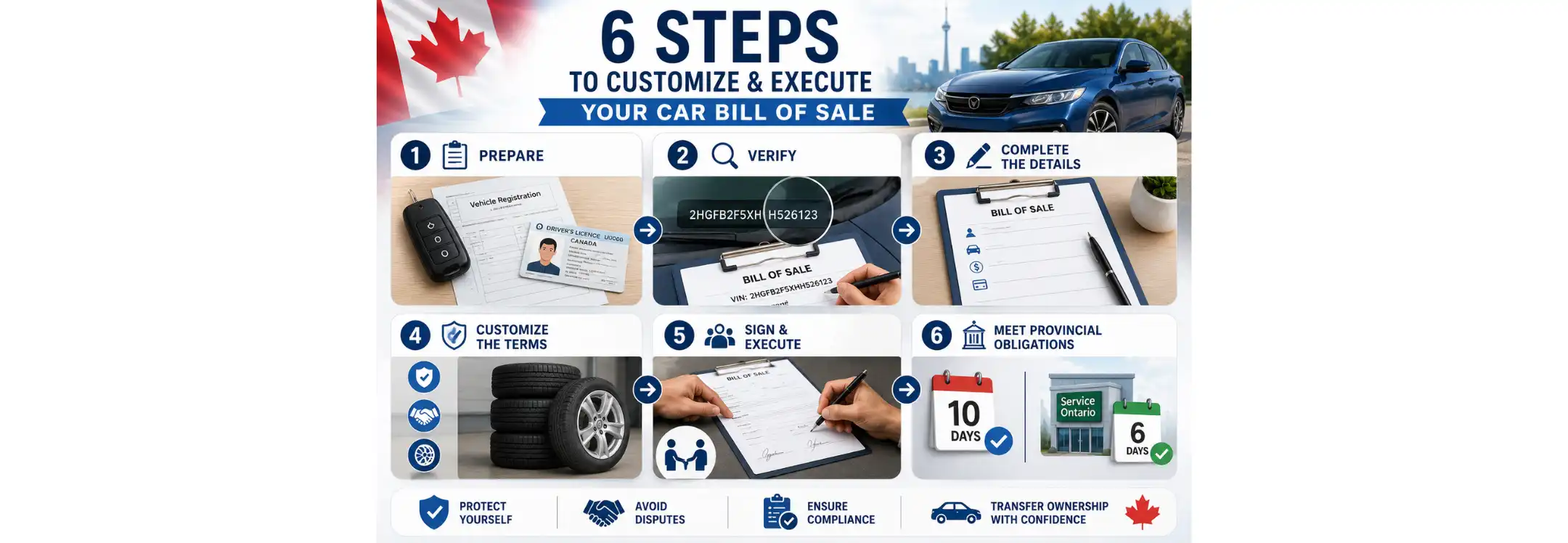
Step-by-Step Guide to Customizing and Executing Your Document
Successfully executing a vehicle transfer requires a systematic approach to filling out and customizing the contract. Before beginning, both parties should gather all necessary documentation, including the existing vehicle registration certificate and government-issued identification cards. This preparation ensures that all inputs are accurate and verifiable. The process is highly collaborative, requiring both the buyer and the seller to agree on the final terms before any signatures are placed on the paper.
The actual physical verification of the automobile must take place alongside the document completion. This means comparing the vehicle identification number stamped on the dashboard with the number written on the ownership papers and the new transfer document. Discrepancies here are a major red flag that must be resolved before proceeding. Once the physical details are verified, the parties can move forward with completing the template fields in a methodical manner.
Chronological Completion of the Form
The document completion process begins by inputting the date of the sale and the geographic location of the transaction. Next, the full legal names and physical mailing addresses of the buyer and seller are recorded in the designated fields. It is critical to use names exactly as they appear on official driver's licenses, as provincial registries will reject forms with inconsistent names.
Following the personal information, the specific details of the automobile are entered, starting with the vehicle identification number, make, model, year, and odometer reading. After the physical attributes are finalized, the financial terms must be completed. The exact purchase price must be recorded in both written words and numerical figures to prevent unauthorized modifications. The chosen payment method, such as cash or an electronic bank transfer, should also be clearly stated.
Tailoring the Agreement to Specific Terms
Customizing a Bill of Sale template allows the transacting parties to include custom clauses that address the specific terms of their agreement. The most common customization in private sales is the inclusion of an as-is clause. This statement declares that the buyer accepts the vehicle in its current state, and the seller disclaims all warranties regarding its future performance or mechanical condition. This clause is vital for protecting the seller from future legal claims if mechanical issues develop after the sale.
Other common customizations include documenting a deposit or outlining a specific payment schedule. If the buyer is paying a portion of the price to hold the car while securing financing, the template can be customized to detail the deposit amount, the deadline for final payment, and whether the deposit is refundable. Additionally, any separate agreements, such as including a set of winter tires or structural parts in the sale, should be explicitly written into the contract to avoid future disputes.
Statutory Obligations and Signatures
For the transfer document to hold legal weight, it must be properly executed in accordance with provincial laws. Both the buyer and the seller must sign and date the document to indicate their formal consent to the terms. In provinces like Alberta, the signatures of independent witnesses are highly recommended to verify that the signatures were obtained voluntarily and without coercion. Each party must retain an original signed copy of the completed agreement.
Furthermore, sellers must fulfill distinct provincial notification requirements once the document is signed. In Newfoundland, the seller must notify the Registrar of Motor Vehicles within ten days that the vehicle has been sold, which relieves them of future liabilities like traffic fines or impound fees. In Ontario, the buyer must present the signed document at a Service Ontario center within six days to transfer ownership legally. Meeting these statutory timelines is critical to avoiding administrative penalties.
Preparing an Online Bill of Sale with Ziji Legal Forms
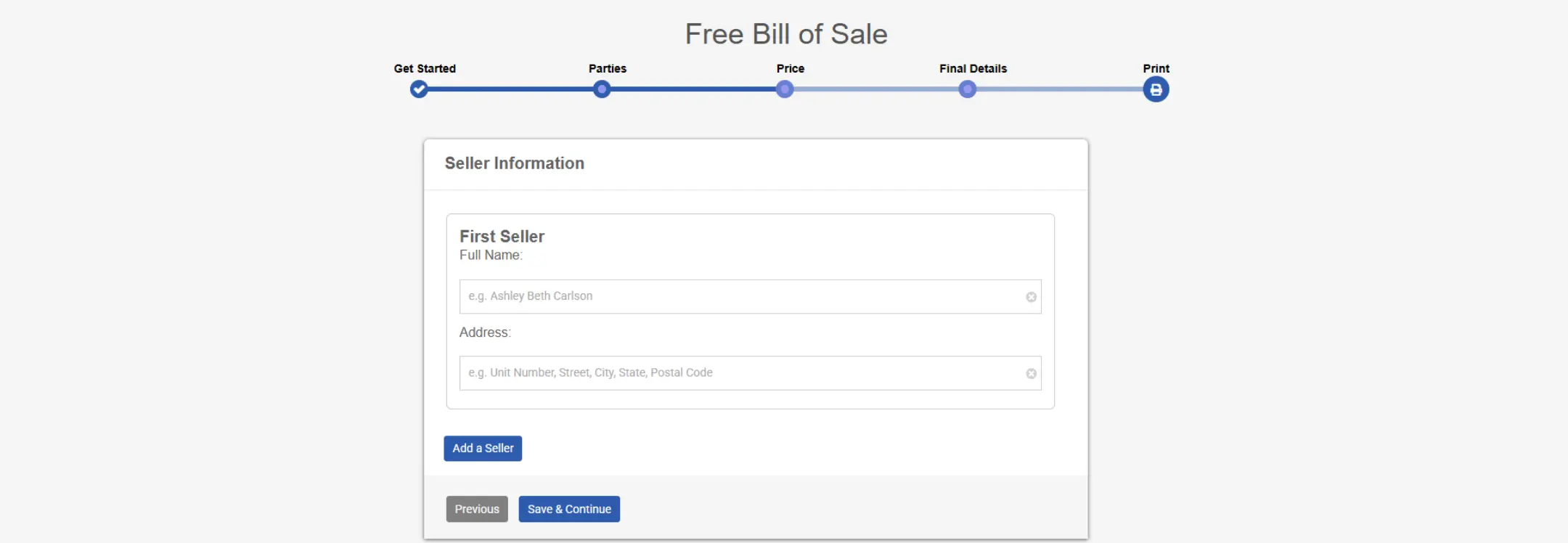
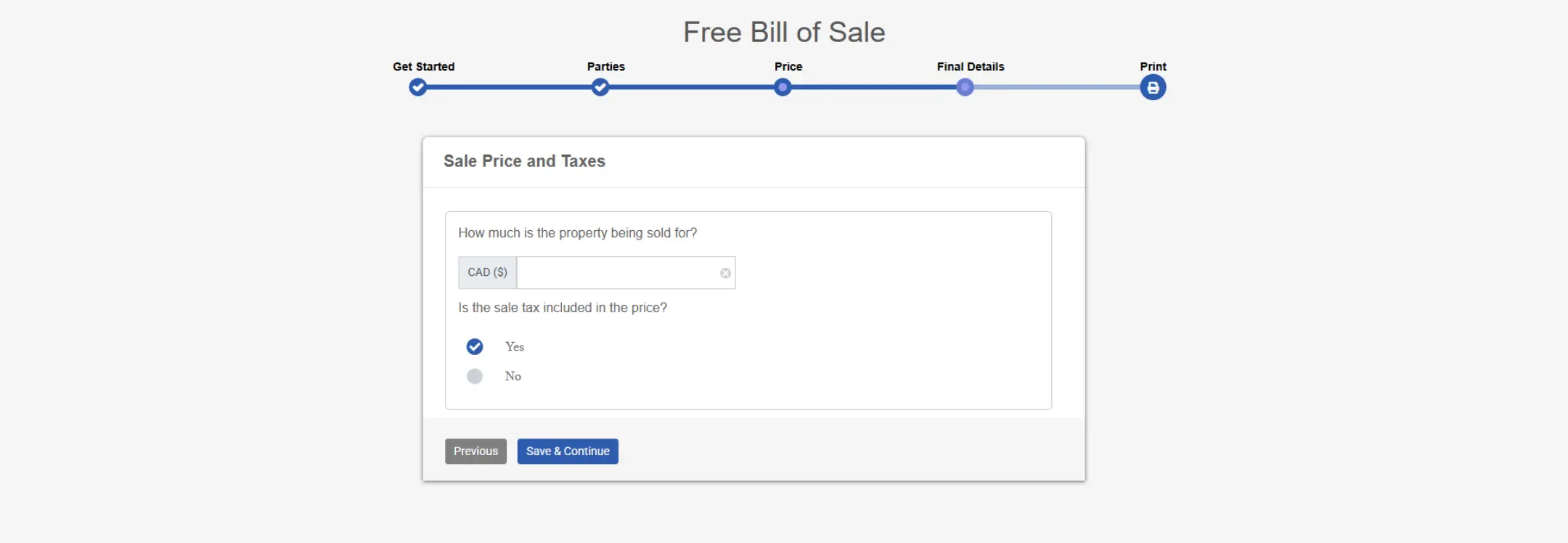
Utilizing a modern digital platform to Create Bill of Sale documents is the most efficient way to ensure accuracy and compliance. Ziji Legal Forms offers an automated system that guides users through the entire process, removing the guesswork from legal drafting. The following steps outline how to generate a customized transaction record using this intuitive platform.
1. Choose Template
2. Add Party Details
Input the full legal names, physical mailing addresses, and contact numbers of the buyer and the seller.
3. Add Pricing Details
Record the final agreed purchase price and indicate the payment method chosen for the transaction.
4. Add Final Details
Provide critical vehicle attributes including the unique vehicle identification number and current odometer reading.
5. Preview and Print
Review the completed draft for any typographical errors before printing the document for immediate physical signature.
Advantages of Pre-Formed Templates Over Manual Drafting
Attempting to draft a transfer contract by hand or using a generic text editor introduces significant legal risks. Manual drafting frequently leads to the omission of essential elements, such as a precise odometer disclosure statement or a clear as-is clause. If the resulting document is incomplete, provincial registries may reject it during the registration process, causing severe delays for the buyer. Furthermore, an incomplete contract can leave the seller exposed to ongoing liabilities if the buyer fails to register the vehicle.
Utilizing a professional Bill of Sale template eliminates these vulnerabilities by providing a legally vetted structure. The template forces both parties to consider and document every necessary aspect of the transaction, ensuring that all provincial standards are met. This systematic approach establishes clear evidence of the transfer of ownership, protecting both the buyer and the seller from potential legal disputes or fraudulent claims down the road.
The Administrative Impact of Clean Presentation
A professional presentation is highly beneficial when dealing with provincial registration authorities. Clerks at registries handle hundreds of transactions daily and must verify the details of each transfer quickly. A clean, legible, and structured document allows the clerk to find the necessary information, such as the vehicle identification number and purchase price, instantly. This efficiency minimizes the time spent at the counter and reduces the likelihood of processing errors.
Moreover, a professional document reinforces the legitimacy of the private sale. If a vehicle is sold for significantly less than its wholesale value, a messy or handwritten receipt may attract scrutiny from tax auditors. A clean, structured template presents the transaction as a formal, transparent agreement, which helps facilitate a smooth transfer of ownership and avoids unnecessary questions regarding the stated purchase price.
Frequent Errors to Sidestep in Private Transactions
One of the most severe mistakes a private buyer can make is failing to conduct a thorough lien search before executing the agreement. Under the Personal Property Security Act in Canadian provinces, lenders register a security interest on a vehicle if it was used as collateral for a loan. This registration is recorded on the provincial Personal Property Security Register. If a buyer purchases a vehicle with an active lien, the lender retains the right to repossess the car, leaving the buyer without a vehicle and out of pocket.
To prevent this devastating outcome, buyers must conduct a comprehensive search on the Personal Property Security Register using the vehicle identification number and the seller's legal name. If a security interest is detected, the transaction should not proceed until the seller provides written proof from the lender that the debt has been fully discharged. This due diligence is a fundamental aspect of a secure private transaction.
Another common mistake is under-reporting the purchase price of the vehicle to help the buyer save on provincial sales tax. Provincial registries actively combat this practice by comparing the listed price on the transfer document with the average wholesale value in the Canadian Red Book. If the reported price is lower, the registry will calculate the tax based on the higher wholesale value unless a formal appraisal is provided. Under-reporting also constitutes tax evasion, which carries heavy legal penalties.
Lastly, buyers and sellers often fail to cross-reference the physical vehicle identification number on the car's dashboard with the paperwork. The seventeen-character code must match the registration certificate and the transfer contract exactly. A mismatch can indicate that the vehicle is stolen, has a salvage title, or was involved in a major accident, rendering it ineligible for registration or insurance. Verifying this serial number is an essential step that must never be skipped.
Concluding Remarks on Secure Vehicle Transfers
Executing a secure private vehicle transaction in Canada requires a clear understanding of provincial regulations and a commitment to thorough documentation. Utilizing an Online Bill of Sale template from a trusted provider like Ziji Legal Forms ensures that all necessary personal, vehicle, and financial details are recorded accurately. This structured approach helps prevent administrative delays during registration and shields both parties from post-sale legal disputes.
Buyers must remain vigilant by conducting independent lien searches on the provincial Personal Property Security Register and physically verifying the vehicle identification number. By following these best practices and completing a comprehensive transaction record, Canadians can navigate the private automotive market with complete confidence.
Bill of Sale FAQs
1. Why is a Bill of Sale important?
It creates a written record of the sale and helps protect both the buyer and seller if questions arise after the transaction.
2. When is a Bill of Sale recommended?
It is recommended whenever valuable personal property is sold through a private transaction.
3. What happens when an item is sold "as is"?
The buyer accepts responsibility for the item's condition after the sale unless the agreement specifically provides a warranty.
4. Is notarization required for every Bill of Sale?
No. Most Bills of Sale do not require notarization, although it may be worthwhile for expensive purchases.
5. Should both parties keep a copy?
Yes. Both the buyer and seller should retain a signed copy for their records.
6. In which jurisdictions can I use the Ziji Legal Forms Bill of Sale?
The Ziji Legal Forms Bill of Sale is designed for use across all supported Canadian provinces and territories.
Author
Mandar Sonavane
|
Legal Content Writer at Ziji Legal Forms Inc.
Symbiosis International University
Mandar is a legal content writer specializing in the development of clear, practical, and easy-to-understand legal resources. With a strong focus on legal research, content creation, and plain-language writing, he works closely with our legal professionals to ensure that legal documents and educational materials are accurate, accessible, and user-friendly. At Ziji Legal Forms Inc., Mandar is responsible for researching legal topics, drafting and reviewing content, and helping transform complex legal concepts into straightforward guidance that empowers individuals and businesses to confidently navigate their legal needs.
Reviewed By
Histon Shek
|
General Counsel and Co-Founder at Ziji Legal Forms Inc.
University of Alberta
Histon Shek was called to the Alberta Bar in 2006. He holds a BA in Sociology and Philosophy and an LLB from the University of Alberta. As co-founder of Ziji Legal Forms Inc., he focuses on making legal documents accessible and affordable, overseeing legal integrity and content development.







 Canada
 United States