- The Canadian government recommends that any child under nineteen carry a consent letter when travelling without both legal guardians.
- Signing authority belongs to those with legal decision making responsibility, which is the modern term for custody in Canada.
- Separated parents usually need a signature from the non travelling parent even if they have a formal parenting agreement.
- A Notary Public is strongly recommended to witness signatures to prevent border officials from questioning the document.
- Supporting documents like long form birth certificates and court orders help prove the relationship between the signer and the child.
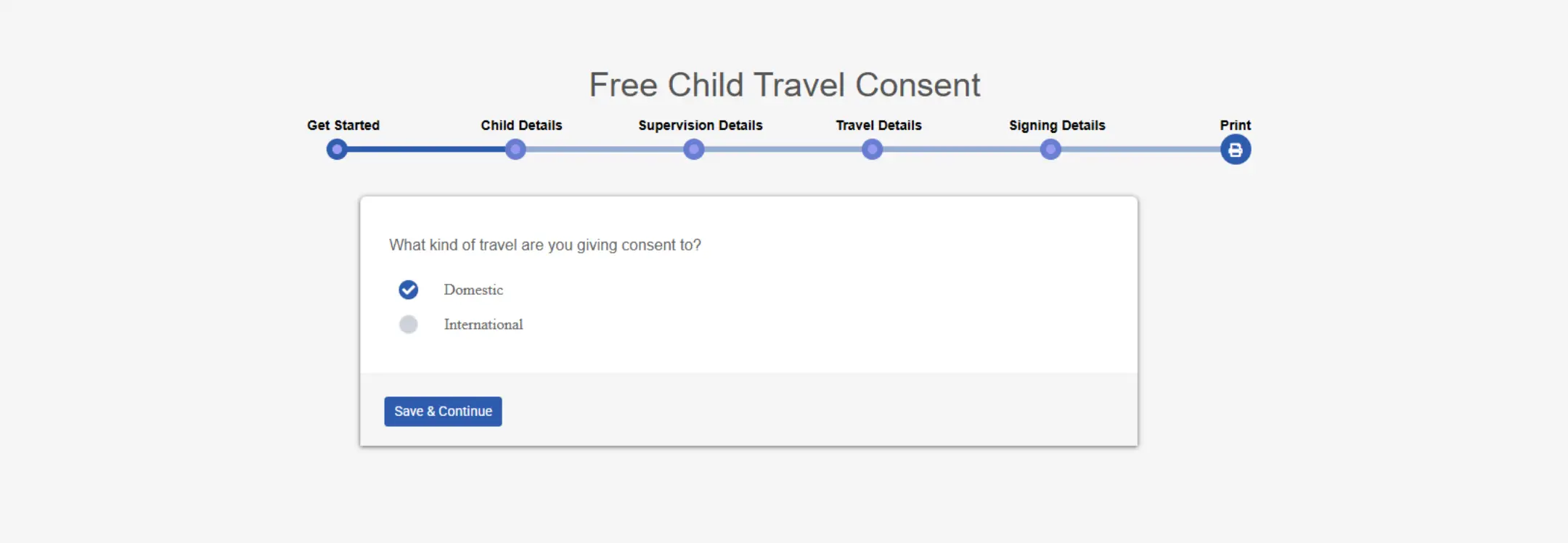
- Using Ziji Legal Forms' Child Travel Consent Form Template ensures all travel details and contact information are clear for immigration officers
Introduction: Why the Signer Matters as Much as the Form
When you prepare for a family trip outside of Canada, you likely focus on passports and packing. However, the legal right to take a child across a border is just as important. A Child Travel Consent Form is the best way to prove that a minor has permission to travel. This document is not just a piece of paper. It is a legal shield that protects children from abduction and trafficking. Border officials look closely at these forms to ensure the child is safe.
The identity of the person who signs the form is the most critical part of the process. If a person without legal authority signs the letter, the document might be rejected. This can lead to serious delays at the airport or land border. You might even be denied entry into your destination country. Officials want to see that everyone with a legal say in the child’s life has agreed to the trip.
In Canada, the rules for who can sign are shaped by federal laws like the Divorce Act. These laws have changed recently to focus on the best interests of the child. Because family structures are diverse, there is no one size fits all answer for who must sign. Whether you are married, separated, or a legal guardian, you must know your specific role. This guide explains how to identify the correct signers for your situation.
What Signing Authority Means in Child Travel
Signing authority is the legal power to give a child permission to leave Canada. This power is linked to decision making responsibility. This is the term the law now uses instead of custody. It describes who has the right to make major choices for a child. These choices include education, health care, and international travel. If you have this responsibility, you generally have the authority to sign a travel consent form.
Border agents in Canada and other countries check for this authority. They want to be sure that no parent is being left out of the decision. This is part of a global effort to stop children from being moved without consent. Even if you have the child in your care most of the time, you may still need the other parent's signature. This is because decision making is often shared between parents by default.
The age of the child also plays a role in signing authority. In Canada, the age of majority is eighteen or nineteen depending on the province. For example, it is nineteen in British Columbia and Nova Scotia but eighteen in Ontario and Alberta. The federal government suggests a consent letter for any child under nineteen. This helps avoid confusion when visiting countries with different age rules.
Legal Authority Versus Caregiving Roles
It is easy to confuse a caregiver with a person who has legal authority. A caregiver is someone like a grandparent or a close family friend who looks after the child. They play a huge role in the child’s life, but they do not always have the legal right to sign travel forms. Only the parents or legal guardians with decision making responsibility can grant travel permission.
If a child is going on a trip with a grandmother, the grandmother is the supervisor. She cannot sign the form for the child. Instead, she must carry a form signed by the child’s parents. This form tells the border official that the parents know about the trip and trust the grandmother. It bridges the gap between daily care and legal responsibility.
The difference is vital because border agents are trained to look for legal links. They may ask for a birth certificate to see if the person signing is actually the parent. If a caregiver signs instead of a legal guardian, the form will likely be rejected. Always ensure that the person signing is the one recognized by Canadian law as having decision making power.
Parents as Signatories
Parents are the most common signers for travel consent documents. In most cases, both biological or adoptive parents hold the right to make decisions. When a child travels without one of them, the parent who stays home must sign the form. This simple step shows that the trip is not an attempt to hide the child from the other parent.
The need for a parental signature does not change because of marital status. Whether parents are together or live apart, their legal rights usually remain. Border officials are very careful about one parent travelling alone with a child. They want to see a clear and valid signature from the other parent. Carrying a Sign Child Travel Consent Form is the best way to handle these questions quickly.
Sometimes a parent is hard to reach or lives in another country. In these cases, you should still try to get a signature. A digital signature might work, but an original is always better. If it is truly impossible to get a signature, you may need to speak with a lawyer. They can help you get a court order that allows the trip to proceed without that signature.
Both Parents Versus One Parent
If a child travels with only one parent, the other parent must sign the form. This applies even for a short day trip to the United States. The travelling parent does not need to sign a letter for themselves. They just need to carry the permission from the parent who is not with them. This document should include the dates and the location of the trip.
When a child travels entirely alone, both parents should sign the form. This is common for older children flying as unaccompanied minors. Having both signatures tells the airline and the border agent that the child has full support for the journey. It is a safety measure that ensures everyone is on the same page.
There are also times when a child travels with both parents at the start but one parent leaves early. In this situation, the parent who stays with the child should have a consent letter. Border agents may ask for it when that parent and child return to Canada. Being ready for these changes in supervision helps you avoid stress during your trip.
Married Parents and Default Parental Rights
Married parents often assume they do not need a travel letter because they live together. However, a border official cannot know your family situation just by looking at you. They need proof that the parent at home knows about the vacation. Carrying a signed letter is a small task that prevents big problems at the border.
If a mother travels alone with her child, an official might wonder if the father knows. A signed and notarized letter from the father solves this instantly. It gives the officer confidence that the child is not being moved without permission. This is especially important for international flights where security is very high.
The law sees both married parents as having equal rights. This means both have the authority to sign. By providing a letter, you are respecting the legal standards that protect all children. It is a proactive way to ensure your travel goes as planned. Most families find that having this document makes crossing the border much faster.
Divorced or Separated Parents
For parents who are divorced or separated, the rules are more specific. Your signing authority is usually guided by a separation agreement or a court order. These papers explain who has decision making responsibility. If you share this responsibility, you must get the other parent to sign the Child Travel Consent Form Canada.
Clear communication is key when you are no longer together. You should give the other parent a full itinerary of the trip. This includes flight numbers and where the child will sleep. When the other parent has this information, they are more likely to sign the form. If your relationship is difficult, you may need a lawyer to help you get the signature.
Many court orders have rules about travel notice. You might need to give thirty days of notice before a trip. Always check your legal papers before you book any flights. Following these rules keeps you in good standing with the court. It also ensures that the border official sees your travel as legal and authorized.
Sole Custody Situations
If you have sole decision making responsibility, you are the only one who needs to sign the form. However, border officials might not know that you have sole authority. They are used to seeing two parents and may ask why a signature is missing. Because of this, it is often easier to still get a letter from the other parent if you can.
If you cannot get a second signature, you must carry your court order. This order should clearly state that you have sole decision making power. A certified copy is better than a simple photocopy. This document explains to the official why only one parent has signed the travel form. It is your legal proof of authority.
In some cases, the other parent may have no legal rights at all. If so, you are the only signer. You should carry the child’s birth certificate or a court order that shows this. The goal is to make the situation clear to the official. By being prepared with the right papers, you can move through the border with less worry.
Legal Guardians and Custodians
Legal guardians are people who have been given the right to care for a child by a court. They have the same signing authority as a parent. If a child lives with a guardian, that guardian must sign the travel consent form. This authority is just as serious as parental authority. Border agents will check the guardian’s papers very carefully.
When a guardian signs, they should be ready to show their legal documents. These papers prove that a court or a will has given them this role. Because children travelling with non parents are checked more closely, these papers are essential. They link the child to the adult in a way that the border agent can verify.
If there are two guardians, both should ideally sign the form. This shows that everyone in charge of the child agrees to the trip. It provides a complete look at the child’s legal support. Whether the guardianship is for a short time or forever, the signer must have the power to say yes to the travel.
Who Qualifies as a Legal Guardian
A legal guardian in Canada is not just a relative who helps out. They are someone with a formal legal appointment. This could come from a court order or a provincial agency. In some cases, a will can appoint a guardian after a parent passes away. To sign a travel form, you must have this official status in writing.
Family members like aunts or grandparents are not guardians unless a court says so. If they want to take a child on a trip, they need a letter from the parents. This is a common mistake that can cause trouble at the border. Always check if you have the legal right to sign before you fill out the form.
If you are waiting for a court to name you as a guardian, you cannot sign yet. Border officials need to see that you have authority right now. Once you have your papers, keep them in a safe place. Carry certified copies when you travel. This ensures you can always prove your right to look after the child.
Difference Between Guardianship and Custody
The words guardianship and custody can be confusing because they seem similar. In the past, custody meant the right to care for and make choices for a child. Now, federal law uses the term decision making responsibility. Guardianship is often used in provincial laws to describe the whole set of rights an adult has.
Some provinces consider all parents to be guardians. In others, you must be appointed. For your Child Travel Consent Form template, the most important thing is who makes the big decisions. If a court order uses the word custody, it usually means that person can sign. If it uses the new terms, look for who has decision making power.
Using the right words in your form helps the border official. You want the language on your form to match your legal papers. If your court order says you have decision making responsibility, use that phrase. This makes it easy for the official to see that everything is correct. It speeds up the process and reduces the chance of questions.
Foster Parents and Temporary Guardians
Children in the foster care system have unique rules for travel. Foster parents provide a home, but they usually do not have the legal right to sign travel forms. That power usually stays with the child welfare agency. This means a foster parent must work with the agency to get permission for any trip.
A representative from the agency must sign the Child Travel Consent Form. This might be a social worker or a supervisor. Foster parents should ask for this signature early in their planning. They will also need a letter from the agency that says they can take the child on the trip. This keeps the child safe and follows the law.
Temporary guardians also need to be careful. This role is common when parents are in the military or need medical care. You must check if your temporary papers give you the right to authorize travel. If they do not, the biological parents may still need to sign from where they are. Always check the fine print of your legal papers.
Supporting Documents Often Requested
A consent form is very helpful, but border officials often want more proof. They may ask for supporting documents to verify the form. These papers show who the child is and how they are related to the adults. Carrying these documents is a key part of being a smart traveller. They act as the evidence for your consent letter.
The most common paper is a birth certificate. Others include court orders or death certificates. These documents provide a clear link between the child and the signer. For example, if a mother has a letter from the father, a birth certificate with the father’s name proves he is the right person to sign.
Always carry original or certified copies of these papers. A simple photocopy is often not enough for an immigration officer. They want to see official seals and signatures. Keeping these documents in a neat folder makes your trip much easier. When an official asks a question, you can show them the proof right away.
Custody Orders and Court Documents
If you have a court order for parenting or custody, take it with you. This document is the final word on who makes decisions for your child. When you use an Online Child Travel Consent Form, the court order gives it context. It shows the border agent that the travel follows the legal rules set for your family.
The court order is very important if one parent has sole responsibility. It explains why there is only one signature on your travel form. If the order has specific travel rules, like where the child can go, the agent will want to see that you are following them. Carry a recent copy to show your current legal status.
Even if you have a good relationship with the other parent, the order is good to have. It acts as a backup if there are any questions about your rights. It can help an official understand the legal framework of your situation. Being over prepared with court papers is always the best choice for international travel.
Guardianship Papers and Formal Appointments
If you are a legal guardian, you must carry your appointment papers. These are your only way to prove you have authority. Unlike parents, who are on the birth certificate, a guardian’s rights come from a court. Without these papers, a border official cannot verify that you are allowed to travel with the child.
Make sure these papers are clear and easy to read. If they were written in a language other than English or French, get a certified translation. This is very important for travel to other countries. A clear translation helps foreign officials understand your role. It ensures your authority is respected no matter where you go.
If a will appointed you, take the probate papers too. A will by itself may not be enough for some officials. They want to see that the court has confirmed your role. Having the full set of papers shows that you have been officially recognized by the law. This gives the official the confidence to let you proceed with your journey.
Birth Certificates
A birth certificate is a basic document that every child should have for travel. In Canada, it is best to carry the long form version. This version lists the names of both parents. This is much more useful than the short form version. It proves exactly who the parents are and links them to the signatures on the consent form.
Birth certificates are also helpful if a parent and child have different last names. This happens often, but it can trigger extra questions at the border. By showing the birth certificate, you can prove your relationship in seconds. This prevents you from being held for more questioning while the officer checks your story.
For children who are adopted or born abroad, use citizenship or adoption papers. These act like a birth certificate for travel purposes. They prove the child’s identity and their legal link to you. No matter your child’s background, you need a document that shows where they come from and who is responsible for them.
Court-Issued Travel Permissions
Sometimes a parent cannot get a signature from the other parent. This might happen if the other parent is missing or refuses to sign for no good reason. In these cases, you can go to a court for a travel permission order. This order takes the place of the consent form. It is a judge’s way of saying the trip is allowed.
A court order for travel is a very strong document. Border officials must follow it. The order usually lists the travel dates and the destination. It might also have rules, like when you must call the other parent. Carry a certified copy of this order to prove you have the right to take the child out of the country.
Getting this order can take some time. You should start the legal process as soon as you know there is a problem. Once you have the order, keep it with the child’s passport. It is the definitive proof of your right to travel. By following the court’s rules, you can enjoy your trip without legal worries.
How to Avoid Consent Form Rejection
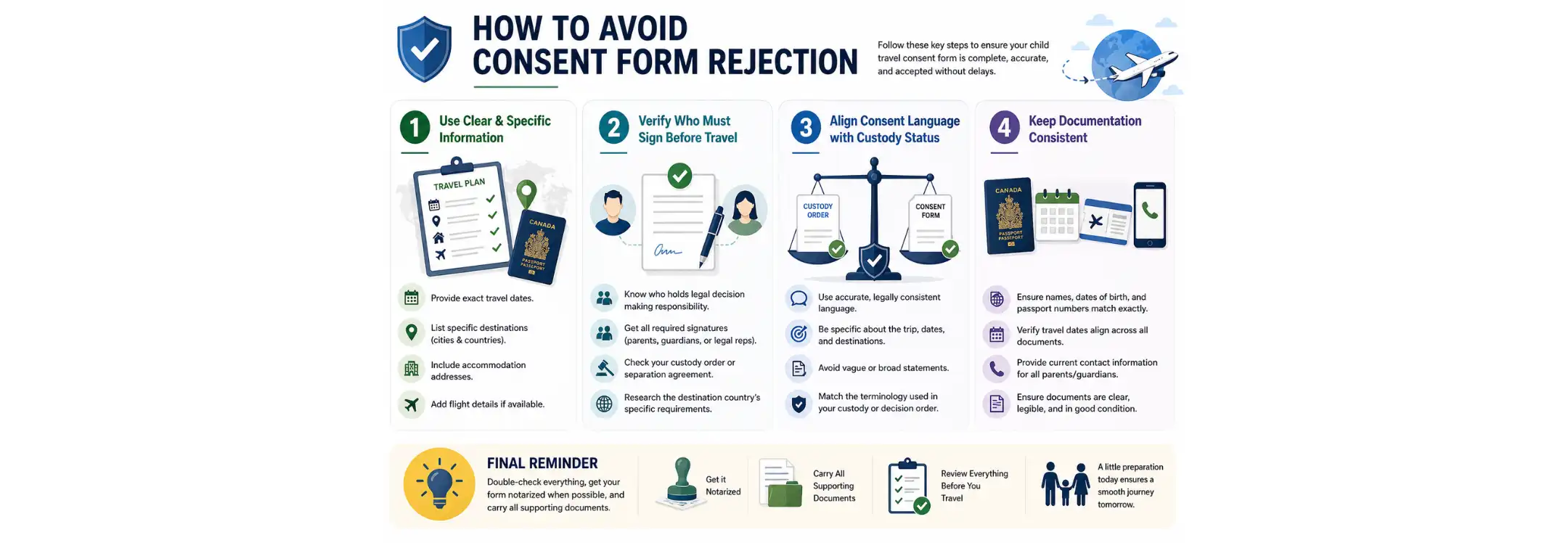
Having a form rejected can ruin your travel plans. Most rejections happen because information is missing or unclear. For example, do not just write Europe as your destination. List every city and country you will visit. Border agents want to see a specific plan for the child’s trip. Detail is your friend when filling out these forms.
Another common reason for rejection is a missing witness. Canadian law does not strictly require a notary, but it is highly recommended. A notarized form is much harder to question. It shows that an official has checked the IDs of the people signing. This extra step can save you a lot of time and trouble at the border.
Make sure all your papers match each other. If the dates on your form do not match your tickets, an official will be suspicious. Check that names are spelled correctly and match the child’s passport. Even a small mistake can lead to delays. Taking the time to double check everything is the best way to ensure a smooth border crossing.
Verifying Who Must Sign Before Travel
Before you start your form, be sure you know who has to sign it. Many people guess wrong and end up with a rejected form. In Canada, the rule is about decision making responsibility. If you share this power with someone else, they must sign too. Do not assume that being the primary caregiver is enough to sign alone.
If you are not sure who has this power, check your legal papers. A separation agreement or a court order will have the answer. If you do not have these papers, it is safest to have both parents sign. For children with guardians, the guardian must sign. Verifying these roles early helps you avoid a last minute rush or a rejected document.
Also, check the rules for the country you are visiting. Some countries are very strict and may have their own special forms. They might want signatures from both parents even if you have sole custody in Canada. Researching these rules before you leave is a vital part of your travel planning. This ensures your form meets every standard.
Aligning Consent Language with Custody Status
The words on your form should match the words in your legal documents. If your court order uses the phrase decision making responsibility, put that on your form. This makes it clear to the official that you are following the law. Using old or informal words can cause confusion and lead to more questions at the border.
Be very specific about what you are consenting to. The form should list the exact trip and the exact dates. Avoid broad statements like I allow my child to travel anytime. Border agents usually do not accept these because they are too vague. They want to know about the current trip. Clear and legal language is the mark of a good consent form.
Using a professional tool like Ziji Legal Forms helps you get the language right. The platform uses the terms that Canadian officials expect to see. This gives your document a professional look and feel. It shows that you have taken the process seriously and are in full compliance with the law.
Keeping Documentation Consistent
Consistency is the most important part of your paperwork. Every detail on your Child Travel Consent Form template must match your other IDs. Check the spelling of names and the numbers for passports and flights. If an official sees a discrepancy, they might think the document is fake. Take five minutes to compare all your papers side by side.
Check the contact numbers for the parents as well. If an agent calls the parent at home and the number is wrong, you will have a big problem. Make sure all phone numbers and email addresses are current. It is also smart to tell the other parent when you will be at the border. This way they can be ready to take a call if needed.
Finally, keep your papers in good condition. Do not show up at the border with crumpled or torn documents. Use a folder to keep everything neat and organized. If you make a mistake while writing, print a new copy instead of crossing it out. A professional looking folder of papers builds trust with the official and makes your trip go faster.





 Canada
 United States