TL;DR- A Child Travel Consent Form is a written statement from a non-traveling parent or guardian providing permission for a minor to travel.
- International travel carries much higher scrutiny due to border security protocols designed to prevent child abduction.
- Domestic travel within Canada does not legally require a consent letter but is strongly recommended by airlines to avoid boarding delays.
- The age of majority in Canada varies between eighteen and nineteen years old depending on the specific province or territory of residence.
- Notarization is the most effective way to prove the authenticity of a travel document to border officials and airline agents.
- Supporting documents like birth certificates and custody orders provide the necessary proof of relationship and decision-making authority.
- The Ziji Legal Forms platform offers a specialized Canadian Child Travel Consent Form template to simplify the creation of these documents.
Introduction: Why Domestic and International Travel Differ
Family travel today involves many security rules and laws. Travel rules for children depend on whether they are traveling inside Canada or to another country. This distinction exists because the mandates of the authorities involved are fundamentally different in scope and intent.
Within Canada, the movement of people is generally seen through the lens of passenger safety and transportation logistics. Domestic officials mainly check identity for security purposes. This ensures that commercial carriers are not facilitating the movement of a child against the wishes of their guardians. However, the legal threshold for proof is lower because the child remains under the jurisdiction of Canadian law and provincial child welfare systems at all times.
International travel has stricter rules because countries work together to prevent child abduction. When a child crosses a border, they enter a jurisdiction where Canadian laws may have limited reach. Consequently, the Canada Border Services Agency and foreign immigration departments apply a much more rigorous standard of evidence. Officials must confirm that all legal guardians approved the trip
Preparing the correct form is the most reliable way to ensure that a family vacation or a child's solo trip proceeds without interruption. Canada is a signatory to this convention, which means the government is obligated to prevent the wrongful removal of children. As a result, the documentation required for a trip to the United States or Europe is significantly more detailed than what is expected for a flight from Toronto to Vancouver.
Understanding these differences helps parents avoid the stress and potential legal complications that arise when a child is stopped at a gate or border. While domestic travel is more flexible, the growing awareness of child safety means that even within Canada, the expectation for clear documentation is rising. Preparing the correct form is the most reliable way to ensure that a family vacation or a child's solo trip proceeds without interruption.
What Is a Child Travel Consent Form
Definition and Primary Purpose
A Child Travel Consent Form is a written document that gives permission for a child to travel. It is specifically used when a minor child is traveling without one or both of their legal guardians. In the Canadian legal context, the term minor refers to any individual who has not yet reached the age of majority in their province or territory of residence.
This document shows who has legal permission to make decisions for the child. It acts as a bridge between the non-traveling parent and the officials who manage border security or airline boarding. This is especially important in the modern era where many families have different last names or complex custody arrangements.
By carrying a Child Travel Consent Form Canada, the traveler can demonstrate to authorities that the trip is authorized and not a case of unauthorized removal or abduction. Border officials may ask for proof that all guardians approved the trip. This document provides that proof in a standardized format that is easy for officials to review and verify.
While the form is not a strictly mandatory legal requirement under a specific federal statute, it is the recommended way to avoid significant complications. Global Affairs Canada and the Canada Border Services Agency both emphasize that carrying a signed and preferably notarized letter is the best practice for all minor travel. Without the form, officials may delay the trip while they check the situation.
Common Travel Situations
There are several standard scenarios where a Child Travel Consent Form becomes an essential part of the travel checklist. The most frequent situation is when a child travels with only one parent. Even if the parents are married or in a common law relationship, the parent who is not going on the trip should provide a signed consent letter to the traveling parent.
Children often travel with grandparents or other relatives. In these cases, the adult accompanying the child has no inherent legal authority to make decisions for the minor. A consent form is necessary to prove that the parents have delegated the responsibility for the child's care to that specific relative for the duration of the trip.
Organized group travel for school, sports, or religious activities also requires these documents. When a hockey team or a school band travels together, each child should have their own individualized Child Travel Consent Form. While many organizations provide their own permission slips, these often lack the legal detail required by border officials, making a formal consent form a much safer option for the group leaders.
Finally, the form is crucial for children traveling as unaccompanied minors. Many Canadian airlines allow children between the ages of eight and eleven to fly alone under specific supervision programs. For these children, the consent form must name the specific individual who will be responsible for meeting them at their destination, creating a clear chain of custody from the point of departure to the point of arrival.
Domestic Child Travel Consent
When Forms Are Typically Requested
Many people think domestic travel in Canada is simple, but there are specific moments when a Child Travel Consent Form is likely to be requested. The most common point of interaction is the airline check-in counter. Carriers like Air Canada and WestJet have internal policies designed to ensure the safety of minors, and their staff may ask for proof of parental consent if they have any concerns.
Airport security officers may also check travel documents. While the primary role of airport security is to screen for prohibited items, the officers are also trained to be vigilant for signs of child exploitation or abduction. If a child appears to be traveling with an adult who does not share their last name or if the child seems distressed, the officers may request to see a consent letter.
Outside of transportation hubs, domestic consent forms are often requested by accommodation providers. Many hotels and resorts in Canada have policies regarding minors staying without their legal guardians. If a grandparent is checking into a hotel with a grandchild, the hotel staff may ask for a consent form to ensure that they are not facilitating an unauthorized stay or violating a custody agreement.
Additionally, if a child is involved in any kind of incident requiring the assistance of local law enforcement or child welfare services, the absence of a consent form can lead to immediate complications. If a child is separated from their group or if there is a medical emergency, the authorities will first look for documentation that identifies who is legally responsible for the child. Having a domestic consent form on hand resolves these inquiries quickly.
Common Scenarios and Situations
One of the most frequent domestic scenarios involves separated or divorced parents who live in different provinces. For a child to fly from Calgary to Toronto to spend a holiday with their other parent, the sending parent should provide a consent form. This shows the trip follows their parenting agreement and prevents any misunderstanding at the airport.
Summer camps and educational exchange programs within Canada also represent a significant volume of minor travel. These programs often involve moving large groups of children across provincial lines. The organizers of these camps almost always require a formal Child Travel Consent Form for every participant, as it provides them with the legal authority to supervise the child while away from home.
Blended families often face unique challenges during domestic travel. When a step-parent travels with a child while the biological parent remains at home, the lack of a shared last name can trigger questions from airline staff. In this instance, a consent form signed by the biological parent is the most effective way to explain the relationship and confirm that the trip is authorized.
Even simple day trips that cross provincial borders can benefit from having a consent form. For example, if a child is going on a day trip from Ottawa to Gatineau with a family friend, having a signed note can be helpful if any unexpected issues arise. While there are no formal border checks between provinces, the presence of the document provides peace of mind for the parents and the accompanying adult.
Who May Request Domestic Consent Forms
The primary entity requesting these forms is the commercial airline. Airlines have a high degree of responsibility when transporting minors, especially those traveling alone. They use these forms to verify that the child has permission to be on the flight and to identify the person authorized to pick them up at the other end. Failing to provide this can result in the airline refusing to let the child board.
Train and bus companies also have the right to request documentation for minor travelers. While they may not check every passenger as strictly as an airline, their staff are authorized to ask for proof of consent if they suspect a minor is traveling without proper authorization. For longer journeys where the child is traveling overnight or across several provinces, the likelihood of a document check increases.
Sports coaches and club leaders are another group that frequently requires these forms. When a local sports team travels to a tournament, the coaches are assuming temporary custody of many minors. Most provincial sports organizations mandate that coaches carry signed consent forms for every player to ensure they can make decisions and seek medical help if the parents are not present.
Finally, police and child welfare officers may request these forms during routine welfare checks or in response to a specific report. If an officer encounters a minor in a public space who appears to be traveling without a guardian, the first thing they will do is ask for identification and proof of consent. A Child Travel Consent Form Canada provides the necessary information to satisfy their concerns and allow the trip to continue.
Practical Risks Without Domestic Consent Forms
Without a consent form, the child may not be allowed to board. If an airline agent is not satisfied that the travel is authorized by all legal guardians, they can refuse to let the child on the plane. This can lead to missed flights, lost vacation time, and the significant financial cost of rebooking travel at the last minute.
Another serious risk involves allegations of child abduction, even among family members. In high-conflict custody situations, a parent who takes a child to another province without a consent letter from the other parent could be accused of kidnapping. Without the document, the authorities may have no choice but to initiate an investigation, which can be a traumatic experience for both the parent and the child.
Medical emergencies present a different kind of risk. If a child is injured while traveling domestically with a relative and the parents cannot be reached, the medical staff may hesitate to perform anything other than basic life-saving procedures. A travel consent form that includes a medical authorization section gives the accompanying adult the legal right to consent to necessary treatments.
Finally, there is the risk of unnecessary stress and delays. Being questioned by airport security or police can be intimidating for a child. If the adult accompanying them cannot provide immediate proof of authorization, the child may have to wait in a security office while phone calls are made to confirm the situation. Carrying a simple, signed form prevents these delays and ensures the child's travel experience remains positive.
International Child Travel Consent
Why Border Authorities Impose Stricter Requirements
Border checks help stop international child abduction. Because a child leaving Canada enters a different legal jurisdiction, the Canada Border Services Agency must be extremely vigilant. Once a child is in another country, it becomes much more difficult for Canadian authorities to protect their rights or ensure their return if a custody dispute arises.
International travel rules are strict because of global security standards. Countries around the world have agreed to cooperate in the fight against human trafficking and the illegal movement of children. To honor these commitments, border agents in every country are trained to scrutinize any minor traveler who is not accompanied by both of their legal parents or guardians.
Furthermore, many countries have specific entry and exit laws that are much more rigorous than those in Canada. For example, some nations require a notarized consent form in the local language before they will allow a minor to enter. If a child arrives at an international border without the expected documentation, the immigration officials have the authority to deny entry and send the child back to Canada.
These rules help prevent illegal child travel. By making it difficult to move a child across borders without clear, verifiable permission, authorities reduce the likelihood that a parent or a third party will attempt to take a child out of the country in violation of the law. The Child Travel Consent Form Canada is the standard tool used by the government to facilitate this international security process.
Role of Immigration and Customs Officers
Immigration officers help protect children at borders. When a minor child approaches a border booth, the officer's first task is to establish the child's identity and citizenship. However, their second and equally important task is to confirm that the child has the legal right to be traveling with the person they are with.
These officers are trained to look for behavioral red flags. They may ask the child questions about the trip. These include who they are traveling with, and when they are coming home. If the child's answers do not match the adult's story or if the child seems coached, the officer will immediately ask to see a Child Travel Consent Form and other supporting documents.
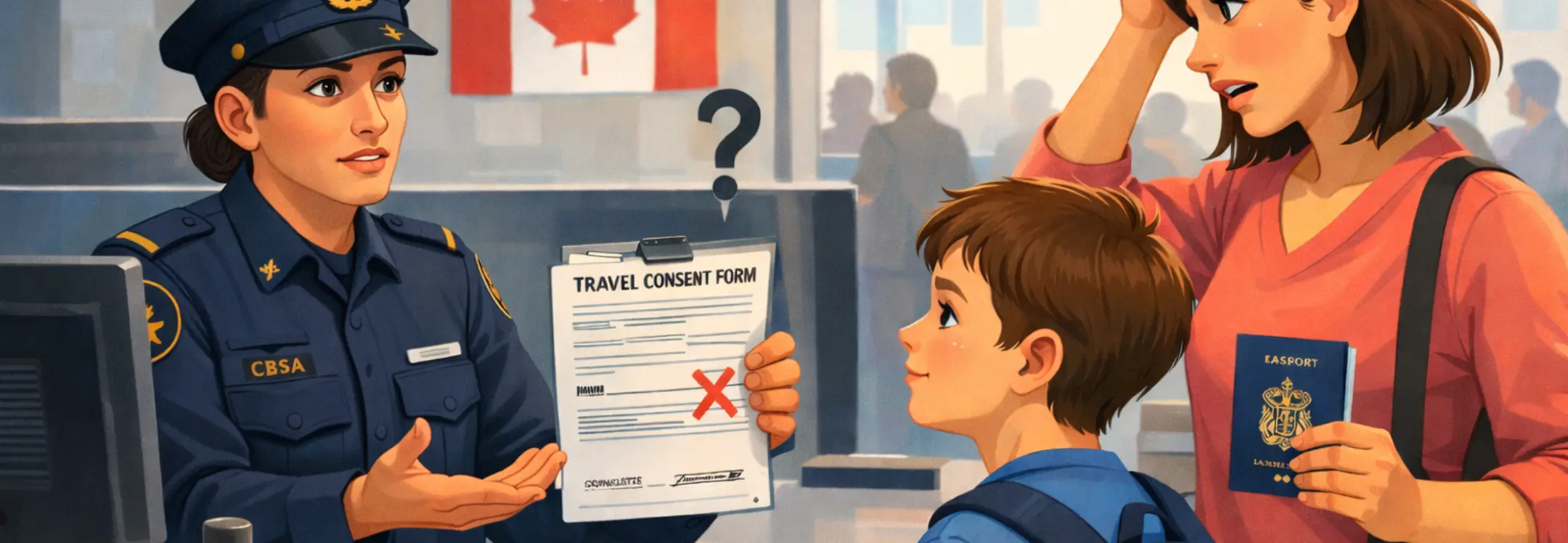
In many cases, the officer will perform a secondary inspection if the documentation is missing or incomplete. During this stage, the traveler may be taken to a separate room while the officer calls the parents listed on the form or checks national databases for any active custody disputes. This process can take several hours, often leading to missed connecting flights or significant travel delays.
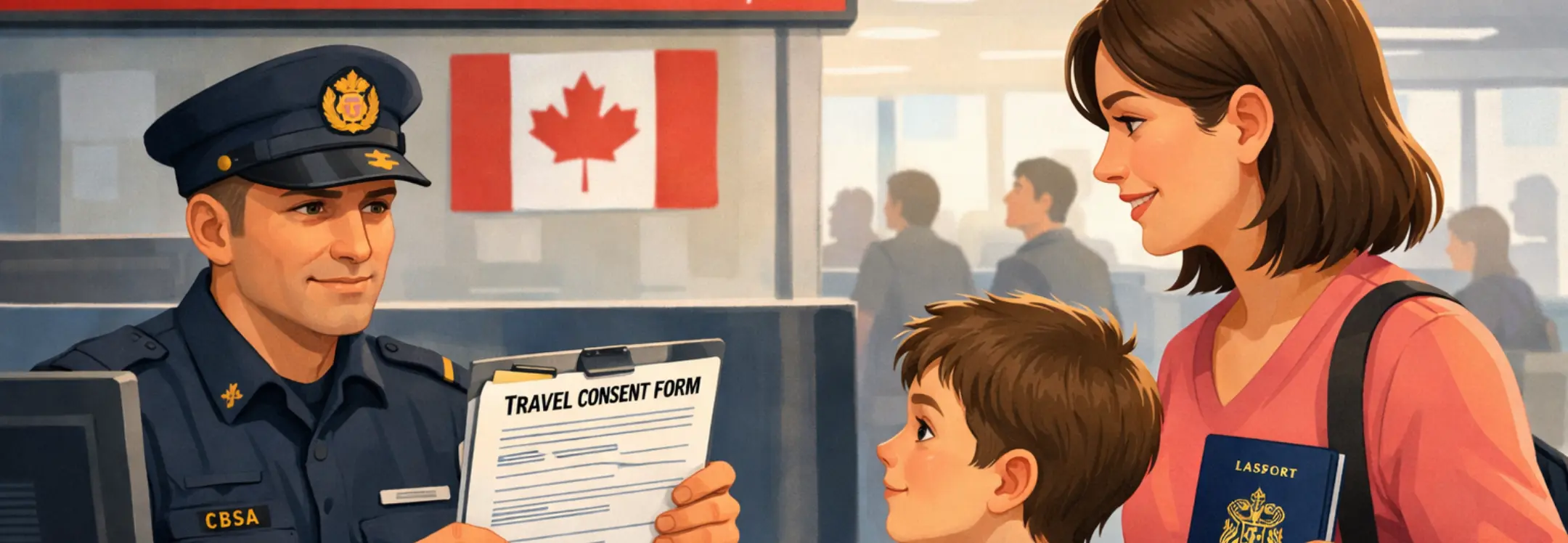
Officers want to make sure the child is traveling safely and legally.. If they are not convinced that the travel is authorized, they have the power to prevent the child from leaving Canada or to deny them entry into the country. Carrying a well-prepared and notarized consent form is the best way to satisfy the officer's requirements and avoid a secondary inspection.
Airline Requirements Versus Immigration Requirements
It is important for parents to understand that airlines and immigration authorities often have different sets of requirements. An airline's primary concern is compliance with the laws of the destination country. If they allow a minor to board a flight and that child is later denied entry by immigration officials, the airline is often legally and financially responsible for the child's return.
Because of this liability, airlines may enforce documentation checks even more strictly than the border agents themselves. They may ask for a consent form at the gate before the child is allowed to board. If the parent cannot produce the form, the airline can refuse to transport the child, even if the child has a valid passport and visa. This is a common point of frustration for many travelers.
Immigration requirements, on the other hand, are focused on the legality of the border crossing. While an airline might be satisfied with a signed letter, a foreign immigration officer might demand that the letter be notarized by a notary public or authenticated by a consulate. These official requirements vary widely from one country to another, and it is the traveler's responsibility to know the rules of their destination.
To ensure a smooth trip, parents should always aim to meet the highest standard requested by either the airline or the government. If the airline suggests a notarized letter but the destination country does not strictly require one, it is still best to have the letter notarized. By preparing for the most rigorous possible check, parents can ensure that their child can pass through every stage of the journey without issue.
Key Differences - Domestic and International Child Travel Consent Forms
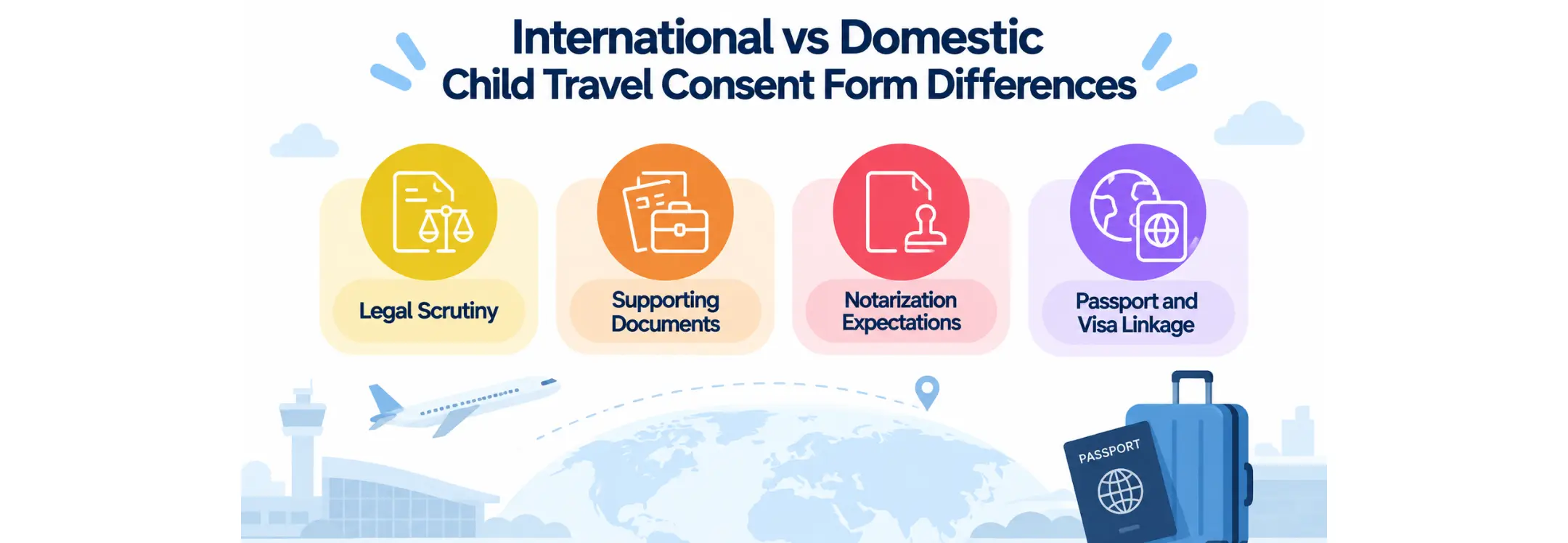
Legal Scrutiny Levels
The most significant difference between domestic and international forms is the level of legal scrutiny they will face. In a domestic context, the form is viewed as a supportive document. Officials are generally looking for a basic confirmation of permission and are less likely to analyze the document for minute legal technicalities or specific formatting.
Internationally, the Child Travel Consent Form is treated as a formal legal instrument. Border officials will examine the document for any signs of forgery or inconsistency. They will check that the child's name matches the passport exactly and that the signature of the parent is witnessed by a recognized authority. Any small discrepancy can be enough for a border official to question the document's validity.
An invalid form can cause serious problems. In a domestic situation, a missing signature might lead to a delay or a phone call to the other parent. Internationally, an invalid form can lead to a complete denial of entry, the initiation of a welfare check, or even legal action under international child abduction treaties. The stakes are simply much higher when crossing a national border.
Because of this higher scrutiny, international forms must be much more detailed. They need to include specific travel dates, flight numbers, and the addresses of where the child will be staying abroad. A domestic form can be more general, but an international form that lacks detail will almost certainly be rejected by immigration officers in a foreign country.
Supporting Documents Often Requested
When a child travels domestically, the supporting documentation is usually limited to a provincial birth certificate or a health card. These are generally sufficient to prove the child's identity for a flight within Canada. The consent form is often the only additional document needed to satisfy the airline or other authorities.
For international travel, the list of required supporting documents is much longer. First and foremost, every child must have a valid Canadian passport for international air travel. In addition to the passport and the Child Travel Consent Form, border officials often ask for a copy of the child's long-form birth certificate, which identifies the names of the parents and establishes the legal link between the child and the signers of the form.
If the parents are divorced or separated, a copy of the legal custody or parenting order is often required. This document proves to the border official who has the legal authority to grant permission for the travel. Without the custody papers, the official has no way of knowing if the parent who signed the consent form actually has the right to make that decision alone.
In more tragic circumstances, such as when one parent is deceased, the traveling parent should carry a copy of the death certificate. This explains why there is only one signature on the consent form and prevents the border official from assuming that a second parent exists who has not given their permission. These extra documents help answer questions at the border.
Notarization Expectations
In Canada, notarization is not a strict legal requirement for domestic travel. While it is always a good idea to have a document notarized, many parents find that a simple signed letter is sufficient for domestic airlines. The risk of a domestic boarding being denied for lack of a notary seal is relatively low, provided the parents can be reached to verify the letter.
Internationally, the expectation of notarization is very high. Global Affairs Canada strongly recommends that all travel consent letters for international trips be notarized. A notary public is a government official who verifies the identity of the person signing the document. To a foreign immigration officer, a notary's seal and signature are the only reliable way to know that the document is authentic.
A notarized document is more trusted than a regular signed letter. Border officials in many countries, especially in Latin America and Europe, may refuse to accept any consent form that has not been notarized. By having the Child Travel Consent Form Canada notarized, parents significantly reduce the chance of their child being questioned or delayed.
The process of notarization is relatively simple and can be done by a notary public or a lawyer. They will check the parent's identification and witness the signing of the form. For parents who are traveling on short notice, some provinces now allow online notarization via video call, which is a convenient way to get a legally valid document without having to leave home.
Passport and Visa Linkage
For domestic travel, there is no formal linkage between the consent form and a passport because passports are not required for flights within Canada. The consent form stands on its own and is usually checked against a birth certificate or health card. This makes the documentation process for domestic travel much more flexible.
In international travel, the consent form and the passport are deeply linked. The consent form must include the child's passport number, date of issue, and country of issue. This ensures that the permission is tied to the specific identity document the child is using to travel. If the passport number on the form does not match the passport in the child's hand, the document will be considered invalid.
Visas add another layer of complexity to this linkage. If a child is traveling to a country that requires a visa, the visa application itself often requires a signed and notarized travel consent form. Once the visa is granted, it is tied to the information provided in the application. The traveler should ensure that the consent form they carry matches the one they used for the visa application.
This connection helps improve travel security. It prevents someone from using an old consent form with a new passport or using a generic permission letter for a trip that requires a specific visa. By linking these documents together, authorities can be much more certain that the child is traveling with the full knowledge and permission of their legal guardians.
Special Considerations for Different Travel Scenarios
One Parent Traveling Internationally with a Child
When only one parent travels with a child internationally, they are often subjected to the most intense questioning at the border. This is because parental abduction is a major concern for border agencies. Even if the parents are happily married and the trip is a routine vacation, the traveling parent must be prepared to prove that the other parent knows about and agrees to the trip.
The consent form for this scenario should be signed by the parent who is not traveling. It should be as detailed as possible, listing the specific flight numbers, the hotel addresses, and the exact dates of the trip. The non-traveling parent should also include their full contact information and a copy of their signed passport or national identity card to allow for signature verification.
In cases where parents are separated or divorced, the traveling parent must also carry a copy of the parenting agreement or court order. This shows the border official who has decision-making responsibility for the child. If the agreement requires the consent of both parents for any international travel, the officer will check to make sure the consent form is present and valid.
If a parent has sole decision-making responsibility, they may still be asked for a consent form from the other parent. In some cases, the other parent may retain visitation rights that could be affected by the travel. If the other parent is not involved or is unreachable, the parent with sole responsibility should carry the court document that proves their legal status and explains why a second signature is not present.
Traveling with Grandparents or Non-Family Members
Traveling with someone who is not a parent or legal guardian requires a high level of documentation. Since the accompanying adult has no inherent legal rights over the child, a Child Travel Consent Form is the only way to prove they have the parents' permission to supervise the minor. In this scenario, both legal parents should ideally sign the consent form.
The form must explicitly name the adult who is traveling with the child and state their relationship to the minor. It should also include a medical authorization clause, which is vital if the child needs emergency care. Without this, a grandparent or family friend might not be allowed to make urgent health decisions for the child if the parents cannot be reached immediately.
For children traveling with a group, such as a school trip or a sports team, the consent form should name the specific organization and the leaders in charge. It is also a good idea to provide the contact information for the school or the team's home office. This allows a border official to quickly verify that the trip is part of an authorized group activity.
In these cases, the accompanying adult should also carry a copy of the child's birth certificate. This helps establish the link between the child and the parents who signed the consent form. If the child and the accompanying adult have different last names, having the birth certificate and a clear, notarized consent form is the best way to prevent any suspicion or delays at the border.
Emergency Travel Situations
Emergency travel, such as traveling for a funeral or a family illness, often happens on very short notice. In these situations, getting a notarized consent form might seem impossible, but it is still highly recommended. Border officials are often more understanding in emergency cases, but they still have a job to do and will still require some form of proof.
If the other parent is unreachable in an emergency, the traveling parent should try to obtain any kind of written permission, even if it is just an email or a text, while they work on getting a formal form. They should also carry proof of the emergency, such as a medical letter or a copy of a death certificate, which can help explain the urgency and the lack of full documentation to a border officer.
For parents who are already in another country and need their child to join them for an emergency, they can visit a Canadian consulate or embassy to have a consent form notarized. The consulate can witness the signature and provide an official seal that will be recognized by both the airline and the immigration officials back in Canada.
It is also possible to seek an emergency court order if a parent is refusing to sign a consent form for a necessary trip. Canadian courts can hear urgent motions for travel authorization, especially in cases where the trip is clearly in the child's best interests. Carrying a copy of an emergency court order is a legally binding way to bypass the requirement for a second parent's signature.
How to Prepare the Right Form for Your Travel
What to Include Depending on Travel Type
The content of a Child Travel Consent Form should be tailored to the specific details of the trip. For a domestic trip, the form can be relatively simple. It needs to include the child's full legal name, date of birth, and the names and contact information of the parents. A clear statement of permission for the specific dates and destination is the core of the document.
International forms require a much higher level of detail to satisfy border agencies. They must include the child's passport number, the date it was issued, and where it was issued. The form should also list the destination country and any countries where the child will be transiting. If the child is visiting multiple cities, listing the addresses of each hotel or residence is a good practice.
The details of the accompanying adult are also critical for international forms. This includes their full name as it appears on their passport, their home address, and their relationship to the child. Providing the accompanying adult's passport number on the form allows the border officer to quickly verify that the person in front of them is the person authorized by the parents.
Finally, every form should include a section for medical authorization and emergency contact information. This is especially important for international travel, where the parents might be in a different time zone and difficult to reach. Listing an alternate contact person in Canada provides an extra layer of safety for the child during their journey.
Matching Consent Scope to the Trip
The scope of the consent must match the reality of the travel plan. A common mistake is providing a broad, open-ended consent letter that does not list specific dates. While this might seem convenient for frequent travelers, it is often viewed with suspicion by border officials who prefer to see that a parent has consented to a specific, well-defined trip.
If a child is going on a multi-country trip, the consent form should reflect this complexity. It should list each country on the itinerary and provide the dates the child will be in each location. If the child is traveling with different adults for different parts of the trip, it is often better to have separate consent forms for each leg of the journey.Parents should also ensure that the scope of the consent aligns with their parenting agreement or court order. If an agreement only allows a parent to take a child out of the province for seven days, a consent form for a fourteen-day trip could be legally problematic. Ensuring that the form and the underlying legal agreements are in sync is essential for avoiding disputes later.
For children who travel frequently between the same locations, such as for school or to visit a parent, it may be possible to create a long-term consent form. However, these should still be updated regularly, at least once a year, to ensure the contact information and identification details remain current. Even with a long-term letter, the child should carry a copy of the schedule or court order that explains the regular travel.
Validity Period and Destination Clarity
A Child Travel Consent Form is generally only valid for the specific dates listed on the document. Border officials look for this information to ensure that the permission is current and relevant. If a child attempts to travel after the end date listed on the form, the document may be rejected, and the child could be delayed while new permission is sought.
Destination clarity is another key factor for border security. A form that simply says the United States is less helpful than a form that lists the specific city and state. For international travel, providing the full address and phone number of the destination is a major help to border officers. It shows them that the trip is legitimate and that the child has a safe place to stay.
If the travel plans change after the form has been signed, a new form should be created. Attempting to cross a border into a country that is not listed on the consent form can be seen as a red flag for child abduction. The border agent's job is to ensure that the parent has consented to the specific destination, and any deviation from the plan can trigger an investigation.
Finally, parents should consider the language of their destination. For Canadian children, a form in English or French is usually fine for the departure, but if the child is going to a non-English speaking country, having a translated version can be very helpful. This ensures that the local immigration officials can read and understand the permission without needing an interpreter. If you have any confusion, read our article to understand Who Can Sign a Child Travel Consent Form
How to Create These Forms Using Ziji Legal Forms
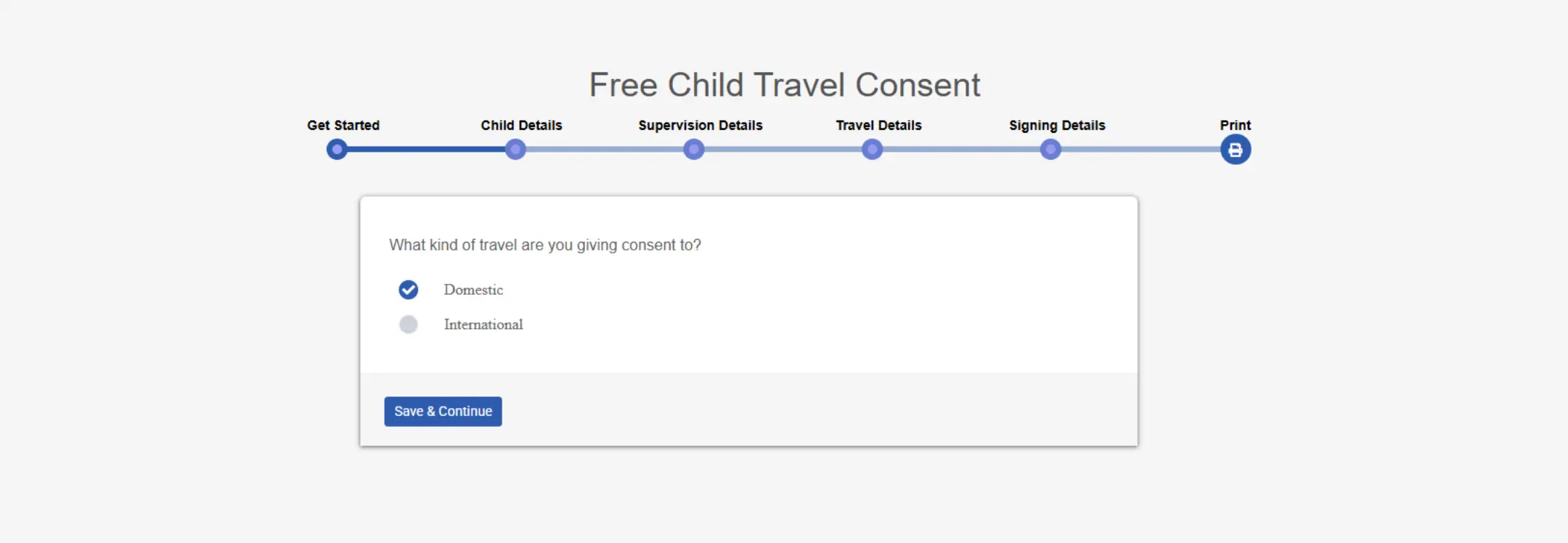
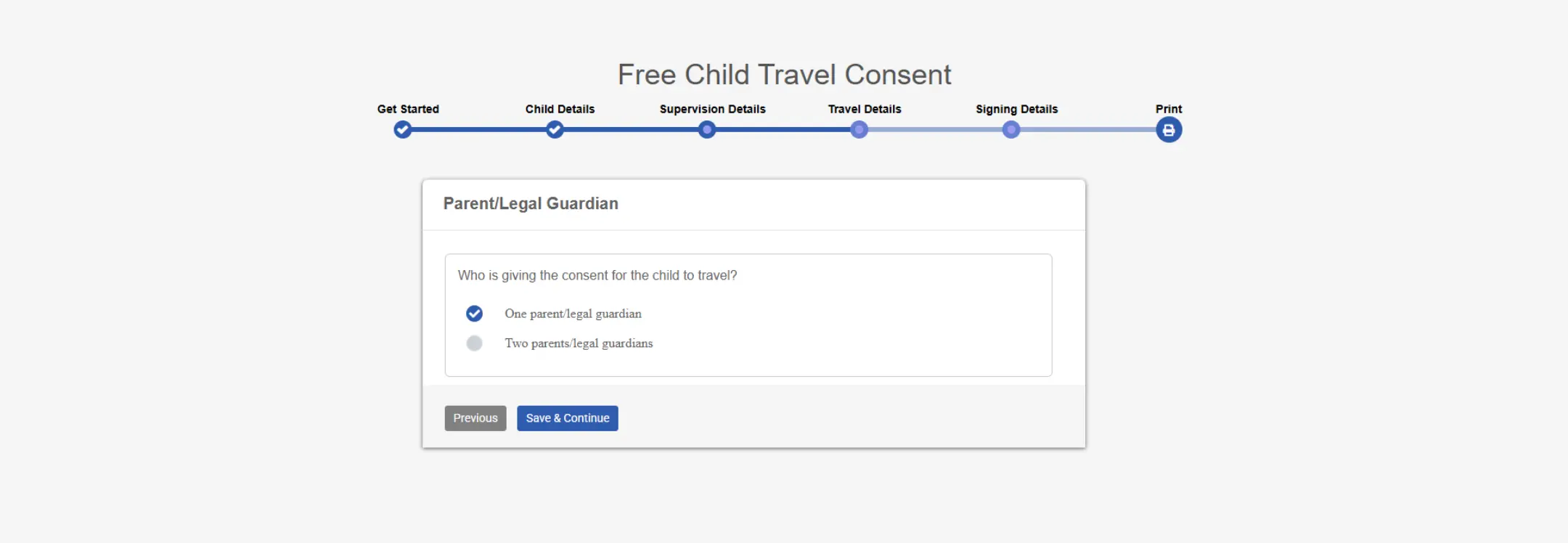
1. Choose template
2. Add Child Details
Enter the minor's full legal name, birth date, and passport information precisely as they appear on their official government identification.
3. Add Supervision Details
Provide the legal name and contact information for the accompanying adult or the specific person designated to meet an unaccompanied minor at the destination.
4. Add Travel Details
List the specific travel dates, destination countries, and full addresses for all accommodations where the child will stay during the journey.
5. Signing Details, Preview and Print
Thoroughly review the form for errors before printing it to be signed by guardians, ideally in the presence of a notary public for official verification.
Template Features and Customization Options
The Ziji Legal Forms Canada template offers a high degree of customization to fit every family's needs. Users can choose to add specific clauses for medical consent, allowing the accompanying adult to make health decisions for the child. This is a vital feature for trips where parents will be far away and difficult to reach in an emergency.
The platform also ensures that the final document is formatted professionally. A clean, typed document is much easier for an airline agent or a border officer to read than a handwritten note. This professionalism helps instill confidence in the authorities and can lead to a faster and easier clearance process at the gate or border.
Finally, the template is updated regularly to ensure it stays in line with any changes to Canadian travel laws or international border requirements. This gives parents the peace of mind that they are using the most current and effective version of the Child Travel Consent Form for their child's trip.
Conclusion: Proper Documentation Ensures Smooth Travel
Creating a Child Travel Consent Form Canada is one of the most important steps in preparing for a child's trip. Whether the travel is a simple domestic flight or a complex international journey, having the right paperwork prevents delays and protects the child's safety. By using the Ziji Legal Forms template and following official recommendations for notarization, parents can ensure that their child's travel experience is smooth and secure. Proper documentation is the key to a worry-free family vacation or a successful solo trip for a minor.
Child Travel Consent FAQs
1. What is the purpose of a Child Travel Consent?
Its purpose is to authorize a minor to travel without a parent or legal guardian and provide evidence of parental permission.
2. Why should parents prepare a Child Travel Consent?
It can help prevent travel delays by showing that the child has permission to travel with another adult or alone.
3. Who can be named as the accompanying adult?
Parents may authorize any trusted adult who is at least 18 years old, including relatives, teachers, coaches, or close family friends.
4. Why is notarization recommended?
Although it is not generally mandatory, notarization can increase the credibility of the document with travel authorities.
5. Is a Child Travel Consent required for domestic travel?
Some airlines may request one for domestic travel involving minors, so it is advisable to have one available.
6. Can the Ziji Legal Forms Child Travel Consent be used anywhere in Canada?
The Ziji Legal Forms Child Travel Consent can be used in all supported Canadian provinces and territories.
Author
Mandar Sonavane
|
Legal Content Writer at Ziji Legal Forms Inc.
Symbiosis International University
Mandar is a legal content writer specializing in the development of clear, practical, and easy-to-understand legal resources. With a strong focus on legal research, content creation, and plain-language writing, he works closely with our legal professionals to ensure that legal documents and educational materials are accurate, accessible, and user-friendly. At Ziji Legal Forms Inc., Mandar is responsible for researching legal topics, drafting and reviewing content, and helping transform complex legal concepts into straightforward guidance that empowers individuals and businesses to confidently navigate their legal needs.
Reviewed By
Histon Shek
|
General Counsel and Co-Founder at Ziji Legal Forms Inc.
University of Alberta
Histon Shek was called to the Alberta Bar in 2006. He holds a BA in Sociology and Philosophy and an LLB from the University of Alberta. As co-founder of Ziji Legal Forms Inc., he focuses on making legal documents accessible and affordable, overseeing legal integrity and content development.




 Canada
 United States