TL;DR- This analysis explains when to Update Last Will and Testament documents as personal and financial milestones change under Canadian laws.
- Major family events like marriage, divorce, and new children modify legal obligations and asset choices across different provinces.
- Relocating to a new province requires checking estate plans due to differing local probate taxes, estate rules, and executor demands.
- Using Ziji Legal Forms' Last Will and Testament template helps individuals maintain a legally valid estate plan based on current rules.
Introduction
A Last Will and Testament is a vital legal document for securing an estate. It helps a person outline how to distribute cash and property after passing away. Many Canadians believe that once they write their estate plans, the task is finished forever. However, a will is a living file that must change as life circumstances shift. As an individual moves through life, family bonds, financial status, and legal needs will surely change. Failing to keep these plans updated can lead to stressful legal battles and money worries for heirs.
In Canada, estate laws are governed by provincial rules. This means that local laws directly affect how assets are handled when a person is gone. Learning about the key moments that require a review of a will is the best way to secure a legacy. By keeping these documents fresh, individuals can ensure that loved ones stay safe. This proactive step also guarantees that the true wishes of the testator are respected and followed.
Major Life Events Requiring an Estate Plan Update
Certain family and money shifts are so big that they immediately change the legal status of an estate plan. Recognizing these key milestones ensures that assets remain safe and plans stay valid under Canadian laws.
Marriage or Divorce
Getting married or ending a relationship has a massive impact on an estate plan. In several Canadian provinces, recent law updates mean that marriage no longer automatically cancels an existing will. For example, under the Succession Law Reform Act in Ontario, the Wills, Estates and Succession Act in British Columbia, and the Wills and Succession Act in Alberta, a prior will remains active after a wedding. This means a new partner might inherit nothing unless a new will is written.
In other provinces, getting married will immediately void any prior will. Divorce also changes legal documents. In most provinces, a divorce automatically cancels gifts left to a former spouse and removes them as executor. Testators must Update Last Will and Testament documents after these shifts to avoid legal chaos.
Birth or Adoption of Children and Grandchildren
Welcoming a new child or grandchild is a happy event that requires updating an estate plan. New children do not automatically receive assets if a will names specific, individual beneficiaries. To include them, a person must formally change the will or set up a trust.
Most importantly, parents need to name a legal guardian for minor children. If both parents pass away early, a will is where they name who raises their kids. Under provincial rules, a named guardian only has temporary authority at first. They must apply to the court for permanent rights soon. Failing to name a guardian can lead to painful custody disputes among relatives.
Moving to a New Province
Moving to another province in Canada is a big step that requires checking estate plans. A will signed in one province is usually valid in another. But the way it is handled can change. Each province has its own separate legal system for managing estates and probate.
Probate fees vary wildly across the country, as some areas charge high taxes while others have flat fees. An out-of-province executor might also have to pay a costly bond. To prevent these hurdles, individuals should update a will to match the rules of their new home.
Significant Financial Changes
A big change in financial status should lead a person to review an estate plan. Buying real estate, starting a business, or getting an inheritance can make older plans obsolete. In Canada, death triggers a deemed sale of capital property under the Income Tax Act. This means capital assets are treated as sold for fair market value right before death.
This can create a massive tax bill for an estate. Business owners often use multiple wills to save on probate taxes. If personal wealth shifts, individuals must update their documents to protect heirs.
Other Situations That Require a Will Review
While major family milestones are clear triggers, other situations also require a will check. Staying alert to these less obvious shifts is vital to keep plans accurate and avoid legal problems.
Changes in Tax Laws and Estate Laws
Estate and tax laws change often in Canada. This occurs at both federal and provincial levels. For example, changes to capital gains rules can heavily impact the final tax liability of an estate. Similarly, provincial rules about probate limits and dependents claims undergo updates.
Relying on an old Last Will and Testament template can lead to invalid clauses under modern laws. A shift in rules can alter how assets are split, leaving a family with less support than intended. Updating documents regularly ensures the use of current tax-saving plans and keeps a will fully legal.
Digital Assets and Modern Considerations
In our digital age, planning must include online assets. Modern estates often contain digital items like crypto, online accounts, and web files. If an executor lacks clear permission to access these files, the assets are lost.
The legal rules for digital items are changing fast in Canada. British Columbia is the first province to allow digital wills and electronic signatures under the Wills, Estates and Succession Act. Other provinces are looking at similar changes soon. Updating a will allows a person to name a digital executor, give clear access, and use new online choices where allowed.
Relationship Changes
Relationships change, and these shifts directly affect estate plans. Entering a new common-law union requires careful thought. This is because partners have different rights across Canadian provinces.
In Ontario, common-law partners do not automatically inherit if a partner dies without a will. Conversely, a formal separation without divorce does not automatically cancel gifts to a spouse in many areas. An estranged partner could still inherit the entire estate if a will is not updated. The death of a named executor is also a major trigger. If a primary executor cannot act, an estate faces delays and high costs.
How Often Should an Estate Plan Be Reviewed?
Regular maintenance is the secret to a strong estate plan. Even without major life events, experts suggest checking estate documents every few years. A check every three to five years is a good rule of thumb. This ensures that plans still match current goals, family structures, and net worth. Over a five-year period, minor changes in life can add up. Treat an estate review as an essential part of financial health, much like filing taxes. By staying proactive, individuals can ensure that an estate is handled smoothly, preventing stress and giving great peace of mind.
Quick Review Checklist
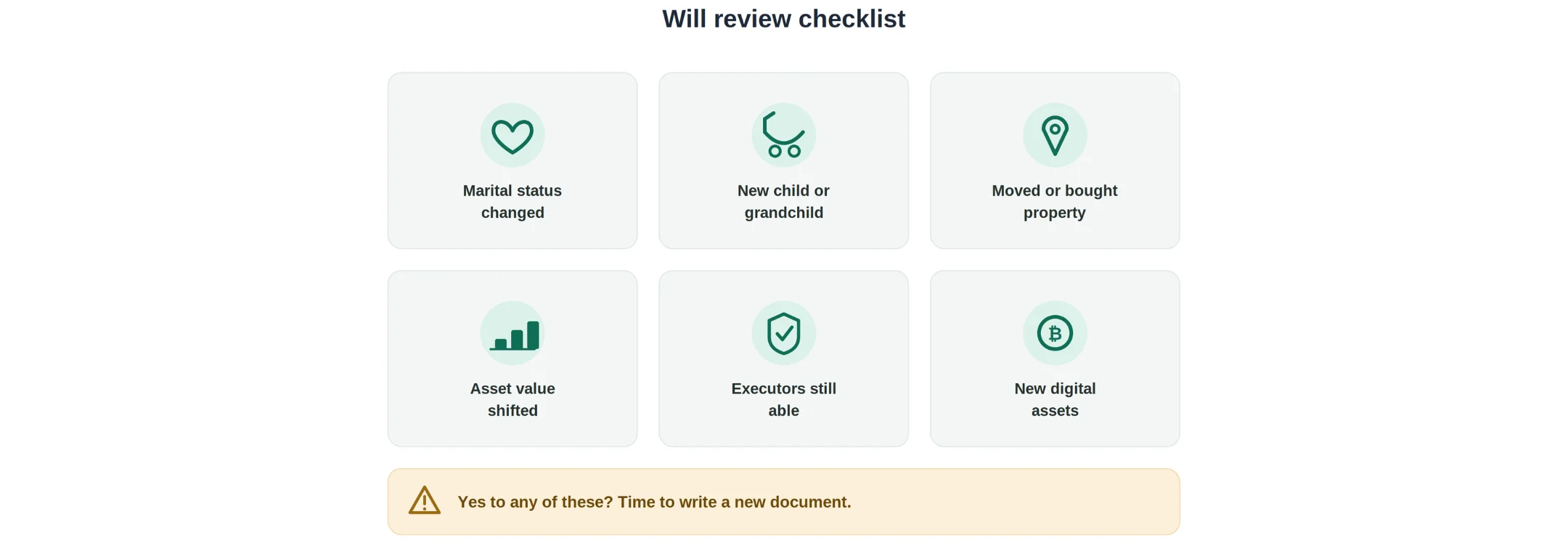
To find out if an estate plan needs a change, individuals can ask these quick questions:
- Has a change in marital status or a new common-law relationship occurred?
- Has a child or grandchild been born or adopted since the last update?
- Has a move to another province or a real estate purchase elsewhere taken place?
- Has there been a major shift in the total value of personal assets?
- Are the named executors, trustees, and guardians still willing and able to help?
- Have new digital assets like online accounts or crypto been acquired? If the answer to any of these questions is yes, it is time to write a new document.
How to Update a Will Correctly
When a person decides that an estate plan needs some changes, they must make them legally. Simply writing notes on current papers or crossing out names will not work and can void the entire document.
Legal Requirements and Compliance
Under Canadian law, there are two main ways to make changes to estate documents. The first is writing a codicil, which is a separate legal paper that changes specific parts of a current will. A codicil must be signed and witnessed with the exact same strict rules, meaning two adult witnesses must watch the testator sign.
The second and much better option is to Create Last Will and Testament documents in their entirety. Modern online tools have made writing a brand new will very easy and cheap. A fresh document avoids legal confusion, as it contains a clause that cancels all prior wills, ensuring absolute clarity for probate courts.
Avoiding Common Update Mistakes
Many Canadians make costly mistakes when they try to update their estate documents. The most common error is making quick, handwritten notes on the copy of their will. These edits are not valid in most provinces and cause court battles.
Another mistake is forgetting to update direct beneficiary choices on financial assets. In Canada, named beneficiaries on registered accounts will override a will. Accounts like a Registered Retirement Savings Plan or Tax-Free Savings Account bypass the estate. If a will is updated but these forms are forgotten, the money will go to the wrong person.
How to Create a Will with Ziji Legal Forms
Drafting a comprehensive estate plan does not have to be a complicated or expensive process. Ziji Legal Forms provides a streamlined and simple platform to help individuals secure their legacy in just a few easy steps.
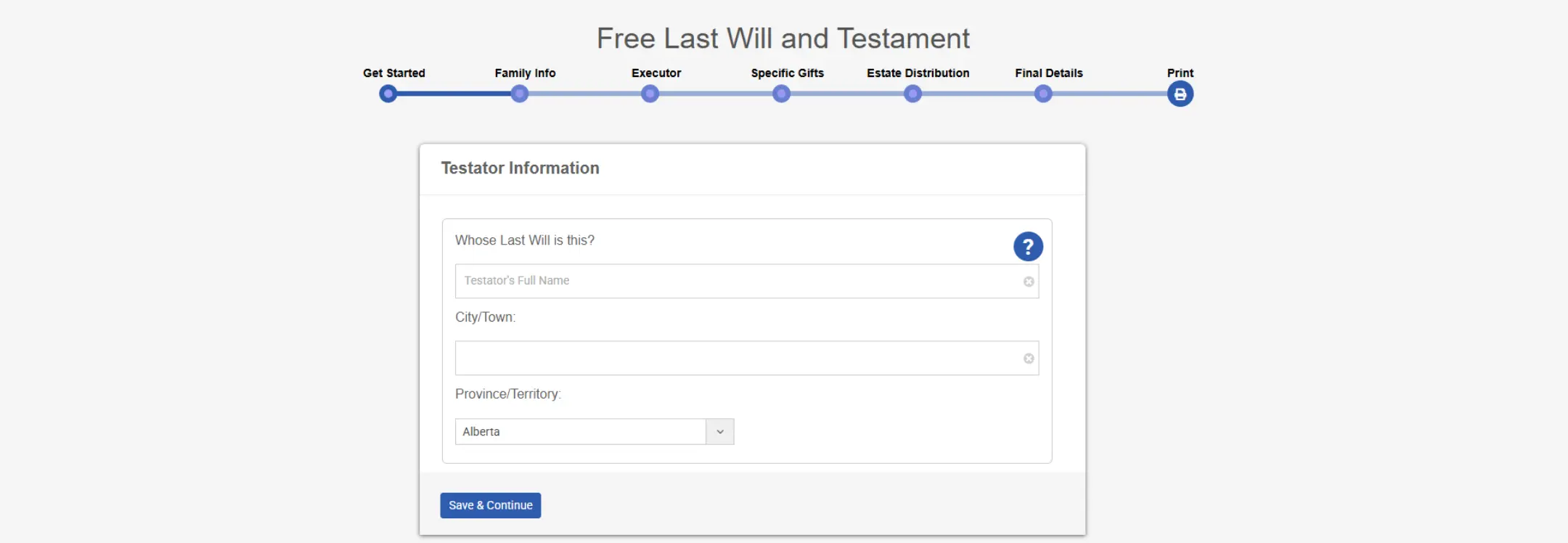
1. Select Template
2. Answer Guided Questions
Users then must complete an intuitive questionnaire by entering personal details, choosing executors, and naming trusted beneficiaries.
3. Review the Will
Finally, users carefully examine the generated document preview before downloading and printing the file to sign in front of witnesses.
Benefits of Using Ziji Legal Forms for Creating a Will
Using Ziji Legal Forms to Create Last Will and Testament documents offers many great benefits for Canadian families. Our platform removes the high fees of traditional legal visits while providing legally compliant forms made for each province. By using an Online Last Will and Testament service, individuals can easily change their papers when life changes occur. This ensures that the planning is always fresh.
This ease of use helps avoid common errors, such as outdated executor or heir choices. With clear questions, users can comfortably protect minor children and secure their family's future.
Conclusion
Keeping an up to date estate plan is a loving gift for a family. Life moves fast, and planning must keep pace with relationship and money changes. By using a high quality Last Will and Testament Canada template, testators can ensure wishes stay clear and legally binding. Do not leave a legacy to chance or let old papers cause stress. Take charge of the future today by using Ziji Legal Forms to build a secure plan in just a few minutes.
Last Will and Testament FAQs
1. How does a Last Will protect my family?
A Last Will provides clear instructions for managing your estate, helping reduce uncertainty and potential disputes among beneficiaries.
2. Who benefits from having a Last Will?
Anyone who owns assets, has children, or wants control over how their estate will be distributed can benefit from having a Last Will.
3. Do I need a lawyer to make a valid Will?
Not necessarily. A properly prepared Will that complies with your jurisdiction's legal requirements can be legally valid without hiring a lawyer.
4. What is an affidavit of execution?
An affidavit of execution is a sworn statement confirming that the Will was properly signed and witnessed, which can help simplify the probate process.
5. What happens if my Will is never updated?
An outdated Will may no longer reflect your wishes or current family circumstances, making regular reviews important.
6. What jurisdictions are covered by the Ziji Legal Forms Last Will?
The Ziji Legal Forms Last Will can be used in all supported provinces and territories across Canada.
Author
Mandar Sonavane
|
Legal Content Writer at Ziji Legal Forms Inc.
Symbiosis International University
Mandar is a legal content writer specializing in the development of clear, practical, and easy-to-understand legal resources. With a strong focus on legal research, content creation, and plain-language writing, he works closely with our legal professionals to ensure that legal documents and educational materials are accurate, accessible, and user-friendly. At Ziji Legal Forms Inc., Mandar is responsible for researching legal topics, drafting and reviewing content, and helping transform complex legal concepts into straightforward guidance that empowers individuals and businesses to confidently navigate their legal needs.
Reviewed By
Histon Shek
|
General Counsel and Co-Founder at Ziji Legal Forms Inc.
University of Alberta
Histon Shek was called to the Alberta Bar in 2006. He holds a BA in Sociology and Philosophy and an LLB from the University of Alberta. As co-founder of Ziji Legal Forms Inc., he focuses on making legal documents accessible and affordable, overseeing legal integrity and content development.








 Canada
 United States