TL;DR
- A Rental Inspection Report Canada establishes an official baseline of property condition at move-in and move-out.
- Completing a Move-In Rental Inspection Report and a Move Out Rental Inspection Report is necessary under Canadian tenancy regulations to process security deposit deductions.
- Missing or incomplete condition documentation causes landlords to lose deposit deduction rights and leaves tenants vulnerable to false damage claims.
- Property owners can build Rental Inspection Reports with Ziji Legal Forms to manage lease contracts and property maintenance smoothly.
What is a Rental Inspection Report
A Rental Inspection Report is an official written document that records the physical state of a residential rental property at specific points during a tenancy. Under Canadian residential tenancy principles, this report acts as a joint factual assessment completed by the landlord and tenant. It details the condition of walls, floors, ceilings, doors, windows, lighting, appliances, and safety devices. The walkthrough generally takes place within one week before or after the tenant moves into or vacates the rental unit. By capturing the condition in writing, the document creates an undisputed legal baseline for both parties.
Canadian tenancy laws require these inspection reports to follow specific standards to remain legally valid. The written evaluation must include specific statutory statements, the date of inspection, and the signatures of all participating parties. Landlords are legally required to provide a completed copy to the tenant immediately or within strict statutory timeframes. Maintaining an accurate record prevents future disagreement regarding who is responsible for property damage. Consequently, this document serves as essential evidence if a dispute arises before a provincial tenancy tribunal.
Move in vs move out reports
Comparing Move-In vs Move Out inspection reports highlights how these two assessments work together throughout a lease term. The Move-In Rental Inspection Report is filled out right before the tenant takes possession of the premises. It records pre-existing scratches, cosmetic blemishes, minor structural issues, and functional defects. This initial report serves as the official reference point for the physical condition of the property at the start of occupancy.
In contrast, the Move Out Rental Inspection Report is completed when the tenant vacates the rental unit. The landlord and tenant walk through the home together to review every room against the initial move-in record. Comparing Move-In vs Move Out findings helps distinguish normal wear and tear from new tenant-caused damage or unauthorized alterations. This comparative analysis directly determines whether the security deposit is returned in full or applied toward legitimate property repairs.
Why accurate inspection reports matter
Accurate inspection records hold immense legal significance under Canadian residential tenancy legislation. If a landlord fails to complete both the incoming and outgoing inspection reports in writing, Canadian laws generally prohibit the landlord from deducting money from the security deposit for physical damage. In such cases, tenancy tribunals routinely order the landlord to return the full security deposit to the tenant, regardless of physical damage found in the unit.
For tenants, an accurate initial walkthrough provides financial security and peace of mind. It proves that specific carpet stains, wall holes, or broken appliances existed prior to move-in, waiving any future financial liability. Furthermore, high-quality documentation builds professional trust between property managers and tenants. By establishing clear standards from day one, accurate reports prevent expensive disputes and streamline tenancy transitions.
Common issues when reports are missing or weak
Operating without a comprehensive inspection report creates substantial legal exposure for both landlords and tenants. Without a written baseline, property owners cannot prove that damage occurred during a specific tenancy. For example, tenants have been held legally and financially responsible for structural modifications left behind by prior occupants simply because no move-in inspection was documented.
Weak or incomplete inspection reports also fail during legal dispute proceedings. Vague notes carry little weight when proving specific physical damage before a dispute tribunal. Missing required signatures, failing to note key handoffs, or neglecting to send copies within statutory deadlines can render reports legally unenforceable. As a result, landlords lose valid claims for repair costs, while tenants face unjustified deposit deductions and prolonged tribunal battles.
Best practices for strong Rental Inspection Reports
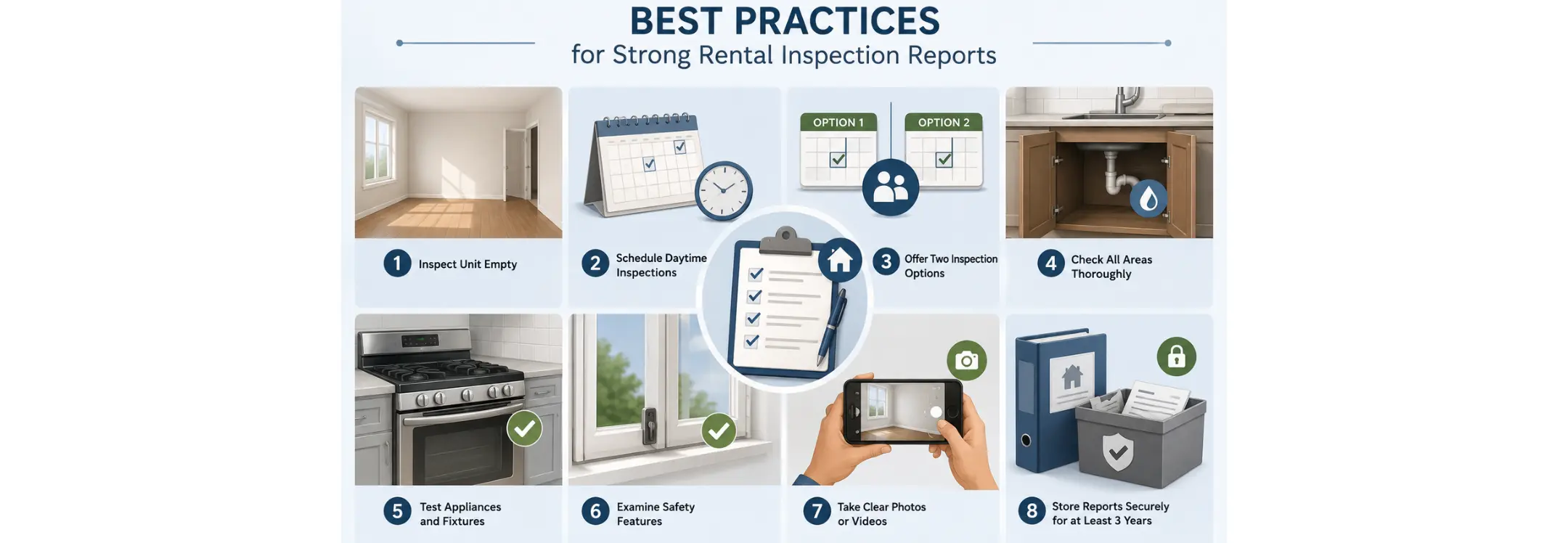
Executing an effective property inspection requires proper preparation and strict adherence to statutory rules. Walkthroughs should always occur when the rental unit is empty of furniture and personal items, allowing full visibility of floors, walls, and corners. Landlords must schedule inspections during permitted daytime hours, offering tenants at least two separate inspection options on different days if scheduling conflicts arise.
During the walkthrough, inspectors should conduct a thorough physical check of the entire premises. Open cabinet doors, check under sinks for moisture leaks, test stove burners, examine window locks, and test all smoke detectors and carbon monoxide alarms. Taking high-resolution photos or video clips provides invaluable supporting evidence alongside written comments. Landlords are legally required to store completed inspection documents securely for at least three years after the tenancy ends.
Move in report specifics
A Move-In Rental Inspection Report must detail every part of the residence before the tenant moves in belongings. The document should record the precise condition of living areas, bedrooms, bathrooms, kitchens, storage areas, and exterior features. It must also list the exact number of entrance keys, garage remotes, and access fobs handed to the tenant.
Legal compliance requires specific statutory statements and signatures on the incoming report. The form must state the date of inspection, names of all inspectors present, and mandatory statements where the tenant indicates agreement or disagreement. If the tenant disagrees with specific findings, clear written reasons must be noted on the form. If a tenant refuses to participate after receiving proper notices, the landlord must document that refusal explicitly on the signed report.
Move out report specifics
The Move Out Rental Inspection Report mirrors the structure of the initial assessment to enable direct room-by-room comparison. During this final walkthrough, the landlord and tenant re-examine all areas to evaluate changes that occurred during tenancy. The report documents any new physical damage, unapproved structural alterations, or excessive dirtiness requiring professional cleaning.
The outgoing assessment must also confirm the return of all keys, access fobs, and property remotes. If repairs are necessary, the report should outline required restoration tasks, estimated repair costs, and proposed deposit deductions. Both parties must sign and date the final document, acknowledging the exit condition and confirming whether deposit funds will be returned or withheld.
Benefits of using a Rental Inspection Report template
Utilizing a standardized Rental Inspection Report template provides structural consistency and legal protection for property managers and tenants. Templates feature organized checklists covering every structural element, fixture, appliance, and safety device in a residential property. This systematic layout ensures that inspectors do not overlook critical items during a busy move-in or move-out day.
Standardized templates also guarantee that essential legal clauses, statutory statements, and signature blocks are present. For landlords, using a proven Rental Inspection Report template saves administrative setup time while reducing errors. For tenants, a standardized document offers a clear, readable record that distinguishes pre-existing damages from new repair responsibilities.
Why an online Rental Inspection Report is even better
Adopting an Online Rental Inspection Report takes property management efficiency even further. Mobile platforms allow landlords and tenants to conduct walkthroughs using tablets or smartphones, attaching timestamped digital photos directly to specific room checklist entries. This digital integration eliminates illegible handwriting, lost paperwork, and unattached photo files during tenancy disputes.
Online platforms also enforce compliance by requiring users to complete all mandatory fields, capture required signatures, and record key counts before finalizing. Once completed, an Online Rental Inspection Report generates instant digital files that are delivered electronically to all parties immediately, satisfying statutory delivery rules. Secure cloud storage ensures long-term preservation for mandatory multi-year retention requirements. For more information, have a look at our rental inspection report checklist.
How to create a move in and move out Rental Inspection Report with Ziji Legal Forms
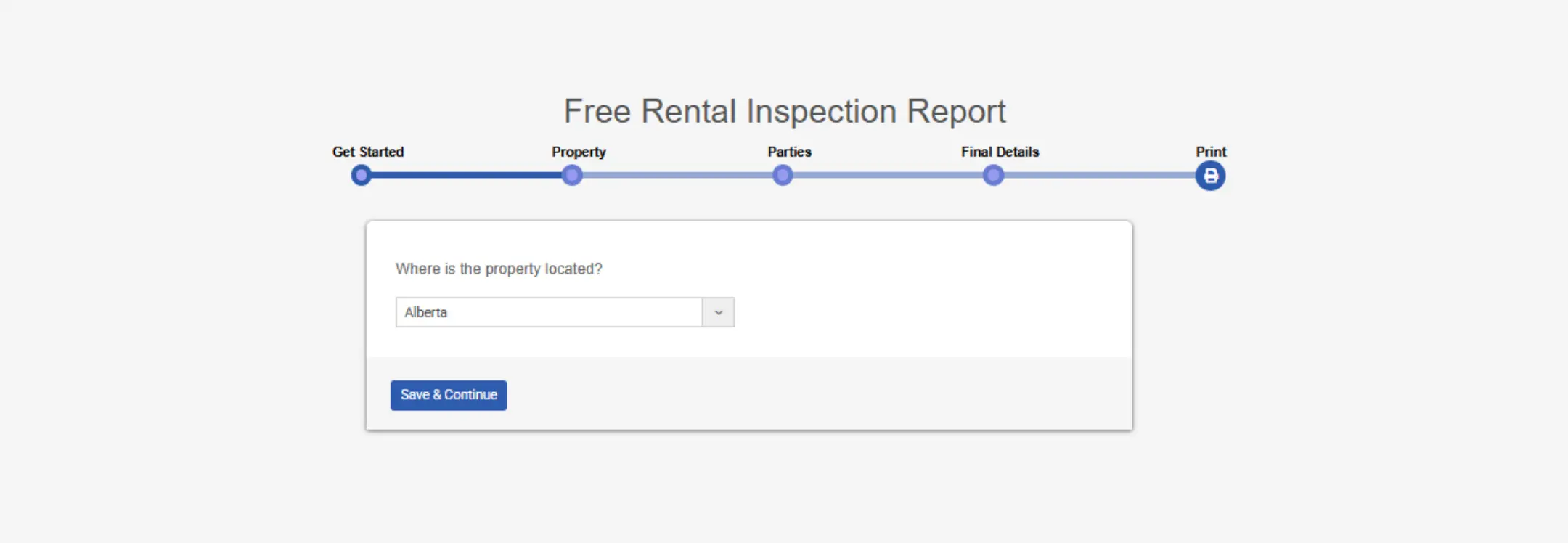
1. Choose Template
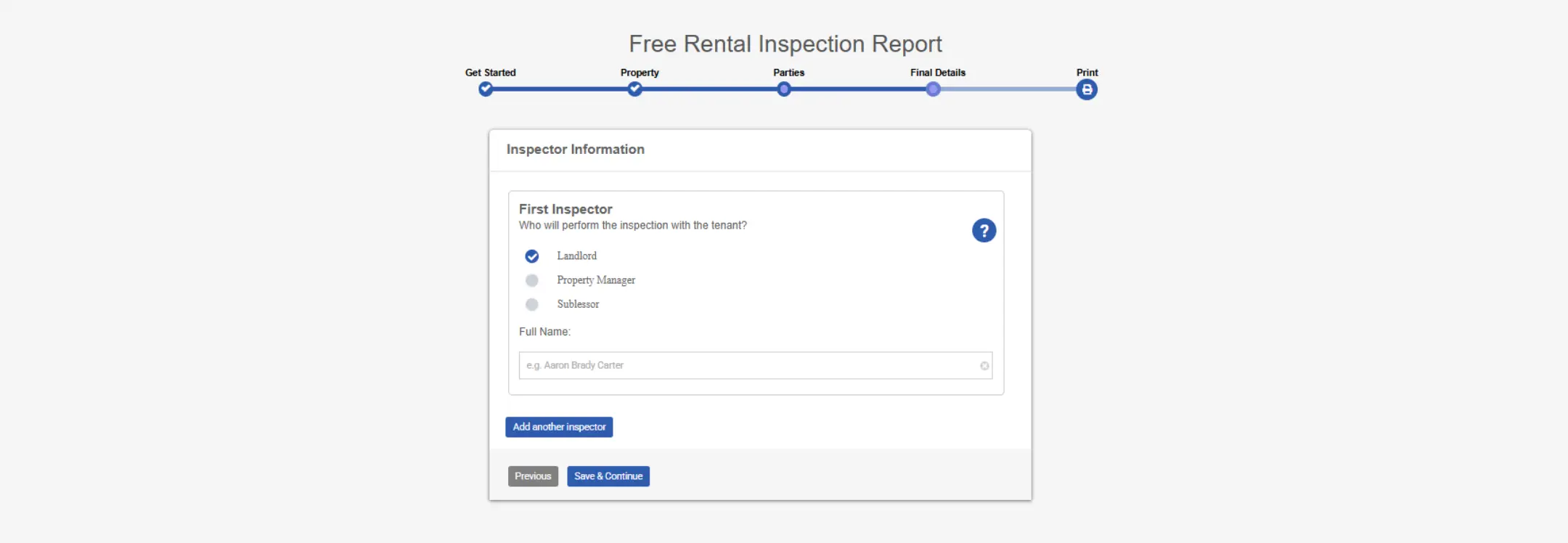
2. Add Party Details
Input the legal names, contact numbers, and official addresses for both the landlord and tenant into the form fields.
3. Add Property Details
Enter the rental unit address, key return counts, and current functional status of all smoke detectors.
4. Add Final Details
Record room condition notes, attach digital photos, and include mandatory statutory tenant agreement statements.
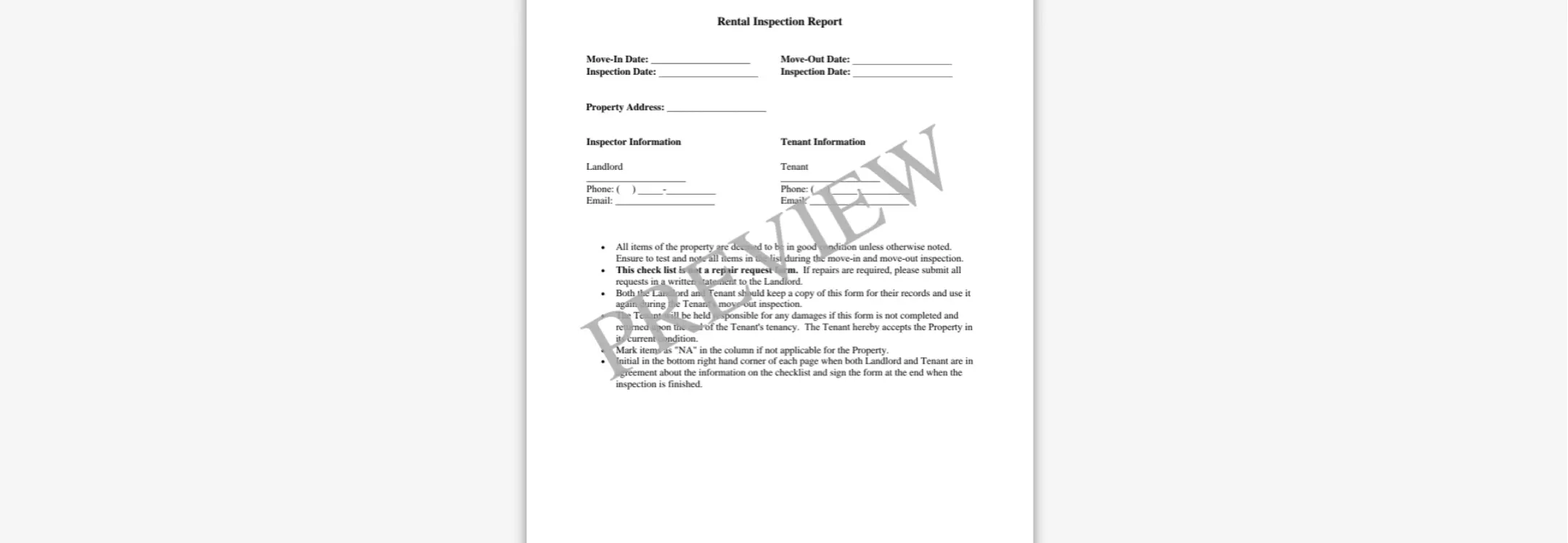
5. Preview and Print
Review the finished document for accuracy, generate instant digital copies, and collect physical or electronic signatures.
Practical tips for landlords and tenants
Effective property inspections require thorough planning and respectful communication between landlords and tenants. Landlords must provide proper written notice when scheduling walkthroughs, offering flexible appointment slots during permitted daytime hours. Conducting inspections while the property is completely vacant ensures that flooring scratches, wall marks, or fixture flaws are easily spotted.
Tenants should prepare for walkthroughs by reviewing their lease terms and testing all fixtures. Run water taps, check drawer slides, inspect appliance seals, and test window latches during the inspection. Bringing a smartphone to capture high-quality photos provides additional visual proof. Approaching the walkthrough collaboratively ensures accurate reporting and preserves healthy landlord-tenant relations.
When to update or supplement inspection records
Inspection records should be updated whenever significant changes occur during a lease term. When landlords complete major renovations, replace appliances, or repair plumbing systems, creating a signed written addendum keeps condition records accurate. Similarly, if a tenant receives approval to add a pet midway through tenancy, updating the inspection report documents property conditions prior to pet occupancy.
Conclusion
Completing a Move-In Rental Inspection Report and a Move Out Rental Inspection Report is an essential requirement under Canadian tenancy laws. These written records protect landlord security deposit claims while safeguarding tenants from financial liability for pre-existing damage. Conducting walkthroughs in vacant units, recording photos, and adhering to statutory notice timelines ensures full legal compliance. Modern digital tools make it easy to Create Rental Inspection Report forms that fulfill provincial regulations and store records securely. By utilizing Ziji Legal Forms, landlords can seamlessly create Rental Inspection Report documents, tenancy agreements, and Service Agreements with total confidence.
Rental Inspection Report FAQs
1. How does a Rental Inspection Checklist protect landlords and tenants?
It provides a detailed record of the property's condition, helping both parties avoid disputes over damage, repairs, and deposits.
2. Who benefits from using a Rental Inspection Checklist?
Both landlords and tenants benefit from having a documented record of the property's condition before and after the tenancy.
3. Should inspections be completed before and after the lease?
Yes. Conducting both inspections allows changes in the property's condition to be accurately identified.
4. What information belongs in a Rental Inspection Checklist?
The checklist should record the condition of rooms, flooring, walls, appliances, plumbing, lighting, windows, doors, and exterior features.
5. Can I customize the checklist for my rental property?
Yes. You can tailor the checklist to suit the type of rental property and include features that are unique to your unit.
6. What jurisdictions are covered by the Ziji Legal Forms Rental Inspection Checklist?
The Ziji Legal Forms Rental Inspection Checklist is suitable for use throughout all supported provinces and territories in Canada.
Author
Mandar Sonavane
|
Legal Content Writer at Ziji Legal Forms Inc.
Symbiosis International University
Mandar is a legal content writer specializing in the development of clear, practical, and easy-to-understand legal resources. With a strong focus on legal research, content creation, and plain-language writing, he works closely with our legal professionals to ensure that legal documents and educational materials are accurate, accessible, and user-friendly. At Ziji Legal Forms Inc., Mandar is responsible for researching legal topics, drafting and reviewing content, and helping transform complex legal concepts into straightforward guidance that empowers individuals and businesses to confidently navigate their legal needs.
Reviewed By
Histon Shek
|
General Counsel and Co-Founder at Ziji Legal Forms Inc.
University of Alberta
Histon Shek was called to the Alberta Bar in 2006. He holds a BA in Sociology and Philosophy and an LLB from the University of Alberta. As co-founder of Ziji Legal Forms Inc., he focuses on making legal documents accessible and affordable, overseeing legal integrity and content development.





 Canada
 United States