TL;DR - A Bill Of Sale Canada serves as the primary legal receipt for transferring ownership of personal property between private parties.
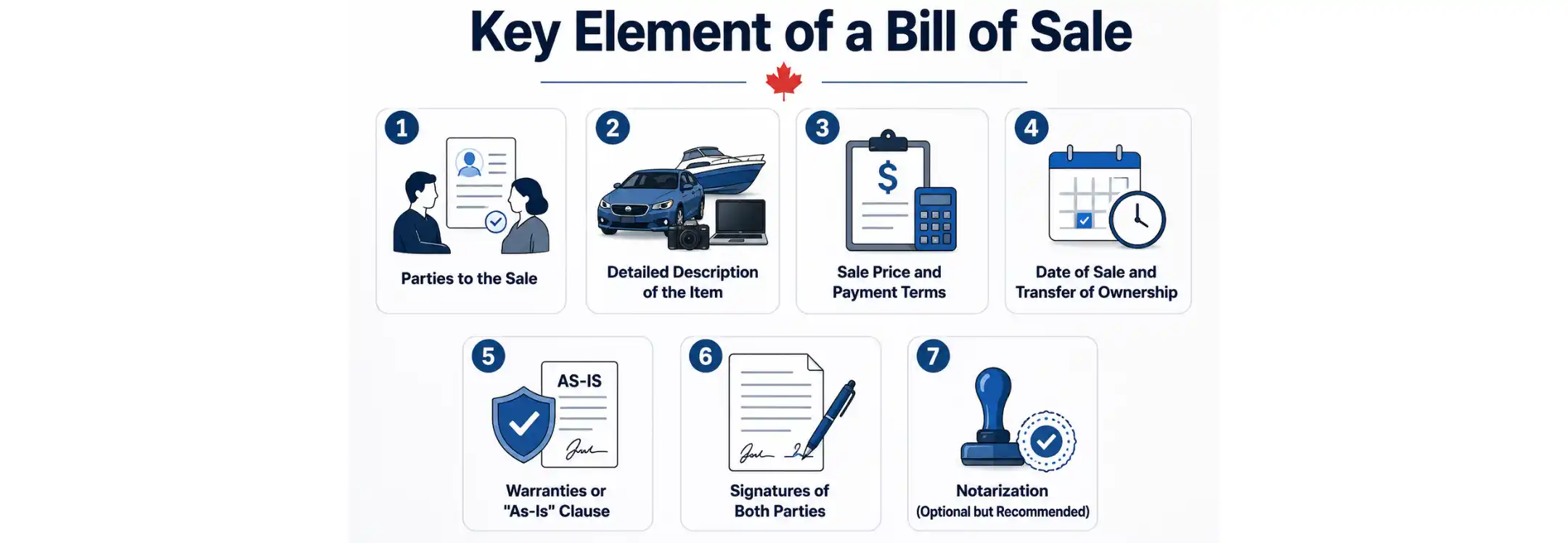
- Essential Elements Of Bill Of Sale require identifying parties, describing the item, stating the price, and setting payment terms.
- Provincial Sale of Goods Acts automatically imply legal conditions regarding title and freedom from liens unless disclaimed in writing.
- Using a Bill Of Sale template from Ziji Legal Forms helps buyers and sellers avoid costly disputes and streamlines provincial registration procedures.
Introduction
Navigating private transactions in Canada requires careful attention to legal documentation to protect both buyers and sellers. When you buy or sell moveable personal property, establishing a reliable written record is essential for legal security. A Bill Of Sale Canada serves as official proof that a transaction took place and that ownership transferred between parties. It connects an informal private deal to official registered status with government authorities.
Without proper written contracts, private sales can quickly lead to financial disagreements, tax confusion, or registration roadblocks. Under Canadian legal principles, provincial Sale of Goods Acts establish default rules that govern private transactions. Understanding how to construct this document ensures that all parties manage legal risks effectively. This guide explains the key components needed for a valid and secure property sale in Canada.
Parties to the Sale
Every legally binding contract depends on accurately identifying the individuals or entities involved in the transaction. Clearly establishing participant details ensures that legal rights and obligations attach to the correct entities without ambiguity.
Complete Legal Information Required
A valid document must state the complete legal names of all buyers and sellers involved in the agreement. You should avoid using informal nicknames or abbreviated names because they create confusion during legal reviews. Provide full residential street addresses for every individual rather than post office box numbers. Verifying participant information against valid government photo identification prevents identity fraud and misrepresentation. When a corporation buys or sells property, include the registered corporate name alongside the principal business address. Collecting comprehensive party information creates a clear legal trail that supports contract enforcement if disputes arise later.
Detailed Description of the Item
A vague property description can compromise the legal enforcement of an agreement during future disagreements. The written description must identify the exact property so that it cannot be confused with any other item.
Vehicle-Specific Requirements
Private sales involving motor vehicles, trailers, or recreational motorized equipment require detailed identification numbers. The sales record should state the model year, make, model name, body style, and exterior color. Crucially, the contract must list the full seventeen digit Vehicle Identification Number alongside the precise odometer reading at delivery. Accurate mileage logs protect sellers from future claims of odometer tampering while giving buyers clear baseline operational records. Missing or inaccurate identification numbers can prevent provincial licensing offices from registering the vehicle under the new owner.
General Property Descriptions
For non-vehicular personal property, thorough identification details remain equally important for contract validity. Consumer electronics require brand names, model numbers, and unique factory serial numbers. Watercraft sales must list the Hull Serial Number, overall length, vessel make, and motor serial details. Livestock sales should specify breed, age, sex, color markings, and microchip or physical brand marks. Specifying these details prevents confusion regarding which item was sold and confirms title transfer.
Sale Price and Payment Terms
Financial terms represent the core consideration that makes a private sales contract legally binding. Documenting pricing structures clearly eliminates monetary disagreements and supports accurate tax reporting.
Purchase Price Documentation
The total purchase price should be written using both numerical figures and full words to prevent alteration. Explicitly stating Canadian Dollars avoids currency confusion in cross-border transactions. The document must state whether sales taxes such as Goods and Services Tax, Harmonized Sales Tax, or Provincial Sales Tax are included. Accurate price reporting is vital when buyers register items with provincial authorities because registries calculate applicable sales taxes based on the document. Underreporting purchase amounts to avoid tax can trigger provincial audits and severe legal penalties.
Payment Method Details
Documenting the exact method of payment establishes a clear record of financial settlement. Common payment methods include cash, electronic bank transfer, certified cheque, bank draft, or direct bank deposit. If the transaction includes a trade-in asset or a scheduled payment plan, those specific terms must be written out clearly. Recording payment details protects sellers against non-payment claims and proves to buyers that financial obligations were met.
Date of Sale and Transfer of Ownership
Establishing a clear transaction date fixes legal timelines for risk allocation, legal duties, and property rights. The sales document must prominently feature the effective date of transfer.
Legal Transfer Moment
The stated effective date identifies the precise moment when legal ownership and operational risk pass from seller to buyer. From this time forward, the buyer accepts financial responsibility for physical damage, loss, or third-party liabilities. Clear dating prevents sellers from being held liable for traffic tickets, parking violations, or accidents that occur after delivery.
Registration and Title Implications
In Canadian provinces, private sales of registered property require updating public ownership records. Provincial ministries of transportation require a written record of sale before issuing new license plates and registration certificates. While a sales form confirms a transaction between private parties, buyers should conduct a separate search under the Personal Property Security Act to verify that no prior liens exist.
Warranties or "As-Is" Clause
Setting clear property condition terms manages post-sale expectations and allocates future maintenance responsibilities. Explicit terms shield both parties from unexpected litigation following physical delivery.
Warranty Provisions
Under Canadian law, provincial Sale of Goods Acts automatically imply default legal conditions into private sales. These statutory conditions mandate that the seller owns the property and has the right to sell it free from undisclosed liens. If a seller provides express guarantees regarding performance or quality, those assurances must be written directly into the agreement.
"As-Is" Sales Protection
To exclude default statutory warranties in private transactions, sellers typically insert an explicit as-is clause. An as-is clause indicates that the buyer inspected the property and accepts it in its current condition with all existing faults. In certain provinces, selling a vehicle as-is requires specific statements noting that the car may not be roadworthy and might require repairs.
Signatures of Both Parties
A written contract requires formal execution to demonstrate mutual assent and legal intent between parties. Signatures confirm that both individuals accept every term written in the document.
Signature Requirements
Both the buyer and the seller must sign and date the final document to make it legally effective. Digital signatures or physical wet signatures offer valid proof of voluntary consent. Both parties should retain an identical executed copy for their personal tax and legal files.
Witness and Additional Protections
Having an independent adult witness sign the document provides extra legal protection for both parties. A neutral witness can confirm that signatures were provided voluntarily by competent individuals. For high-value transactions, independent witnesses discourage future claims of coercion, fraud, or signature forgery.
Notarization: Optional but Recommended
Understanding when formal notarization provides valuable security helps parties select appropriate document authentication.
Benefits of Notarization
Notarization involves a licensed Notary Public or Commissioner for Oaths verifying party identities and witnessing signatures. This formal process creates strong legal evidence that prevents future disputes regarding document authenticity. A notarized document deters identity theft and makes it difficult for a party to deny signing.
When Notarization Is Required
Most routine private sales in Canada do not legally require formal notarization to be valid. However, notarization is highly recommended for high-value assets, interprovincial transfers, or complex private deals. Lenders and registration authorities may also request notarized documents before processing loans or ownership transfers.
Provincial and Federal Requirements
Canadian legal rules split between federal jurisdiction over specific assets and provincial oversight over general personal property. Ensuring compliance requires understanding which governmental level regulates your asset class.
Federal Requirements
Certain types of property fall under federal jurisdiction regardless of the province where the sale occurs. Aircraft sales must comply with Transport Canada registration guidelines, while commercial vessels adhere to federal marine regulations. Federal excise tax rules also dictate how registered businesses document asset sales for national tax reporting.
Additional Provincial Requirements
General personal property sales operate under provincial laws governed by individual provincial Sale of Goods Acts. Each province applies distinct guidelines for calculating Provincial Sales Tax or Harmonized Sales Tax during vehicle registration transfers. Accurate sales documents ensure provincial registry offices apply proper tax rates and register ownership correctly.
Creating a Bill of Sale with Ziji Legal Forms
Using an online platform simplifies drafting legal paperwork while maintaining Canadian legal accuracy.
1. Select the Bill of Sale Template
2. Enter the details of your sale
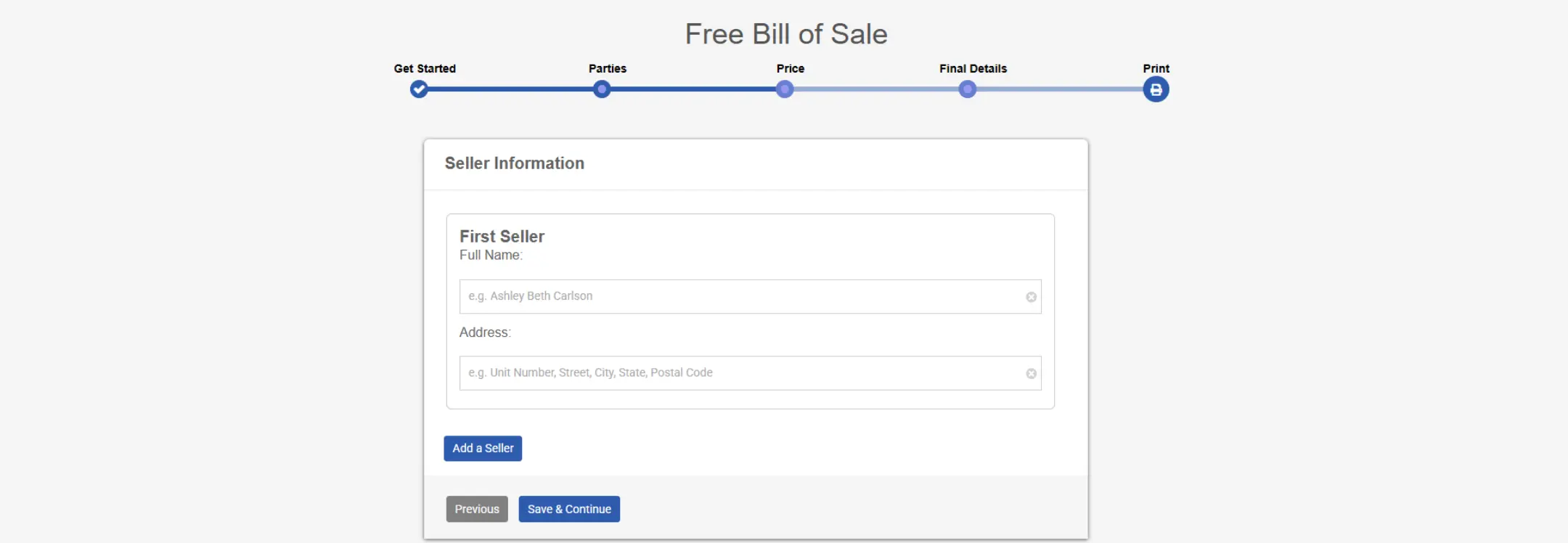
Answer simple guided questions regarding the buyer, seller, asset details, and agreed purchase price. Fill in accurate participant names, physical addresses, identification numbers, tax choices, and condition terms.
3. Review your completed Bill of Sale
Preview the generated document for accuracy before downloading, printing, and collecting signatures.
Advantages of Using Ziji Legal Forms Templates
Utilizing customizable digital templates provides convenience, speed, and legally sound protection for private property transfers.
User-Friendly Process
Ziji Legal Forms streamlines legal document creation through an intuitive question process. The interactive tool ensures you include all necessary Elements Of Bill Of Sale without missing vital clauses. Anyone can create Bill Of Sale documents quickly without incurring expensive legal fees. Utilizing a customizable Bill Of Sale template ensures complete compliance across Canadian provinces. Furthermore, the platform allows individuals and commercial clients to prepare additional legal documents like Service Agreements easily.
Conclusion
Executing a formal sales document is essential whenever personal property transfers between private individuals or business entities in Canada. Including verified party details, detailed property identifiers, clear purchase amounts, and explicit warranty terms protects both buyers and sellers. Understanding the default implied conditions under provincial Sale of Goods Acts helps parties customize their contracts effectively. Utilizing standardized digital platforms makes creating enforceable documents simple, accurate, and highly affordable. A properly executed Bill Of Sale Canada establishes undisputed proof of purchase, simplifies provincial tax reporting, and ensures smooth ownership registration.
Bill of Sale FAQs
1. How does a Bill of Sale protect buyers and sellers?
It provides written proof of the transaction, including the item sold, purchase price, and transfer of ownership.
2. Who should use a Bill of Sale?
Anyone buying or selling valuable personal property through a private sale should use a Bill of Sale.
3. Is every Bill of Sale an "as is" sale?
Not necessarily. If the seller provides a warranty or guarantee, it should be clearly stated in the document.
4. Should I notarize my Bill of Sale?
Although many private sales do not require notarization, it can provide additional confidence for both parties.
5. Why should both the buyer and seller sign the Bill of Sale?
Their signatures confirm that both parties agreed to the sale and its terms.
6. What jurisdictions are covered by the Ziji Legal Forms Bill of Sale?
The Ziji Legal Forms Bill of Sale is suitable for use throughout all supported provinces and territories in Canada.
Author
Mandar Sonavane
|
Legal Content Writer at Ziji Legal Forms Inc.
Symbiosis International University
Mandar is a legal content writer specializing in the development of clear, practical, and easy-to-understand legal resources. With a strong focus on legal research, content creation, and plain-language writing, he works closely with our legal professionals to ensure that legal documents and educational materials are accurate, accessible, and user-friendly. At Ziji Legal Forms Inc., Mandar is responsible for researching legal topics, drafting and reviewing content, and helping transform complex legal concepts into straightforward guidance that empowers individuals and businesses to confidently navigate their legal needs.
Reviewed By
Histon Shek
|
General Counsel and Co-Founder at Ziji Legal Forms Inc.
University of Alberta
Histon Shek was called to the Alberta Bar in 2006. He holds a BA in Sociology and Philosophy and an LLB from the University of Alberta. As co-founder of Ziji Legal Forms Inc., he focuses on making legal documents accessible and affordable, overseeing legal integrity and content development.





 Canada
 United States