The creation of a robust residential lease is a fundamental task for any property owner in Canada. This document serves as more than a simple receipt for rent payments because it establishes the legal boundaries of the relationship between a landlord and a tenant. A well drafted agreement protects the financial interests of the owner while ensuring that the tenant enjoys the right to a safe and quiet home. By understanding the nuances of provincial legislation and general contract principles, landlords can mitigate risks and foster long term stability in their rental investments.
TL;DR
- A written residential lease is legally required or highly recommended across all Canadian provinces to prevent misunderstandings and provide evidence for dispute resolution.
- Every agreement must identify the legal names of all parties and provide a precise description of the premises including unit numbers and specific parking or storage details.
- Rent and security deposit rules vary significantly by province with some regions strictly limiting deposit amounts to half of one month of rent or prohibiting them entirely.
- Maintenance responsibilities generally place the burden of structural and essential service repairs on the landlord while tenants manage daily cleanliness and minor upkeep.
- Landlords must provide at least twenty four hours of written notice before entering a unit except in cases of emergency or with prior tenant consent.
- Legal disclosures regarding fire safety and privacy and occupancy limits are mandatory to ensure the health and safety of residents and compliance with provincial laws.
- Ziji Legal Forms provides free customizable residential lease agreement templates that can help you create such documents with ease.
Introduction to Residential Lease Agreements
The concept of a residential lease in Canada is governed by a complex interplay of provincial statutes and common law principles. Unlike commercial leases which offer broad freedom of contract, residential tenancies are heavily regulated to protect the rights of individuals to secure and habitable housing. Every province has its own version of a Residential Tenancies Act which sets out mandatory terms that apply even if they are not explicitly written into the contract. These laws ensure a level playing field and prevent the inclusion of unfair clauses that might exploit a tenant in a competitive market.
The Shift Toward Written Clarity
While verbal agreements might be recognized in some jurisdictions, they are inherently risky for both parties. A written residential lease template provides a clear roadmap for the tenancy and documents everything from the length of the term to the specific utilities included in the monthly price. In provinces like British Columbia and Ontario, the law mandates that landlords provide a written copy of the agreement to the tenant within a specific timeframe after it is signed. This transparency reduces the likelihood of expensive hearings before a provincial tribunal or rental board.
Adapting to Modern Rental Realities
The rental landscape in Canada has changed significantly with the rise of digital tools and changing lifestyle preferences. Landlords today must account for new variables such as electric vehicle charging and remote work requirements and the legalization of cannabis. Using an online residential lease allows owners to customize their documents while remaining compliant with the latest legal updates. This modern approach ensures that the lease remains a living document that accurately reflects the current state of the property and the expectations of the parties involved.
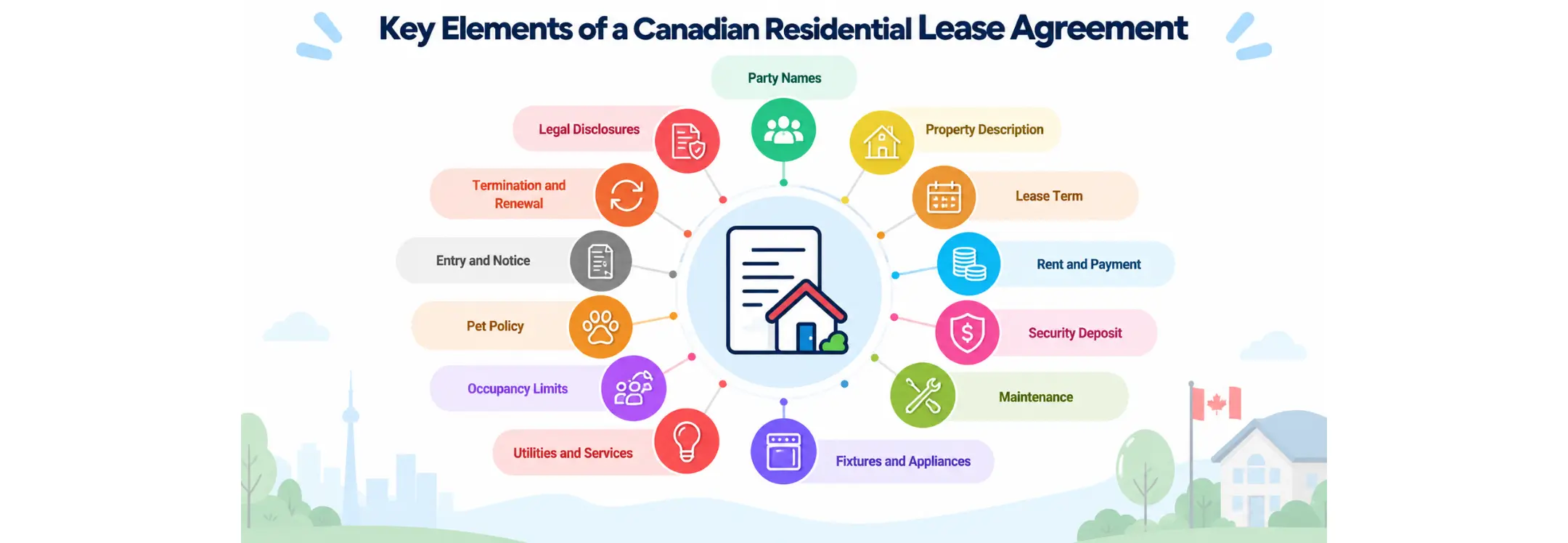
Key Elements of a Canadian Residential Lease Agreement
Every effective lease begins with a core set of identifiers that ground the contract in legal reality. These elements define who is involved and what is being rented and for how long. Missing even one of these details can make the agreement difficult to enforce if a dispute arises. Landlords should treat these sections as the vital statistics of the tenancy which must be accurate and verified before the tenant takes possession of the unit.
1. Names of All Parties
The agreement must state the full legal names of the landlord and every adult tenant who will reside in the property. In Canada, it is standard practice to hold all adult occupants jointly and severally liable for the terms of the lease. This means that if one person fails to pay their share of the rent, the landlord can legally collect the full amount from the other named tenants. This provision protects the landlord from financial loss when roommates or couples experience a change in their personal relationship.
Verification and Accountability
Verifying identities through government issued identification is a critical step in the pre leasing process. Landlords should ensure that the names on the lease match the names on the credit reports and background checks. This alignment ensures that the person who signed the contract is the same person who is legally responsible for the premises. If a corporation is the landlord, the agreement should list the corporate name along with the address of a designated representative for service of legal notices.
2. Property Description
A vague description of a property can lead to significant friction regarding which areas a tenant is permitted to use. The lease should include the full civic address including the unit number and the city and the postal code. Beyond the unit itself, the description should specify access to common areas such as laundry rooms or fitness centers or communal gardens. If the tenant has exclusive use of a backyard or a balcony, this should be explicitly stated to prevent future arguments with neighbors or other tenants.
Defining Storage and Parking Spaces
In many urban Canadian centers, parking and storage are premium commodities that require clear documentation. If the lease includes a parking stall, the agreement should list the specific stall number and any rules regarding the type of vehicles allowed. Similarly, storage lockers should be identified by number and location. Clearly defining these spaces ensures that the tenant knows exactly what they are paying for and prevents unauthorized use of other portions of the property by the occupant or their guests.
3. Lease Term
The lease term defines the duration of the tenant's right to occupy the property and usually falls into two categories. A fixed term tenancy has a specific end date and usually lasts for one year. This provides stability for both the landlord and the tenant. A periodic tenancy, often called a month to month lease, continues indefinitely until one party provides notice to end it. Canadian laws often dictate that a fixed term lease automatically converts to a periodic one after the end date unless a new agreement is reached.
Understanding Security of Tenure
One of the unique aspects of a residential lease Canada provides is the concept of security of tenure. This means that even if a fixed term ends, a landlord cannot simply evict a tenant without a valid legal reason such as non payment of rent or the landlord needing the unit for personal use. This principle protects tenants from arbitrary displacement and encourages long term residency. Landlords must be aware of these renewal rules to manage their properties effectively and plan for future vacancies or renovations.
4. Rent Amount and Payment Terms
The financial core of the lease is the rent amount and how it is to be delivered. The agreement must state the exact dollar amount due each month and the specific day it is due, which is traditionally the first of the month. It should also list the accepted methods of payment such as electronic funds transfer or post dated cheques or direct deposit. Many landlords in Canada now prefer digital payments for their speed and automatic record keeping features.
Rent Increases and Late Fees
Landlords must follow provincial guidelines regarding how often and by how much they can increase the rent. Most provinces require at least ninety days of written notice before an increase can take effect. Additionally, late fees are often capped by provincial regulation to ensure they are compensatory rather than punitive. The lease should clearly outline these terms so the tenant understands the consequences of a missed payment and the process for future cost adjustments.
5. Security Deposit Terms
Security deposits are a major point of variation across the country. In Alberta and Saskatchewan, a landlord can request a deposit equal to one month of rent. In British Columbia and Manitoba, the limit is half of one month of rent. Conversely, Ontario does not allow security deposits at all and only permits a rent deposit for the final month of the tenancy. Quebec is even more restrictive as it prohibits all forms of deposits entirely.
Management of Deposit Funds
When a deposit is collected, it must often be held in a separate interest bearing trust account. Some provinces require the landlord to pay interest to the tenant annually while others allow the interest to accrue until the end of the tenancy. The lease must detail the conditions for returning the deposit which usually happens within a set number of days after the tenant moves out. Deductions are only allowed for specific reasons like damage beyond normal wear and tear and must be supported by receipts or a statement of account.
6. Maintenance Responsibilities
A well drafted lease clearly divides the labor of property upkeep. Landlords are legally obligated to keep the premises in a good state of repair and fit for habitation according to health and safety standards. This includes the roof and the walls and the plumbing and the heating systems. Even if a tenant was aware of a defect before moving in, the landlord cannot contract out of their duty to fix structural or essential system issues.
Tenant Obligations for Cleanliness
Tenants are responsible for the ordinary cleanliness of the unit and for repairing any damage they or their guests cause through negligence or willful acts. This includes things like properly disposing of garbage and preventing mold growth through adequate ventilation. For example, if a tenant breaks a window during a party, they are responsible for the repair cost. However, if the window seal fails due to old age, the landlord must pay for the replacement.
7. Fixtures and Appliances
If the rental includes appliances like a refrigerator or a stove or a microwave, the landlord is responsible for their maintenance. The lease should list every appliance provided to establish an inventory and confirm that they were in working order at the start of the tenancy. If an appliance fails due to normal wear and tear, the landlord must repair or replace it with a similar model. Tenants cannot be charged a deductible for these repairs unless the damage was caused by misuse.
Managing Permanent Fixtures
Fixtures are items that are permanently attached to the property such as light fixtures or shelving or ceiling fans. The lease should state that the tenant cannot remove or replace these items without written consent. If a tenant wants to install a new light fixture, they must usually get approval and ensure the work is done by a qualified professional. At the end of the lease, any unauthorized changes may need to be reversed at the tenant's expense to return the unit to its original condition.
8. Utilities and Services
The agreement must specify which utilities are included in the rent and which are the responsibility of the tenant. This clarity prevents disputes over unexpected bills and ensures that essential services remain active. Common utilities like water and sewer are often covered by the landlord in multi unit buildings while electricity and gas are frequently paid for by the tenant. The lease should also mention services like snow removal and lawn maintenance and waste collection.
Vital Services and Continuity
In many provinces, the law prohibits landlords from interfering with vital services even if the tenant is behind on rent. This means that a landlord cannot shut off the heat in the middle of a Canadian winter as a way to force a tenant to move out. If the tenant is responsible for their own utilities, the landlord may require proof that the accounts have been set up before handing over the keys. This step ensures that the property is properly heated and lit throughout the duration of the tenancy.
9. Occupancy Limits
Occupancy limits are included in a residential lease template to prevent overcrowding and ensure compliance with municipal bylaws. These limits are usually based on the number of bedrooms and the total living space of the unit. While landlords have a right to limit the number of permanent residents, they must be careful not to violate human rights codes by discriminating against families with children. The goal is to balance property safety with the housing needs of the community.
Tracking Authorized Occupants
The lease should name every person who is authorized to live in the unit as a permanent resident. This prevents a tenant from moving in extra roommates without the landlord's knowledge. While short term guests are allowed, many leases define a guest as someone who stays for less than two weeks. If a guest stays longer, they may be considered an unauthorized occupant. This distinction is important for insurance purposes and for managing the overall wear and tear on the building systems.
10. Pet Policy
Pet policies are highly dependent on the province where the property is located. In Ontario, any clause in a lease that bans pets is generally considered void under the Residential Tenancies Act unless the animal is dangerous or disruptive. In other provinces like British Columbia and Alberta, landlords have the full right to prohibit pets or set specific rules regarding the breed and size and number of animals allowed. It is essential to understand these local differences when drafting the pet section.
Accommodating Service and Support Animals
Regardless of the general pet policy, Canadian law requires landlords to accommodate service animals used by individuals with disabilities. These animals are not considered pets and cannot be subject to extra fees or damage deposits. Landlords should ask for appropriate documentation if a tenant requests an accommodation for a service animal. Clear communication about these rights and responsibilities helps prevent discrimination claims and ensures that all tenants have equal access to housing.
11. Entry and Notice Requirements
Respecting a tenant's privacy is a fundamental obligation of every landlord. The law requires that a landlord provide written notice at least twenty four hours before entering a unit for non emergency reasons. This notice must state the specific date and the approximate time of entry and a valid reason such as performing repairs or conducting a move out inspection. Entry should generally occur between eight in the morning and eight in the evening to minimize disruption to the tenant.
Exceptions for Emergency Situations
There are specific instances where a landlord can enter a unit without notice. These include emergencies such as a fire or a major flood or a gas leak where waiting twenty four hours would result in significant property damage or danger to life. A landlord may also enter if the tenant gives consent at the time of entry or if the tenant appears to have abandoned the property. Outlining these rules in the lease ensures that both parties understand the boundaries of privacy and the necessity of property maintenance.
12. Termination and Renewal Conditions
The end of a tenancy requires formal communication to avoid legal complications. For a periodic tenancy, the tenant usually must provide at least one full month of notice before the last day of the rental period. Landlords can only terminate a tenancy for specific reasons allowed by law, such as non payment of rent or significant damage or the need to occupy the unit themselves. The lease should detail the exact forms and timelines required for these notices to be legally effective.
Mutual Agreement and Lease Breaks
Sometimes a landlord and tenant may mutually agree to end a tenancy earlier than the original end date. In these cases, it is best to sign a formal agreement to terminate the lease to prevent any future claims for unpaid rent or illegal eviction. If a tenant breaks a fixed term lease early without a legal reason, they may be responsible for the rent until a new tenant is found. Clearly stating these consequences in the contract encourages tenants to fulfill their commitments or communicate early if their situation changes.
13. Required Legal Disclosures
Canadian law mandates several disclosures that must be included in or attached to every residential lease. One of the most important is the landlord's contact information and a service address for the delivery of legal documents. This ensures that the tenant has a clear point of contact for repairs or emergencies. Additionally, many provinces require landlords to provide a copy of the provincial government's official handbook on tenant and landlord rights at the start of the tenancy.
Fire Safety and Health Disclosures
Landlords must disclose the location and maintenance schedule of fire safety equipment like smoke alarms and carbon monoxide detectors. In some buildings, information about previous issues like bedbugs or mold may also be required depending on local health regulations. Privacy disclosures are also critical as landlords must inform tenants about how their personal data is being used and protected under federal and provincial privacy acts. These disclosures build trust and ensure the landlord is protected from liability if a safety or privacy issue arises later.
Optional Clauses Landlords Should Consider
Beyond the standard legal requirements, landlords can include optional clauses that address specific property concerns or lifestyle preferences. These clauses allow the owner to tailor the agreement to the unique features of their building. However, these additions must always remain within the bounds of the law and cannot be used to deprive a tenant of their basic rights. Careful drafting of these extra rules can lead to a more harmonious living environment for everyone involved.
1. Smoking Policy
A comprehensive smoking policy is essential for protecting the property from fire risks and odors and cleaning costs. Landlords in Canada have the right to ban the smoking of tobacco and cannabis inside the rental unit and on balconies and in common areas. With the legalization of recreational cannabis in 2018, many landlords also include a ban on growing cannabis plants within the unit. This prevents the high humidity and electrical risks associated with indoor cultivation.
Enforcing a Smoke Free Environment
If a tenant violates a no smoking clause, the landlord can take steps toward eviction based on a breach of the lease terms. However, obtaining an eviction for smoking can be difficult because it requires clear evidence of the violation and proof of damage or disturbance. Landlords should clearly define what is included in the smoking ban and encourage tenants to use designated outdoor smoking areas if they are available. Consistent enforcement of these rules helps maintain the air quality and safety of the entire building.
2. Renters Insurance Requirement
It is highly recommended that landlords require tenants to maintain their own renters insurance throughout the tenancy. This insurance protects the tenant's personal belongings from fire or theft and provides liability coverage if they accidentally cause damage to the property or if a guest is injured. The landlord's building insurance does not cover the tenant's personal property or their individual liability. Requiring this coverage ensures that the tenant has the resources to handle an emergency without putting the landlord's investment at risk.
Benefits for Both Parties
Requiring proof of insurance can be a condition for handing over the keys to the unit. If a major incident like a flood occurs, renters insurance often covers the cost of temporary housing for the tenant, which removes a significant burden from the landlord. It also simplifies the process of recovering costs for accidental damage because the landlord can deal directly with the insurance provider. Including this clause in the residential lease Canada uses most often is a hallmark of professional property management.
Rules for Home Businesses
As more people work from home, it is important to clarify what types of business activities are permitted in a residential unit. Most landlords allow remote work that only involves a computer and a telephone. However, businesses that involve frequent clients or employees coming to the unit or the storage of hazardous materials can cause significant issues. These activities can increase noise levels and put extra strain on elevators and common areas while potentially violating local zoning laws.
3. Approval and Liability
Landlords should require tenants to obtain written permission before starting any home business. This allows the landlord to assess the impact on the property and other tenants. If a business is approved, the landlord may require the tenant to carry extra liability insurance that specifically names the business operations. This protection ensures that the residential nature of the building is preserved while allowing tenants some flexibility in how they earn their living.
Penalties for Unauthorized Occupants or Alterations
Unauthorized occupants can lead to overcrowding and increase the utility costs and wear on the building. The lease should clearly state that only the individuals named in the agreement are allowed to live in the unit. If a tenant wants to add a new roommate, they must seek the landlord's approval and have that person added to the lease. This ensures that every adult occupant has passed a background check and is legally responsible for the rent.
Restoring the Property
Similarly, the lease should prohibit any alterations to the unit like painting or changing the flooring or installing new fixtures without prior written consent. If a tenant makes unauthorized changes, the landlord can require them to pay for the cost of returning the unit to its original state. These penalties act as a deterrent and protect the long term value of the property. Clear rules about guests and alterations prevent the property from being modified or occupied in ways the owner did not intend.
4. Subletting vs. Assignment of Lease
Subletting and assignment are common ways for tenants to manage changes in their lives without breaking their lease. Subletting is a temporary arrangement where the original tenant moves out and allows someone else to live there but plans to return later. Assignment is a permanent transfer of the lease to a new person. In both cases, the tenant must obtain the landlord's written permission before the new person moves in.
Landlord's Right to Screen
While a landlord cannot arbitrarily refuse a sublet or assignment, they do have the right to screen the new occupant. The prospective subtenant or assignee must meet the same credit and reference standards as the original tenant. If the proposed person is not financially stable or has a poor rental history, the landlord may have a valid reason to refuse. Including these procedures in the lease ensures that the tenant knows the correct steps to take and the landlord maintains control over who occupies the building.
How to Create a Lease Using Ziji Legal Forms
The process of generating a professional and compliant residential lease template can be accomplished through a few simple and guided steps.
1. Choose a template
Select the residential lease template tailored to Canadian tenancy laws to ensure the agreement starts on a compliant legal foundation.
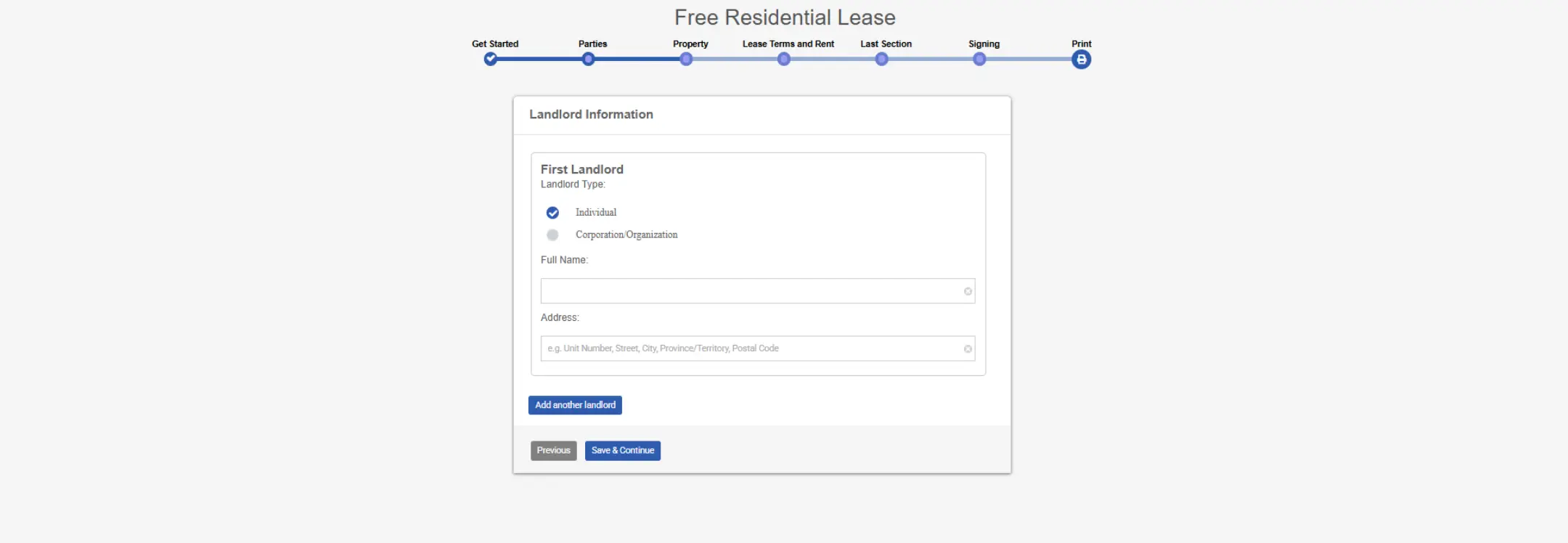
2. Add the party details
Enter the complete legal names and current contact information of the landlord and each tenant to clearly identify all parties to the lease.
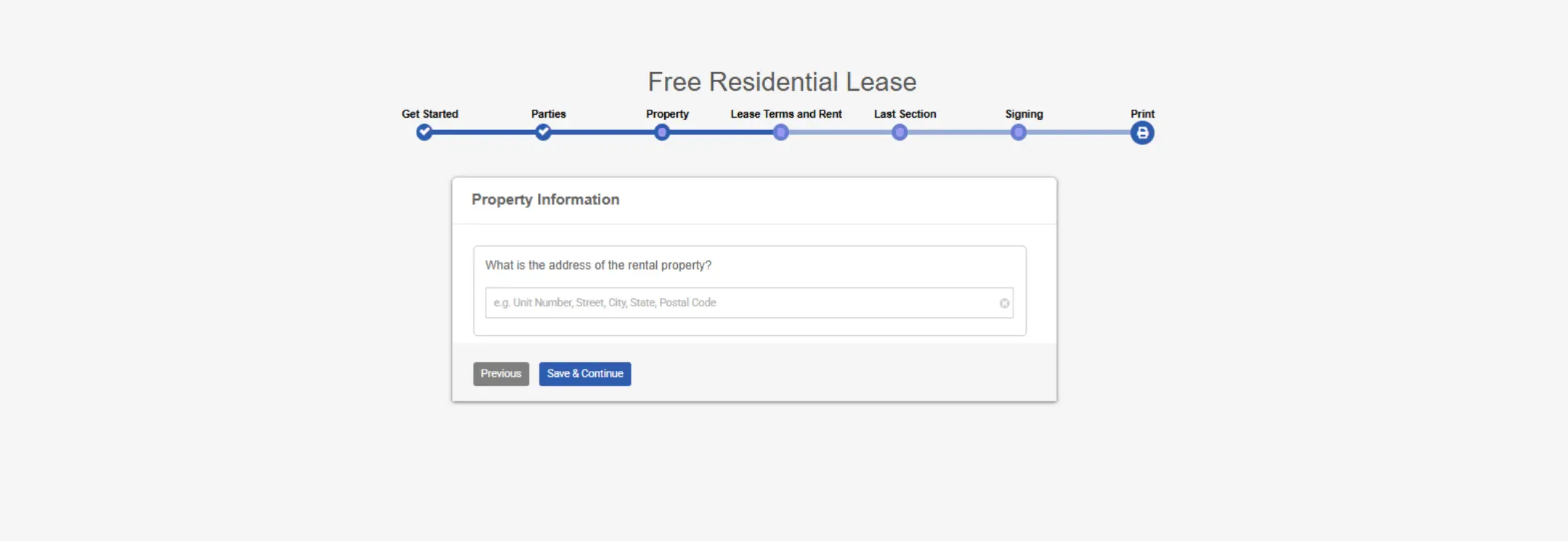
3. Add the property details
Provide the full civic address, unit number, and details of any included parking spaces or storage areas to accurately define the rented premises.
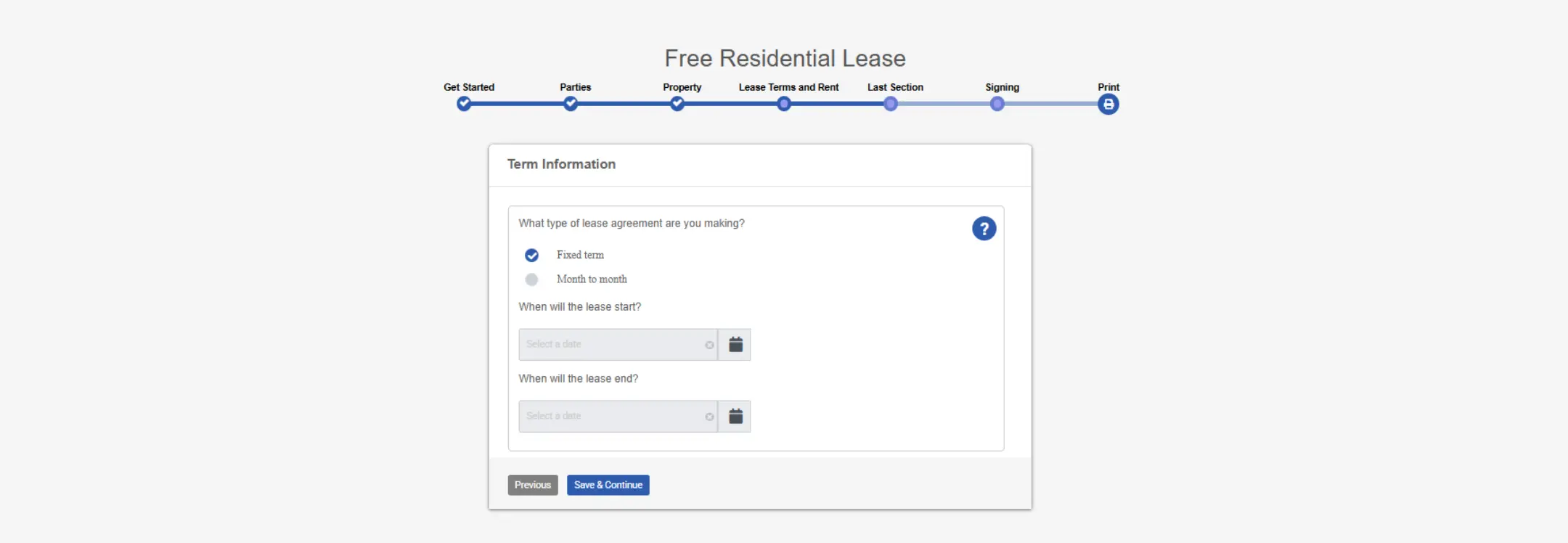
4. Add the lease term and rent details
State the tenancy type, lease duration, monthly rent amount, and the exact due date to establish clear payment expectations.
5. Preview and print
Review the completed agreement carefully for accuracy before printing or executing it electronically for signatures.
Finalizing, Signing, and Storing the Lease
Once the document is prepared, it must be signed by the landlord and all named tenants to become legally binding. It is common practice to have each party initial every page of the agreement to confirm that they have read and understood all the terms. In the digital age, electronic signatures are increasingly popular as they provide a timestamped record of execution and are easier to manage for remote parties. The landlord must provide the tenant with a fully signed copy of the lease within twenty one days of its completion.
Properly storing the lease is the final step in the process. Both the landlord and the tenant should keep their signed copies in a safe location such as a fireproof filing cabinet or a secure digital cloud service. Having the lease readily available is crucial for resolving future disputes regarding rent increases or repairs or the return of the security deposit. A well maintained digital record of the lease and any subsequent amendments ensures that the history of the tenancy is always clear and verifiable.
Conclusion
A comprehensive residential lease is the most important tool a Canadian landlord has for managing their property and protecting their income. By including all the essential elements and considering optional clauses for smoking and insurance, you create a fair and transparent environment for your tenants. Taking the time to draft a clear and compliant agreement reduces the risk of conflict and ensures that your investment remains a stable and professional operation for years to come.
Residential Lease FAQs
1. What does a Residential Lease do?
A Residential Lease establishes the rental terms, including rent, lease duration, and the obligations of both the landlord and tenant.
2. Who should use a Residential Lease?
Anyone renting a house, apartment, condo, townhouse, basement suite, or other residential property should use a written lease.
3. Which lease term should I choose?
A fixed-term lease offers greater stability, while a periodic tenancy provides more flexibility for both landlords and tenants.
4. Can landlords restrict pets?
Yes. Landlords may establish pet rules in the lease, subject to the laws of the applicable province or territory.
5. Does a lease automatically renew?
Some leases continue as periodic tenancies after the initial term, while others require both parties to enter into a new agreement.
6. Where can the Ziji Legal Forms Residential Lease be used?
The Ziji Legal Forms Residential Lease is available for use throughout the supported Canadian jurisdictions.
Author
Mandar Sonavane
|
Legal Content Writer at Ziji Legal Forms Inc.
Symbiosis International University
Mandar is a legal content writer specializing in the development of clear, practical, and easy-to-understand legal resources. With a strong focus on legal research, content creation, and plain-language writing, he works closely with our legal professionals to ensure that legal documents and educational materials are accurate, accessible, and user-friendly. At Ziji Legal Forms Inc., Mandar is responsible for researching legal topics, drafting and reviewing content, and helping transform complex legal concepts into straightforward guidance that empowers individuals and businesses to confidently navigate their legal needs.
Reviewed By
Histon Shek
|
General Counsel and Co-Founder at Ziji Legal Forms Inc.
University of Alberta
Histon Shek was called to the Alberta Bar in 2006. He holds a BA in Sociology and Philosophy and an LLB from the University of Alberta. As co-founder of Ziji Legal Forms Inc., he focuses on making legal documents accessible and affordable, overseeing legal integrity and content development.







 Canada
 United States