- A Child Medical Consent Form allows parents to delegate healthcare decision making power to a temporary caregiver.
- Canadian laws often prioritize a child's capacity to understand a treatment over their chronological age.
- The Divorce Act now uses the term decision making responsibility to describe what was previously called custody.
- While not legally required for domestic care, notarizing the form is strongly recommended for international travel.
- Privacy in Canadian healthcare is protected by PIPEDA and provincial acts like PHIPA rather than the American HIPAA.
- Provincial health cards and reciprocal billing agreements ensure that children can receive care across different provinces.
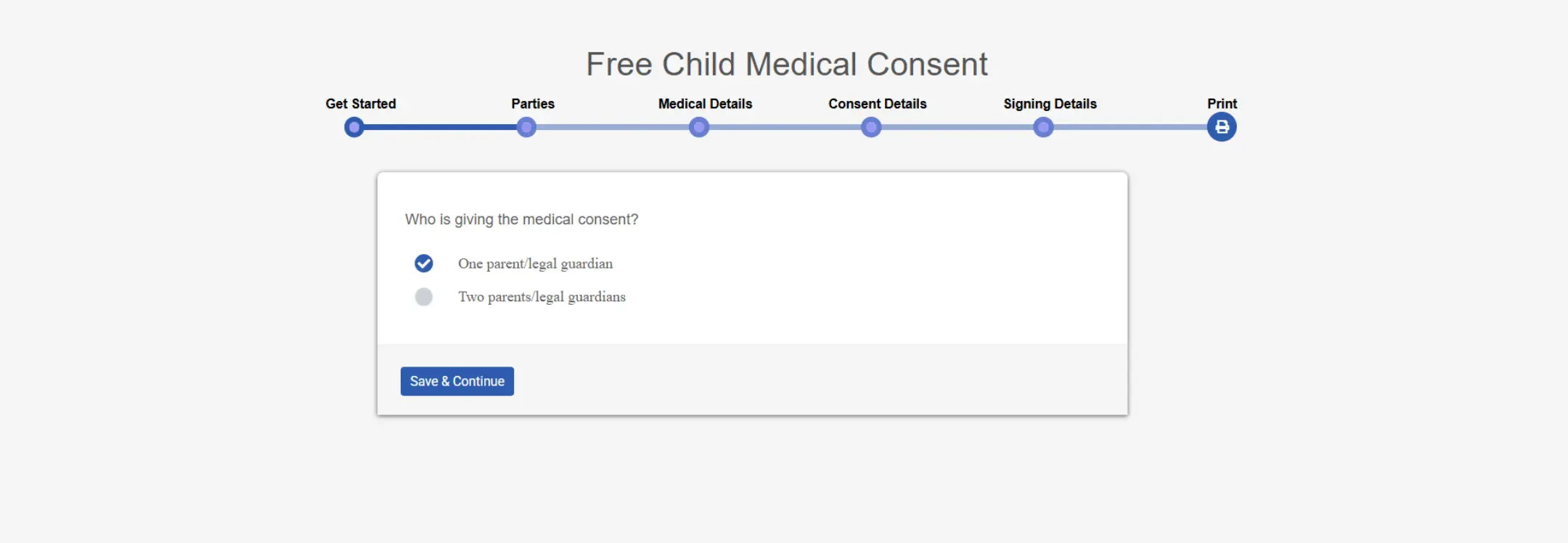
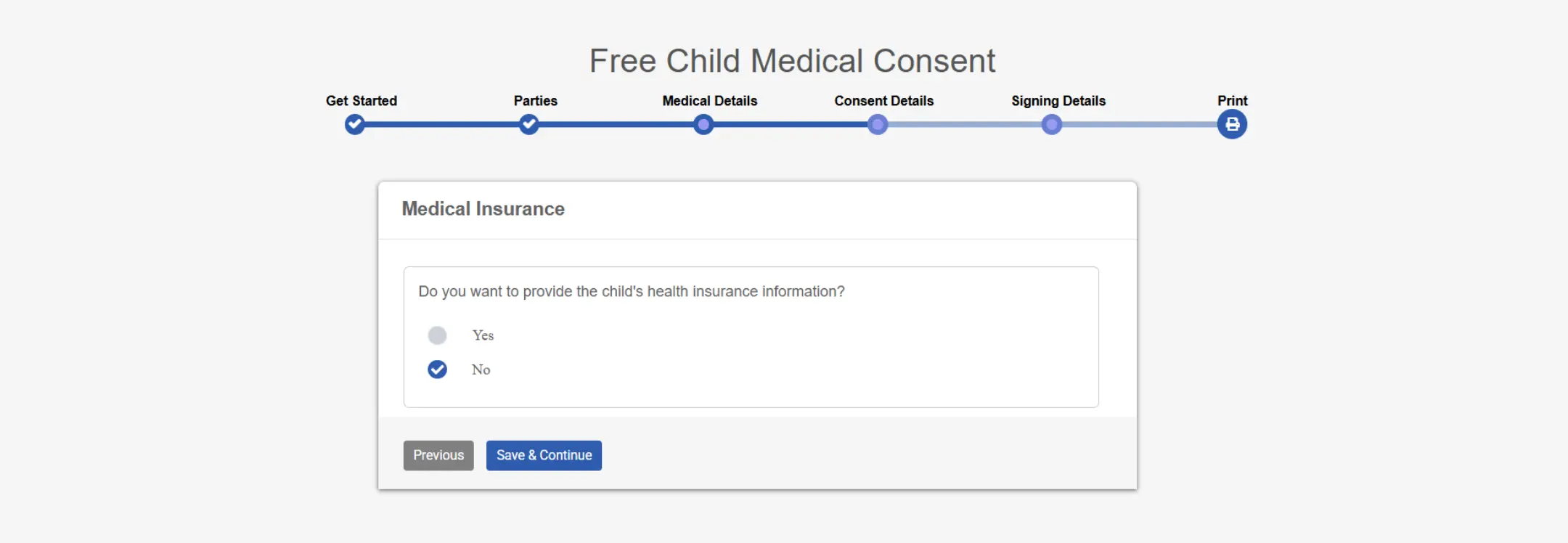
- You can use Zii Legal Forms' online templates to easily create a Child Medical Consent Form
Key Terms You Need to Know
Understanding the vocabulary of the Canadian legal and medical systems is the first step in creating an effective Child Medical Consent Form. These terms define who has the power to act and what the limitations of that power are in a medical setting.
Minor
In Canada, the definition of a minor depends entirely on the province or territory where the child resides. This age of majority is the threshold at which an individual is legally considered an adult and can sign binding contracts. For provinces like Ontario, Alberta, and Saskatchewan, the age of majority is eighteen. In contrast, provinces like British Columbia, New Brunswick, and Nova Scotia set the age of majority at nineteen.
However, the age of majority does not always dictate the age of consent for medical treatment. Most Canadian jurisdictions follow the mature minor doctrine which allows a child to consent to their own care if they possess the intellectual and emotional maturity to understand the risks. This means that a sixteen year old might be legally considered a minor for the purpose of voting but an adult for the purpose of choosing to receive a vaccine or a surgery.
Parent or Legal Guardian
A parent or legal guardian is the person who holds the legal responsibility for a child's well-being and development. Since March 2021, the federal Divorce Act has transitioned away from using the word custody in favor of the more descriptive term decision making responsibility. This change emphasizes the duties of the parent rather than their ownership over the child's time.
In most cases, both biological parents are considered legal guardians unless a court order or written agreement has modified their rights. If one parent has exclusive decision making responsibility for healthcare, they alone have the authority to sign a medical consent form. In shared arrangements, it is best practice for both parents to provide authorization to avoid any confusion at the hospital.
Consenting Adult or Caregiver
An authorized caregiver is an adult who has been granted temporary power by a parent or guardian to make medical decisions for a minor. This person could be a grandparent, an aunt, a nanny, or even a teacher during a school excursion. The role is strictly limited to the duration and scope defined in the Child Medical Consent Form.
The caregiver serves as the primary point of contact for medical professionals when the parents are unreachable. They are responsible for communicating the child's medical history and authorizing necessary procedures based on the parent's instructions. Because they are making life changing decisions, the choice of a caregiver should involve deep trust and clear communication regarding the child's health needs.
Medical Consent
Medical consent is the informed agreement to a specific treatment or procedure provided by a patient or their legal representative. For consent to be valid in Canada, it must be informed, voluntary, and specific to the treatment being proposed. Healthcare providers are legally obligated to explain the benefits, risks, and alternatives to the treatment before seeking consent.
When a child is not yet mature enough to provide their own consent, a parent or their designated caregiver must step in as a substitute decision maker. The law assumes that this person will act in the child's best interest at all times. If a doctor believes that a consent decision is not in the best interest of the child, they may involve child welfare authorities to ensure the child's safety.
Notarization
Notarization is the process where a notary public verifies the identity of the person signing a document and witnesses the signature. In Canada, a medical consent form does not strictly require notarization for use within the country. However, many institutions prefer notarized documents because the notary's seal acts as a safeguard against forgery and fraud.
For international travel, the Government of Canada strongly recommends that all consent letters be notarized. This is because border officials and foreign hospitals are much more likely to accept the validity of a document that has been officially witnessed. In Ontario, current rules for 2025 emphasize that notarization for such documents must often happen in person rather than through remote video calls.
PIPEDA and Privacy Laws
While American websites often talk about HIPAA, Canada operates under a different set of privacy laws. The federal Personal Information Protection and Electronic Documents Act, known as PIPEDA, governs how private organizations handle personal data. Most provinces also have their own health specific acts like the Personal Health Information Protection Act in Ontario.
These laws ensure that a child's medical records are kept confidential and are only shared with authorized individuals. A Child Medical Consent Form must explicitly mention that the caregiver is authorized to receive and disclose personal health information to satisfy these privacy requirements. Without this clarity, a hospital might refuse to discuss the child's diagnosis with a caregiver for fear of violating privacy regulations.
What Is a Child Medical Consent Form?
A Child Medical Consent Form is a legal document that allows a parent or legal guardian to authorize another adult to make medical decisions for their child. It is a temporary delegation of power and does not permanently alter the parent's legal rights. This document is essential because it ensures that a child can receive care even when the parents are physically unavailable due to work, travel, or emergencies.
The form acts as a comprehensive medical profile for the child, containing their health card number, medication list, and allergy information. It provides healthcare professionals with the legal certainty they need to move forward with treatment. In the Canadian context, where physicians are wary of treating minors without clear authority, this form serves as a protective shield for both the child and the medical provider.
Moreover, the form helps navigate the complexities of provincial health systems. Since each province manages its own healthcare, having a document that clearly lists the child's home province and insurance details simplifies the administrative process. It is a practical tool that turns the parent's abstract legal authority into a tangible permission slip that a doctor can rely on in a busy emergency room.
When Do You Need a Child Medical Consent Form?
There are several scenarios in a child's life where a parent's physical absence could create a dangerous delay in medical treatment. Identifying these moments in advance allows a family to prepare a Child Medical Consent Form template that covers all bases.
Traveling Without Parents
When a child travels abroad or even to another Canadian province without both parents, they should carry a medical consent letter. Global Affairs Canada recommends this for children traveling alone, with friends, or with only one parent. While border agents primarily check for travel permission, having medical authorization included is crucial if the child falls ill in a foreign jurisdiction.
International hospitals may have very different standards for minor consent than Canadian facilities. A notarized form helps bridge these cultural and legal gaps, giving a relative or a friend the standing to speak for the child. It is a proactive way to manage the risks of international vacations or school exchanges where the parents are thousands of kilometers away.
Temporary Guardianship During Vacations or Emergencies
Parents often go on solo trips or might face a sudden hospitalization that leaves them unable to care for their children. During these times, grandparents or other relatives often step in to help. A medical consent form ensures that these temporary guardians can handle everything from a routine checkup for a persistent cough to an emergency appendectomy.
Without a form, a relative might find themselves in a difficult position where they are legally unable to approve a minor surgery. This can lead to increased stress and unnecessary delays in the child's recovery. By providing a written authorization, parents give their relatives the peace of mind they need to focus on the child's health rather than legal paperwork.
Babysitters or Nannies Caring for Children Overnight
Even for short periods, like a weekend away, a nanny or a babysitter should have medical authorization. Most childcare providers are capable of handling minor scrapes and bruises, but a severe allergic reaction or an accidental fall requires professional medical intervention. A consent form allows the sitter to take the child to an urgent care clinic and authorize treatment immediately.
This is especially important for parents who work in professions that take them away from home for several days at a time. Providing a nanny with a Child Medical Consent Form Canada ensures that the household remains functional and safe. It creates a clear line of authority that protects the caregiver from being accused of making unauthorized decisions for the minor.
Sports Camps, School Trips, or Extracurricular Activities
School boards across Canada, such as those in Toronto and Vancouver, require parents to sign medical information forms for all student excursions. These forms authorize teachers and chaperones to act in place of the parents during the trip. If a child is injured on a soccer field or during a ski trip, the coaches need the legal power to coordinate with local emergency responders.
Extracurricular programs often take children away from their home cities, which means they may be using a different hospital network. Accurate documentation of the child's provincial health card and any chronic conditions is vital for the staff supervising the activity. It ensures that the child's medical needs are met without the organizers having to spend hours trying to reach the parents in a different city.
Parents in Military Service or Deployed
Canadian military families face unique challenges because spouses and children are usually covered by provincial health systems rather than federal military medical services. When a member of the Canadian Armed Forces is deployed, the remaining parent or a designated caregiver must be prepared to handle all healthcare decisions alone.
The military often provides pre-deployment checklists that include creating emergency childcare plans and medical consent letters. These documents are essential if the non-deployed parent also becomes unavailable or if the children need to stay with relatives in a different part of the country. Having a formal document on file helps provincial doctors understand the family's unique situation and ensures continuity of care.
Situations Involving Divorced or Separated Parents
In cases of divorce or separation, the parenting order will specify who has decision making responsibility for healthcare. If parents share this responsibility, they are generally expected to agree on all major medical treatments. A medical consent form can clarify which parent is authorizing a specific activity or a trip, providing a clear record of agreement.
If one parent has sole decision making responsibility, they can delegate medical consent to a third party without the other parent's permission. However, having a copy of the parenting order attached to the consent form is a good idea to prevent any confusion at the clinic. It ensures that the child's care is not delayed by co-parenting disputes that may arise when the child is in someone else's care.
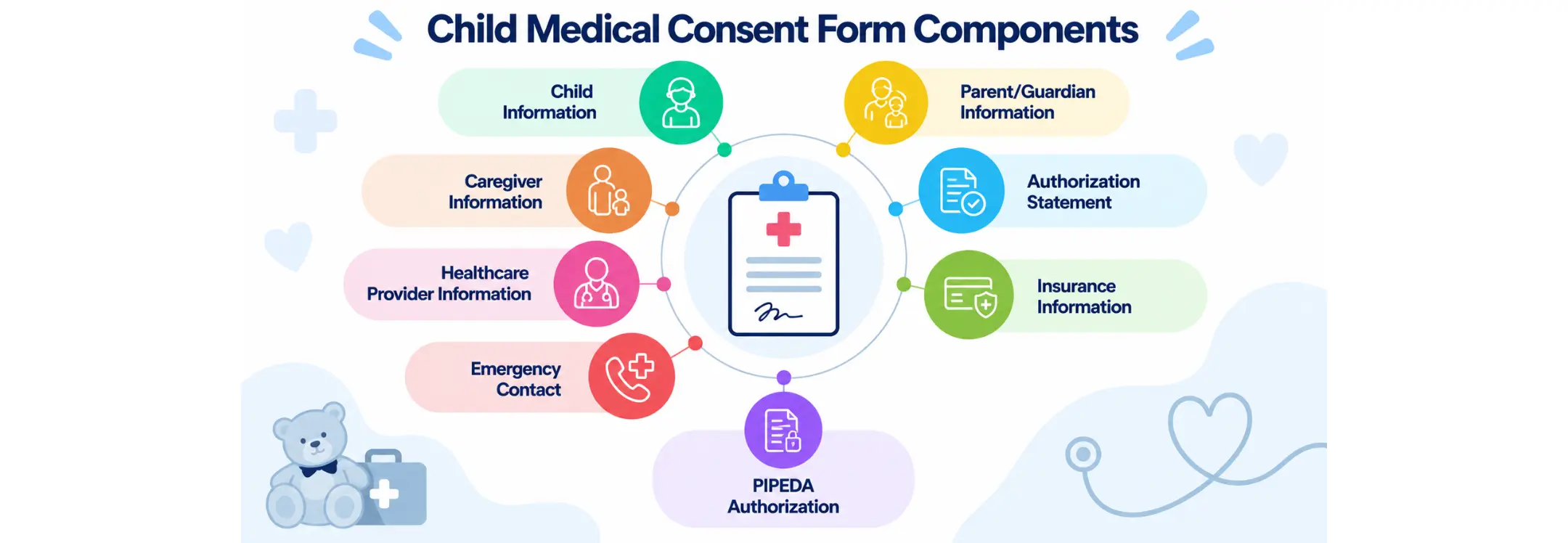
What Should Be Included in a Child Medical Consent Form?
A Child Medical Consent Form Canada must be detailed enough to satisfy the requirements of hospitals and clinics across the country. Each section of the document serves a specific legal or medical purpose that helps the caregiver navigate the healthcare system.
Complete Child Information
The form should start with the child's full legal name, date of birth, and place of birth to ensure there is no confusion regarding their identity. Including the child's current address is also important because it identifies which provincial health authority is responsible for their care.
If the child is traveling, including their passport number and any other government identification can be helpful for foreign medical providers. Accuracy is key in this section, as any discrepancy between the form and the child's official identification could lead to a hospital rejecting the document.
Detailed Parent or Guardian Information
The names and contact information of the parents or legal guardians must be clearly listed. This includes primary and secondary phone numbers as well as email addresses to ensure that medical staff can attempt to reach them. The form should also state whether the parents have joint or sole decision making responsibility.
If one parent is deceased or their rights have been terminated, the form should note this and may include a reference to a death certificate or a court order. Providing this context helps the healthcare provider understand why only one signature is present on the document and prevents unnecessary delays.
Comprehensive Caregiver Information
The authorized caregiver should be identified by their full legal name and their relationship to the child. The form should list their current residence and multiple ways to contact them while they are caring for the minor. This helps the hospital verify that the person presenting the child is the same person named in the consent document.
Some parents choose to appoint multiple caregivers, such as both grandparents, to ensure that there is a backup option if one person is unavailable. If this is the case, the form should clearly state that either adult has the power to consent to treatment. This redundancy is a smart way to manage the risks of an emergency situation.
Clear Authorization Statement
The heart of the document is the statement that grants the caregiver the power to consent to medical, dental, and surgical procedures. This section should be broad enough to cover emergencies but can include specific instructions for routine care. It should also specify that the caregiver has the authority to sign any necessary hospital admission forms.
Parents can choose to exclude certain procedures if they have specific beliefs or concerns, such as a refusal of blood transfusions for religious reasons. If these exclusions exist, they must be written clearly so that the caregiver and the doctor are both aware of the limitations. However, parents should be aware that in life-threatening situations, a court might overrule such exclusions to save the child's life.
Healthcare Provider Information
Including the contact details for the child's primary doctor or pediatrician allows emergency room staff to access the child's medical history quickly. This is especially important for children with complex health needs who see multiple specialists. The form should list the name of the clinic, the doctor's name, and their phone number.
Having this information on the form provides a level of comfort to the treating physician, as they can verify information with a colleague who knows the child well. It also ensures that any emergency treatment is consistent with the child's ongoing health management plan.
Insurance Information
In Canada, the most important piece of medical information is the provincial health card number. The form should list the number and the province of issue to ensure that the hospital can process billing through the reciprocal agreements between provinces. This prevents the caregiver from having to pay for services out of pocket.
If the family has private supplemental insurance, the policy number and the insurance company's contact information should also be included. This is useful for covering costs that are not insured by the provincial plan, such as prescription medications or private hospital rooms.
Emergency Contact Information
The form should list alternative emergency contacts in case the parents and the primary caregiver are all unreachable. This provides an extra layer of security, ensuring that there is always someone who can be reached to provide guidance or support. These contacts should ideally be people who are familiar with the child's health history.
Including a local contact in the area where the child is traveling is also a wise choice. If a child is at a camp in Northern Ontario and the parents are in Toronto, having a contact in the local town can be much more practical for immediate needs.
PIPEDA Authorization
Because Canadian privacy laws are strict, the form should include a specific clause that allows the caregiver to receive the child's personal health information. This is the Canadian equivalent of a HIPAA authorization and is essential for the caregiver to have informed discussions with the doctor.
The clause should state that the parents waive their right to privacy for the specific purpose of allowing the caregiver to make informed medical decisions. Without this, a doctor might be legally barred from explaining a diagnosis to the person who is supposed to be authorizing the treatment.
Is Notarization Required?
A common question for parents using an Online Child Medical Consent Form is whether they must visit a notary. Under Canadian common law, a written document signed by the parents and witnessed by any adult is generally sufficient for domestic use. There is no federal law that mandates notarization for medical consent within Canada.
However, many travel authorities and foreign governments have higher standards for verification. If a child is traveling outside the country, a notarized form is the gold standard for proving that the parents have truly authorized the arrangement. The notary's seal confirms the identity of the parents and makes it much harder for officials to question the document's authenticity.
In some provinces like Ontario, the rules for witnessing signatures have become stricter as of 2025, emphasizing that for certain legal authorizations, the notary and the signer must be in the same physical room. While this can be an inconvenience, it ensures that the document is legally robust. For the sake of a small fee, notarization offers a high level of protection against administrative delays in high stakes medical situations.
Limitations of a Medical Consent Form
Even the most well drafted Child Medical Consent Form Canada has certain legal and practical boundaries. Parents must understand these limitations to ensure they have realistic expectations of what a caregiver can and cannot do.
Temporary Authority Only
A medical consent form is a temporary delegation of power and is not a permanent transfer of parental rights. It must have clear start and end dates that correspond to the period of the parent's absence. Once the specified end date passes, the caregiver's authority typically vanishes unless a new form is signed.
Parents have the right to revoke the consent at any time before the end date by providing written notice to the caregiver and any relevant medical providers. This ensures that the parents remain the ultimate authority in their child's life. The form is a tool for convenience and safety, not a way to permanently change the family's legal structure.
Healthcare Provider Discretion
A medical consent form does not strip a doctor of their professional judgment. Physicians have a primary ethical and legal duty to act in the best interest of the patient. If a doctor believes that a caregiver's decision is harmful to the child, they may refuse to follow it or seek a court order to intervene.
In some cases, the hospital's internal policies may also impose restrictions that the form cannot override. For example, a clinic might require two doctors to agree before performing a certain elective procedure on a minor, regardless of what the consent form says. The document is a guide and an authorization, but it must still fit within the standard of care.
Time and Scope Limitations
The authority granted in a consent form is usually limited to the specific medical needs and timeframes outlined in the text. If a caregiver is authorized to handle emergency care during a two week vacation, they cannot use that same form to enroll the child in a long term clinical trial months later.
Scope limitations are important for protecting the child from unintended decisions. Parents should be specific about what they are authorizing, whether it is routine dental work, emergency surgery, or simply the administration of daily medications. If the form is too vague, a hospital might be hesitant to rely on it for complex medical choices.
Insurance and Billing Complications
A consent form does not guarantee that every medical expense will be covered. While Canadian provinces have reciprocal billing for many services, they do not cover everything. For example, if a child from BC receives treatment in Ontario, the BC Medical Services Plan will only pay what it would have cost to treat the child in BC.
The parents are responsible for any difference in cost. Furthermore, some services like ambulance trips or certain dental procedures are not covered by provincial plans at all. The consent form allows the caregiver to authorize the treatment, but it does not shift the financial burden away from the parents.
Province Law Variations
Because healthcare is a provincial responsibility, the laws governing minor consent can change as you cross borders within Canada. For example, Quebec's Civil Code has very specific rules that differ from the common law provinces. In Quebec, a minor who is fourteen years or older can generally consent to their own care unless it involves a serious risk to health.
These variations mean that a form drafted for Ontario might be interpreted slightly differently in British Columbia. While most Canadian hospitals will respect a well written consent form from another province, parents should be aware that the local laws of the hospital will always take precedence over the laws of the child's home province during treatment.
Cannot Override Parental Rights
A Child Medical Consent Form cannot be used to bypass the rights of a co-parent with legal decision making responsibility. If one parent signs a form authorizing a controversial treatment and the other parent explicitly objects, the healthcare provider will likely wait for a consensus or a court order before proceeding.
The form is intended to assist when parents are unavailable, not to solve disputes between parents. In a high conflict divorce, hospitals are very careful about following the most recent court ordered parenting arrangement. A consent form is most effective when it is supported by both parents and reflects their shared vision for the child's health.







 Canada
 United States